Building a Mushroom Lab in My Basement
Before the first harvest comes the work of building an environment where mushrooms might thrive.

Turning an unfinished basement room into a controlled environment for mushroom cultivation, one experiment, construction project, and unexpected problem at a time.
Project Ledger VII:
When I first introduced the mushroom lab in The Basement Incubator , there wasn’t much to show for it. I’d framed off a section of the basement, installed drywall on the exterior walls, and moved an old grow tent into the space. I had a general understanding of what I wanted to accomplish, but most of the actual work was still ahead of me. (See The Basement Incubator: Building a Creative Space at Home)
Since then, the room has come a long way. I’ve been lining the walls, installing electrical, working through ventilation, and gradually assembling the equipment needed to turn an unfinished basement room into a controlled environment for mushroom cultivation. There are still plenty of things to finish, and I haven’t grown a single mushroom in the space yet, but it’s beginning to resemble what I originally envisioned.
What I find interesting is how much the project has evolved as I’ve worked through it. I started with a fairly straightforward idea of what a mushroom lab would require, only to discover that nearly every part of the build introduces another collection of decisions. It’s been a combination of construction, research, problem-solving, and figuring things out as I go, which is a large part of what I enjoy about projects like this in the first place.
How I Got Interested in Mushrooms
For most of my life, I didn’t particularly like mushrooms. My experience was largely limited to ordinary white button mushrooms, usually appearing as slimy little additions to pizza or mixed into dishes where they didn’t contribute much beyond an unpleasant texture. I never really understood the appeal, although there were exceptions.
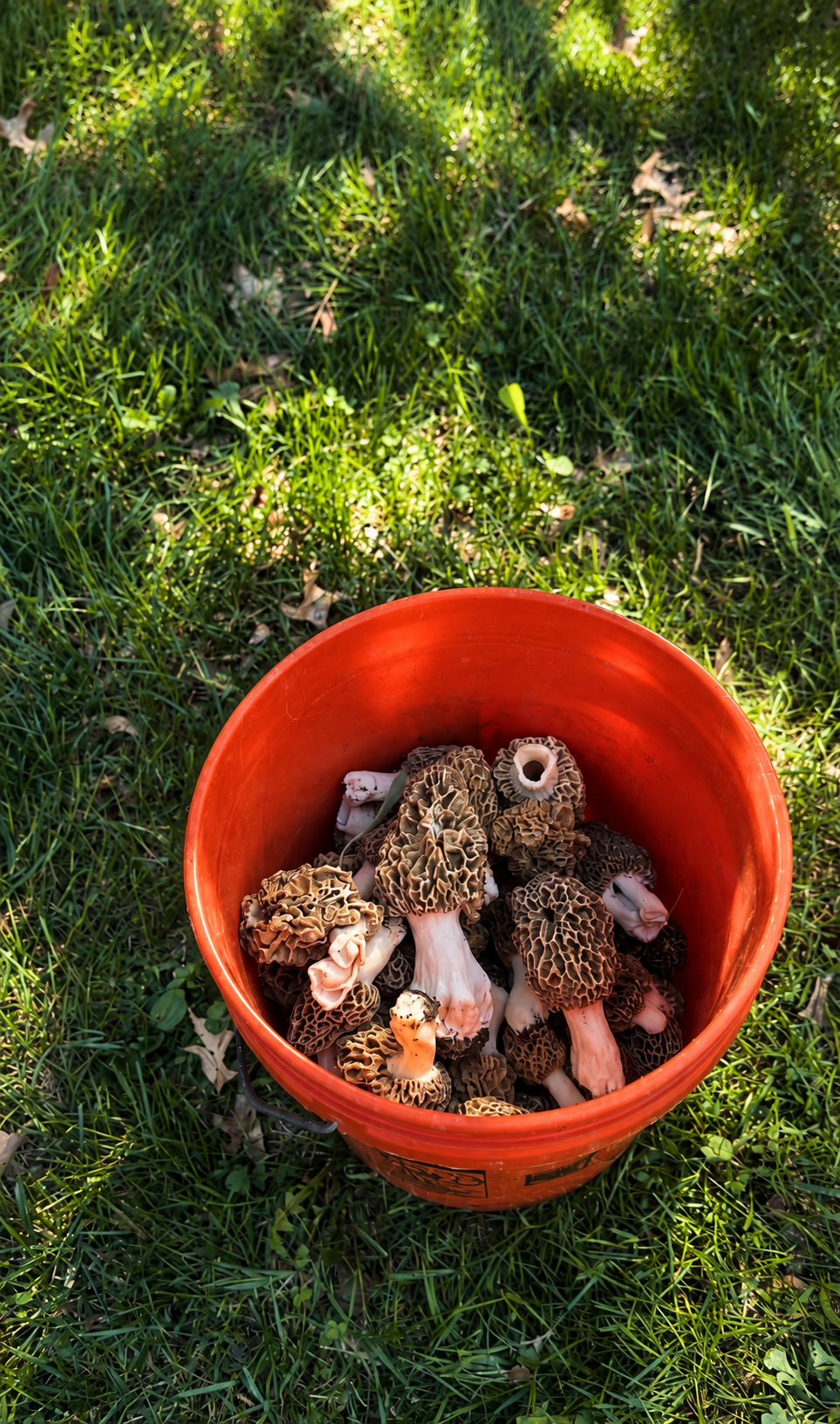
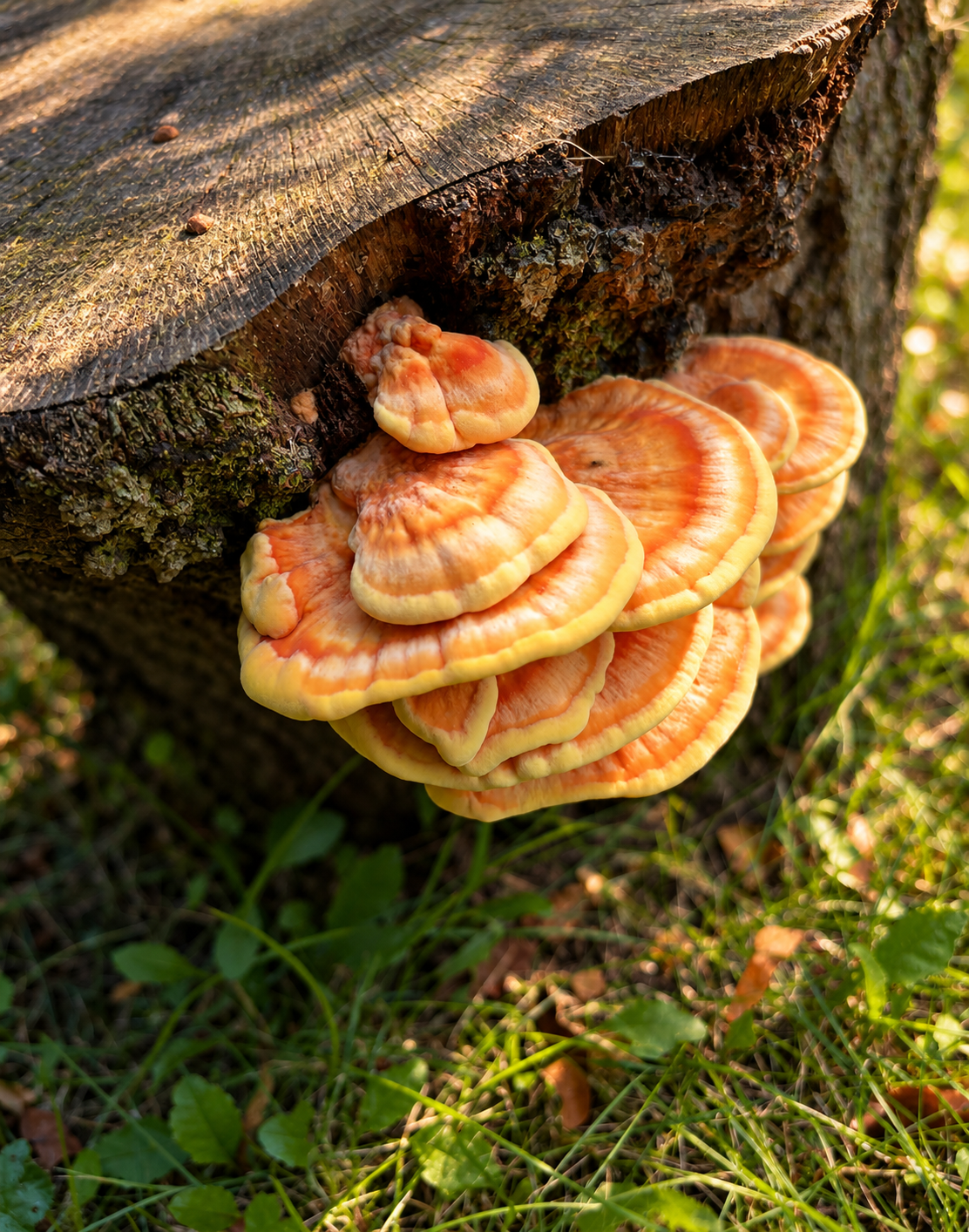
Growing up, I’d gone morel hunting in Michigan’s Thumb, and I remember those mushrooms being something special. They had a completely different flavor and texture from the varieties I was accustomed to eating. I also remember discovering chicken of the woods, with its bright orange shelves growing from trees and a texture surprisingly reminiscent of it's namesake. But for years, those occasional encounters were about the extent of my enthusiasm.
Things began changing as I became more interested in food. Between business travel, vacations, and exploring Detroit’s restaurant scene, I started encountering mushrooms I hadn’t previously given much thought to. Oyster mushrooms, black trumpets, truffles, and other varieties introduced me to an entirely different side of the ingredient. It turned out I didn’t dislike mushrooms nearly as much as I thought. I just hadn’t experienced very many good ones.
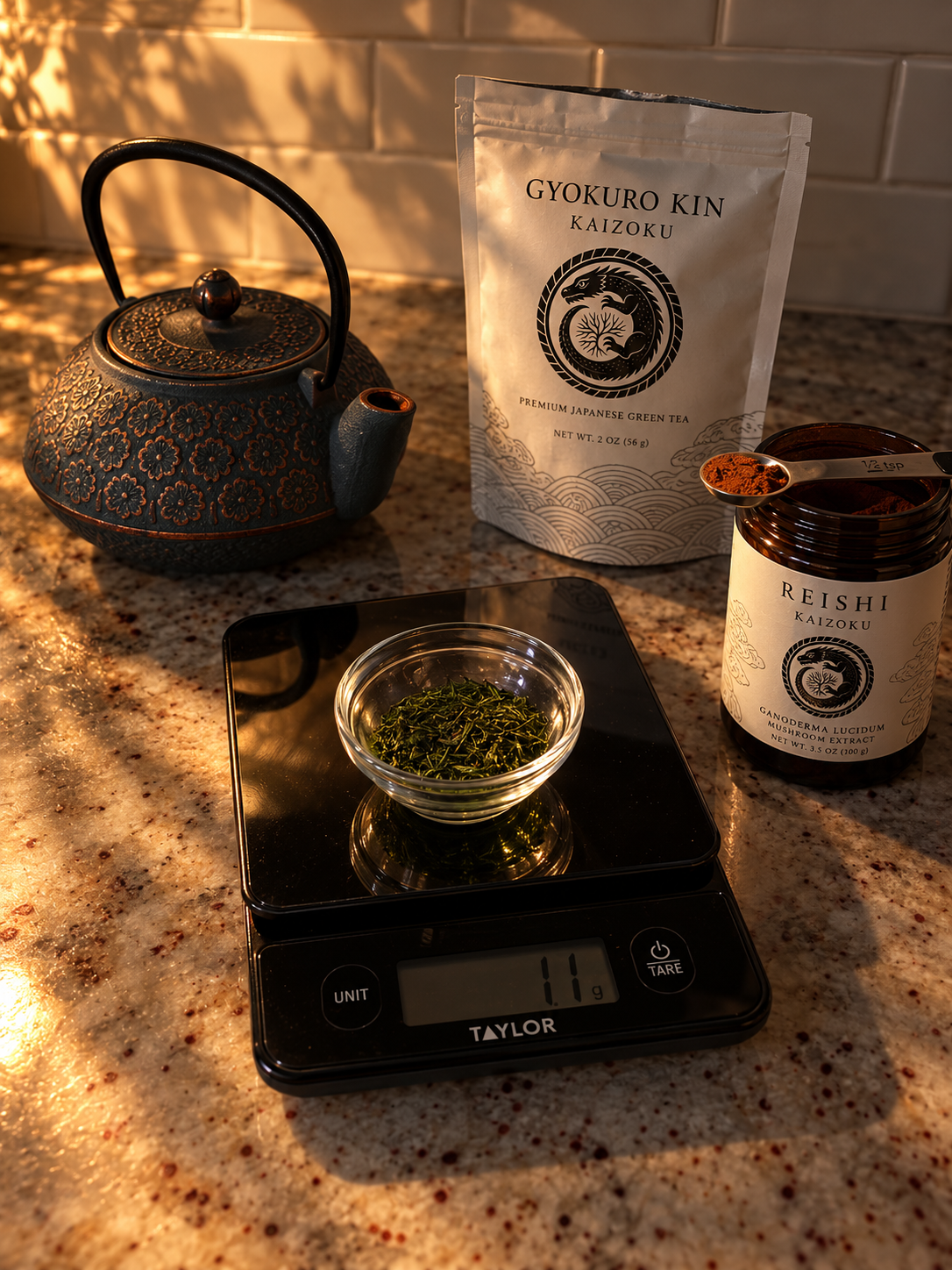
My interest expanded further after I quit drinking and began exploring alcohol-free drinks, teas, and other alternatives. I started encountering products containing lion’s mane, reishi, cordyceps, and other fungi marketed for their potential wellness benefits. That sent me down another rabbit hole, learning about their biology, traditional uses, and the research surrounding their compounds. Some of the health claims are better supported than others, but the subject was fascinating regardless.
The more I researched, the more varieties I discovered, and the more I realized how little I knew about fungi. They weren’t simply another ingredient to experiment with in the kitchen. There was an entire world of cultivation methods, growing conditions, and potential applications that I’d barely begun exploring.
There was also the matter of cost and availability. Gourmet mushrooms aren’t always easy to find locally, and specialty mushroom products can become expensive when purchased regularly. Naturally, I started wondering whether I could produce some of these things myself. Building an entire mushroom lab in my basement probably isn’t the most economical alternative to buying a few supplements or a package of oyster mushrooms, but economics wasn’t really the point. The idea of growing, experimenting with, and learning about different fungi sounded like a hell of a lot more fun.
Bringing Cultivation Home
I wasn’t entirely new to growing things. I’ve spent years working on gardens and landscaping, growing vegetables, and experimenting with indoor cultivation. I enjoy understanding what something needs to grow and figuring out how to provide those conditions, particularly when the environment itself becomes part of the challenge.
Mushrooms introduced an entirely different set of considerations. Unlike the plants I’d worked with, fungi don’t rely on sunlight and photosynthesis. Cultivation involves substrates, mycelium, humidity, fresh-air exchange, sanitation, and environmental conditions that can vary considerably from one species to another. The more I learned, the more I realized that pursuing this interest would probably lead me toward either foraging or cultivation.
Foraging was already familiar territory. Mushroom hunting is deeply ingrained in Polish culture, and I’d participated in morel hunting since childhood. It’s something I’d like to explore further eventually, but cultivation offered an opportunity to learn an entirely different set of skills, with considerably more control over the process.
More importantly, it was something I could bring into my home.
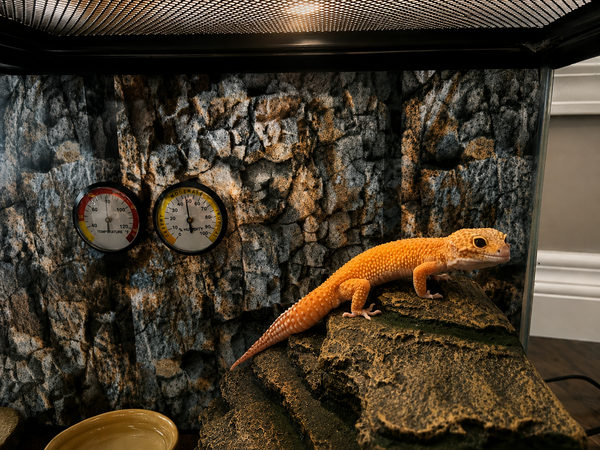
I’ve always liked having the things I’m interested in within reach. Not every activity needs to involve driving somewhere or making special arrangements to participate. There’s something appealing about being able to walk downstairs on an ordinary evening and spend an hour working on something that interests me, whether that’s tending to a reptile enclosure, experimenting with a new recipe, or eventually checking on a collection of growing mushrooms.
I’d already been planning specialized environments for reptiles, so the idea of engineering another little piece of nature into the house fit naturally with what I was doing. The basement offered the space, I had access to an old grow tent, and I was already transforming portions of the basement into dedicated areas for different projects. The mushroom lab became another part of that larger undertaking.
From the Basement Incubator to a Dedicated Lab
When I first wrote about the project in The Basement Incubator, the room was little more than a framed enclosure with drywall installed on the exterior sides of the walls. Inside sat a decommissioned grow tent that had previously been used for cannabis cultivation by a family member. The tent had a new purpose, but there was very little infrastructure in place to support it.
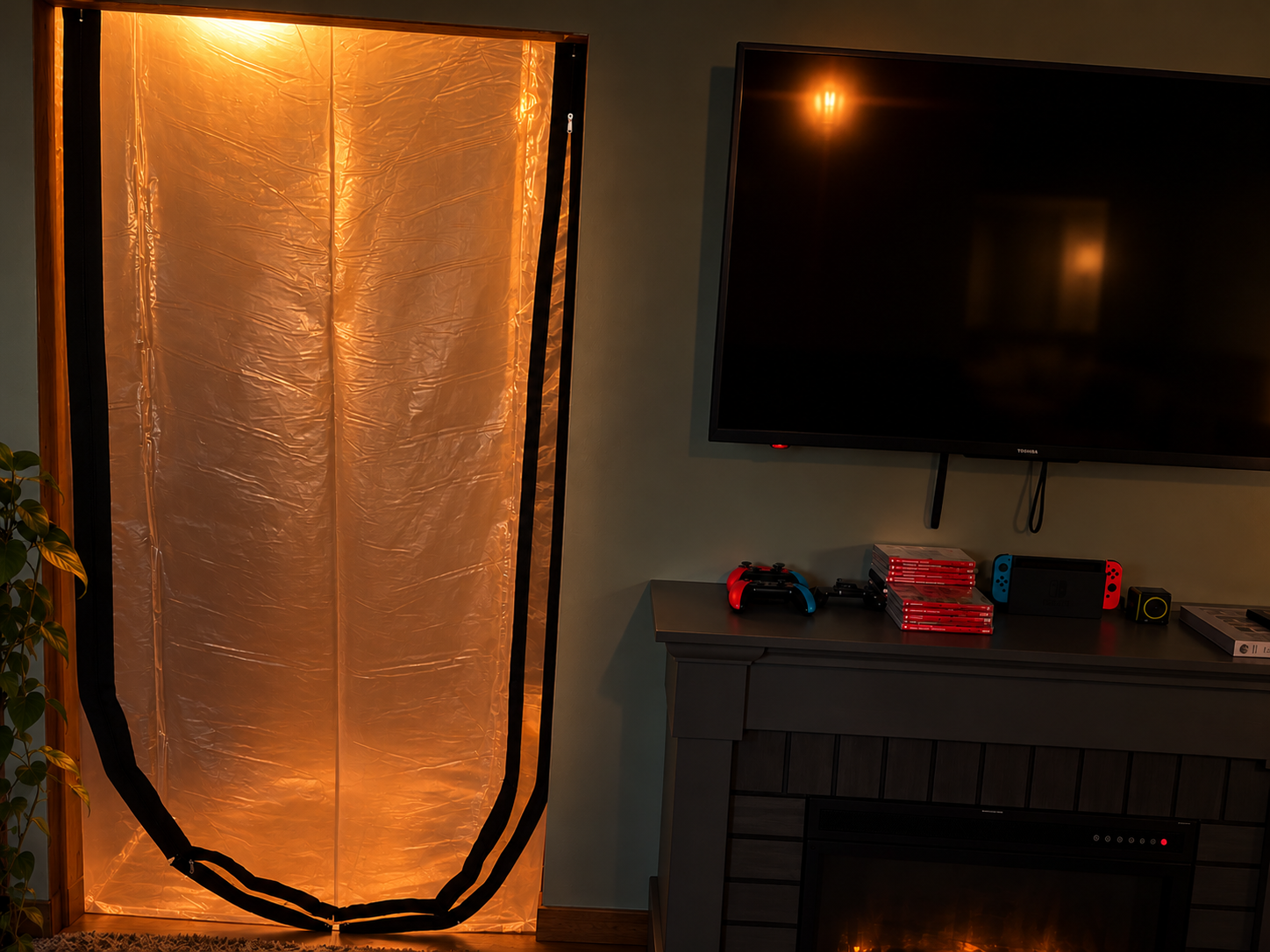
Since then, I’ve been working toward creating a room that’s reasonably isolated from the surrounding basement, easy to clean, and capable of supporting controlled growing conditions. Mushroom cultivation presents an interesting challenge because the fungi I’m trying to grow aren’t the only organisms interested in nutrient-rich growing materials. Unwanted molds and bacteria can take advantage of those same conditions, making sanitation and contamination control important considerations.
I began lining the walls with Visqueen plastic sheeting, paying particular attention to seams and penetrations. Fasteners were sealed, and specialized tape was used to close gaps and create a more continuous barrier. I’m not under the illusion that an unfinished basement can become a perfectly sterile laboratory, but I can make the room easier to clean and reduce places where moisture and contaminants might accumulate.
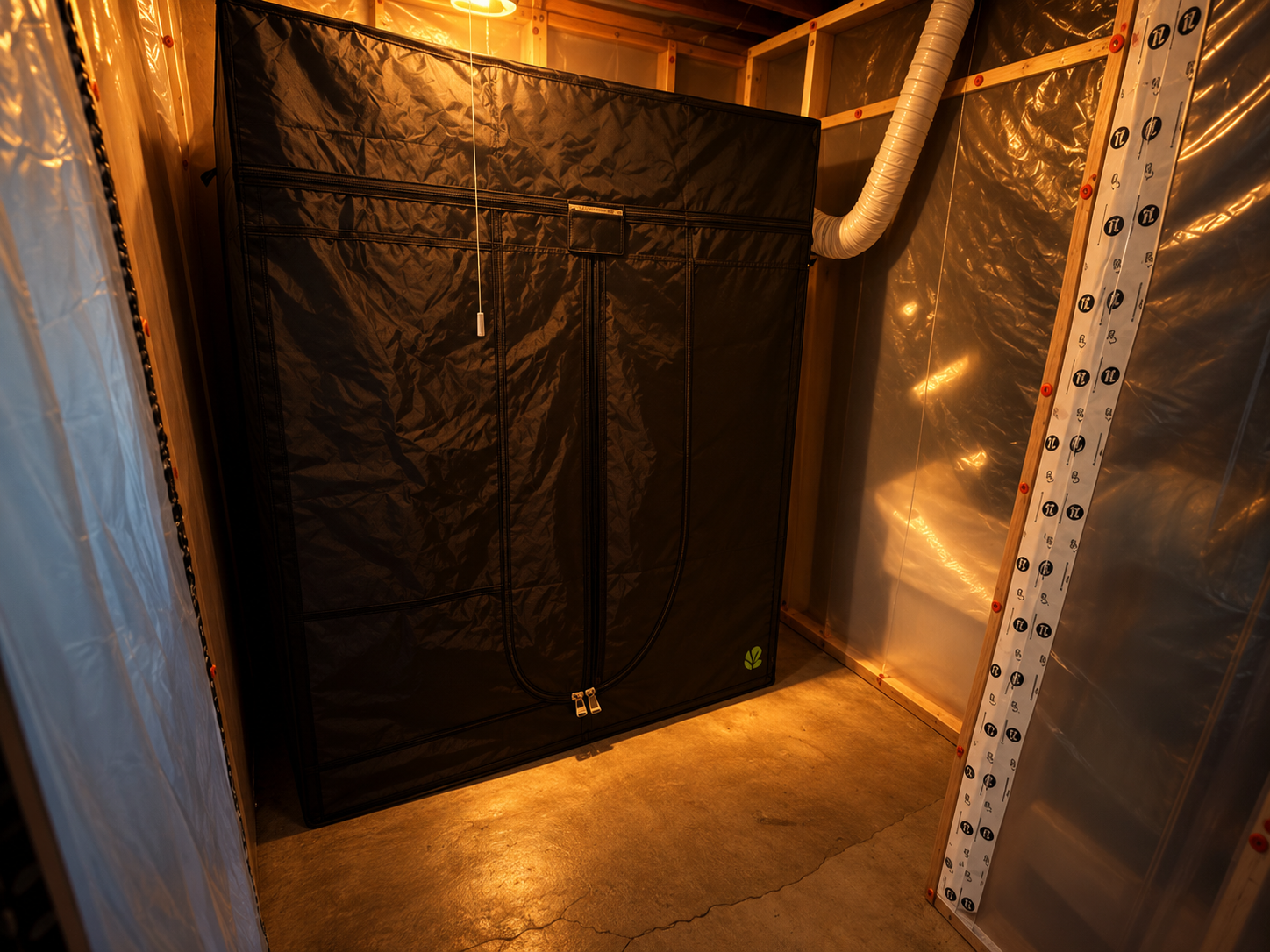
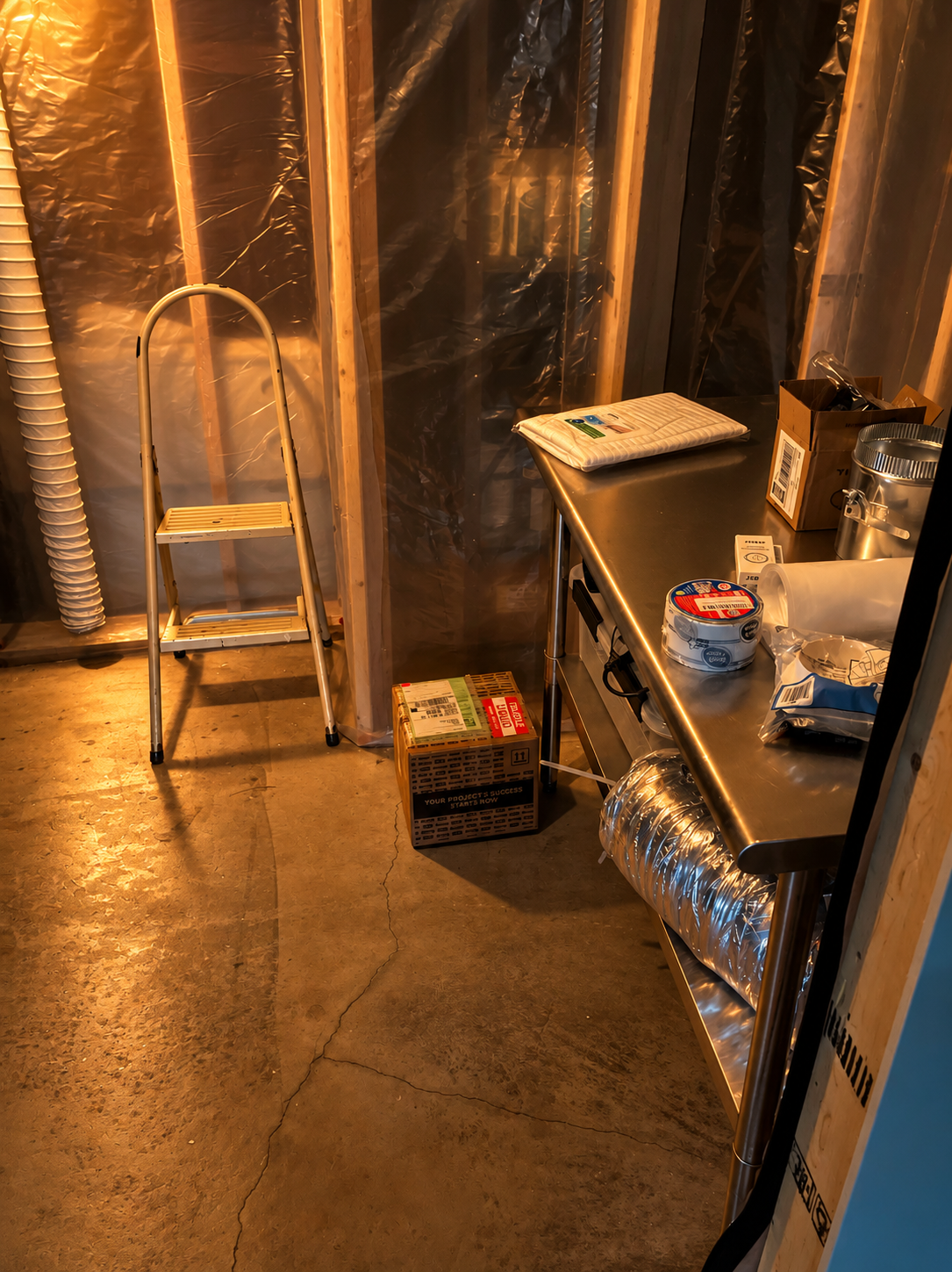
The ceiling will receive similar treatment once the mechanical work above it is finished, and the concrete floor still needs to be sealed with Drylok. I’m also incorporating a stainless steel workbench to provide a durable, cleanable surface for handling equipment and preparing materials.
One of the more satisfying additions came from an entirely unexpected source. While out for an evening jog around the neighborhood, I spotted a sizable stainless steel rack sitting at the curb. Someone was moving out and apparently had no further use for it. I took one look and thought, Damn, that’s nice.
Stainless steel equipment isn’t cheap, particularly when you’re outfitting a space where moisture resistance and cleanable surfaces matter. So I interrupted my run, picked up the rack, and carried the thing home by hand before heading back out to finish my jog. It was an unexpectedly useful find, and exactly the kind of resourcefulness I enjoy incorporating into projects. Not everything needs to be ordered new, especially when something perfectly useful is sitting on the curb waiting to be thrown away.
Electrical, Ventilation, and the Systems Behind It
Beyond the physical construction, the lab needs electrical power, lighting, and ventilation. I ran 12/2 wiring on a 20-amp circuit intended to serve both the mushroom lab and the adjacent reptile room. Eventually, those spaces will contain fans, lighting, environmental controls, and other equipment, so I wanted to plan the electrical infrastructure around their anticipated needs rather than piecing things together afterward.
Ventilation has required considerably more thought, partly because the mushroom lab sits beneath existing HVAC ductwork. Some of the work overhead also serves other areas of the basement, including the reptile room and an area we call the lodge. I’ve been developing branches of the heating system to serve those spaces, and although that work isn’t directly related to mushroom cultivation, it needs to be completed before I can finish sealing the lab ceiling.
That’s how these projects tend to go. You start working on one room and discover that finishing it requires completing something in another.
For the mushroom lab itself, I’m planning a system with an intake fan, a fresh-air-exchange exhaust fan, and filtered replacement air. The objective is to maintain adequate airflow while controlling temperature, humidity, and carbon dioxide levels. Different mushroom species have different requirements, and the way I move air through the space will affect nearly every other environmental condition I’m trying to maintain.
I’ve considered exhausting air outside, returning some air to the surrounding room, and potentially recirculating conditioned air when fresh-air exchange isn’t necessary. Each approach introduces its own advantages and drawbacks. Returning humid air might reduce water consumption, for example, but it could also create unwanted moisture problems if I don’t manage it properly.
These are the kinds of decisions that have continued evolving as I build. I had a general understanding of the ventilation requirements from the beginning, but working through the actual equipment, ductwork, and room layout has forced me to take a closer look at how everything will operate together.
Different Mushrooms, Different Requirements
One of the more interesting parts of planning this lab has been realizing how different cultivation methods can be from one species to another. My notebook has gradually filled with comparisons of growing containers, grain spawn, substrates, temperatures, humidity, and fresh-air requirements.
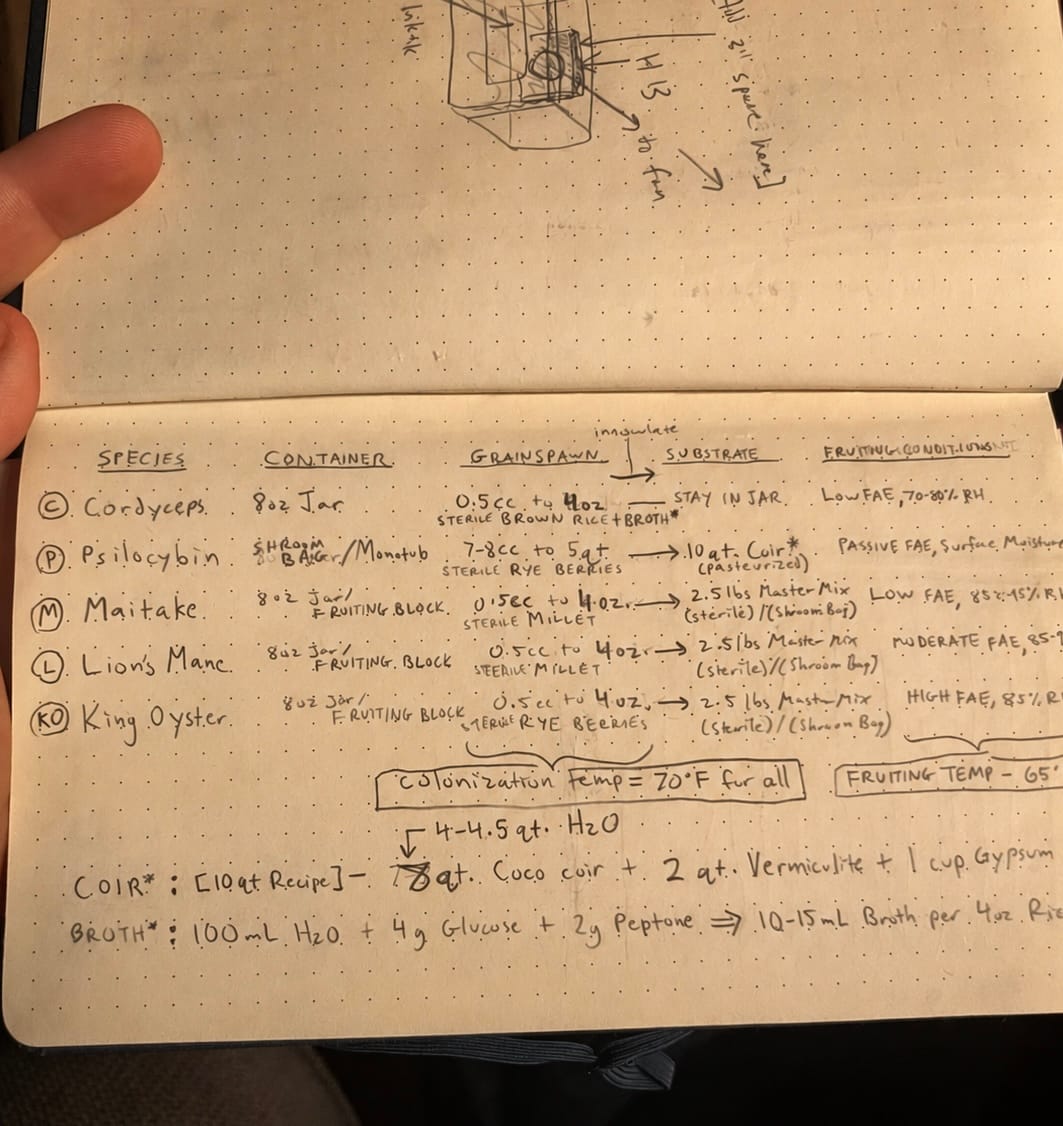
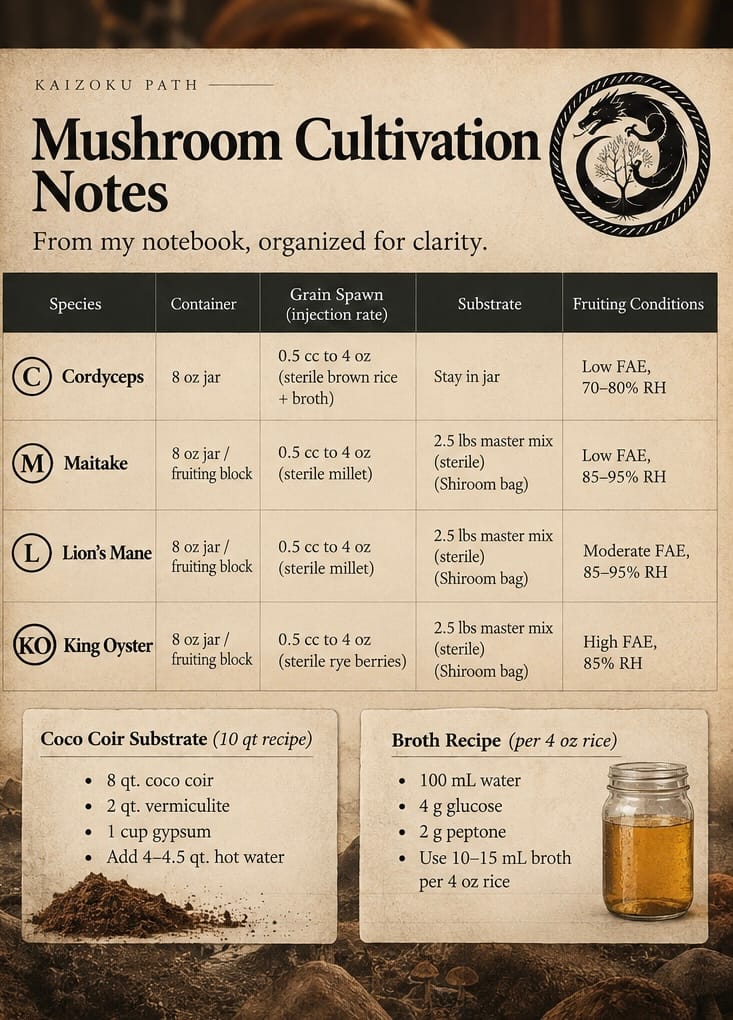
The initial lineup includes lion’s mane, king oysters, maitake, and cordyceps, with room to expand into other species as I gain experience. Some will be grown in bags or fruiting blocks inside the tent, where I can maintain higher humidity and more active fresh-air exchange. Others may be better suited to jars or separate containers, particularly where the growing process differs significantly.
Cordyceps, for example, introduces a different approach from growing a large cluster of oyster mushrooms. I’ve also been researching the lighting needs of each setup. Mushrooms don’t use light in the same way plants do, but lighting can still influence development and fruiting in many cultivated species.
Rather than creating one environment where everything receives identical treatment, I’m approaching the room as a collection of smaller growing systems, each designed around the requirements of what I’m trying to cultivate. That flexibility is part of what makes the project appealing. I don’t want to build a space that only works for one particular mushroom. I want something I can experiment with and improve over time.
The Humidity Problem
Of all the remaining environmental questions, humidity has probably sent me down the most unexpected rabbit hole. I knew from the beginning that I’d need a way to maintain high humidity inside the fruiting tent, and initially figured a reptile fogger might do the job.
But then I started thinking about water consumption.
Depending on how the system performs, I could potentially go through more than a gallon of water a day. Buying distilled water by the gallon doesn’t sound particularly appealing, either financially or logistically, so naturally I began considering whether ordinary tap water could be used instead.
That introduced another problem. Ultrasonic foggers can disperse dissolved minerals into the air along with the water, potentially leaving deposits on surfaces and equipment. There are also questions about water treatment, cleaning, and microbial growth that I need to account for.
So now I’m reconsidering the entire approach.
Perhaps an evaporative system would make more sense, or maybe I’ll build a humidifier from a plastic tote and components that allow moisture to enter the air without dispersing as many minerals. A commercial system might still prove to be the better solution, but I haven’t decided.
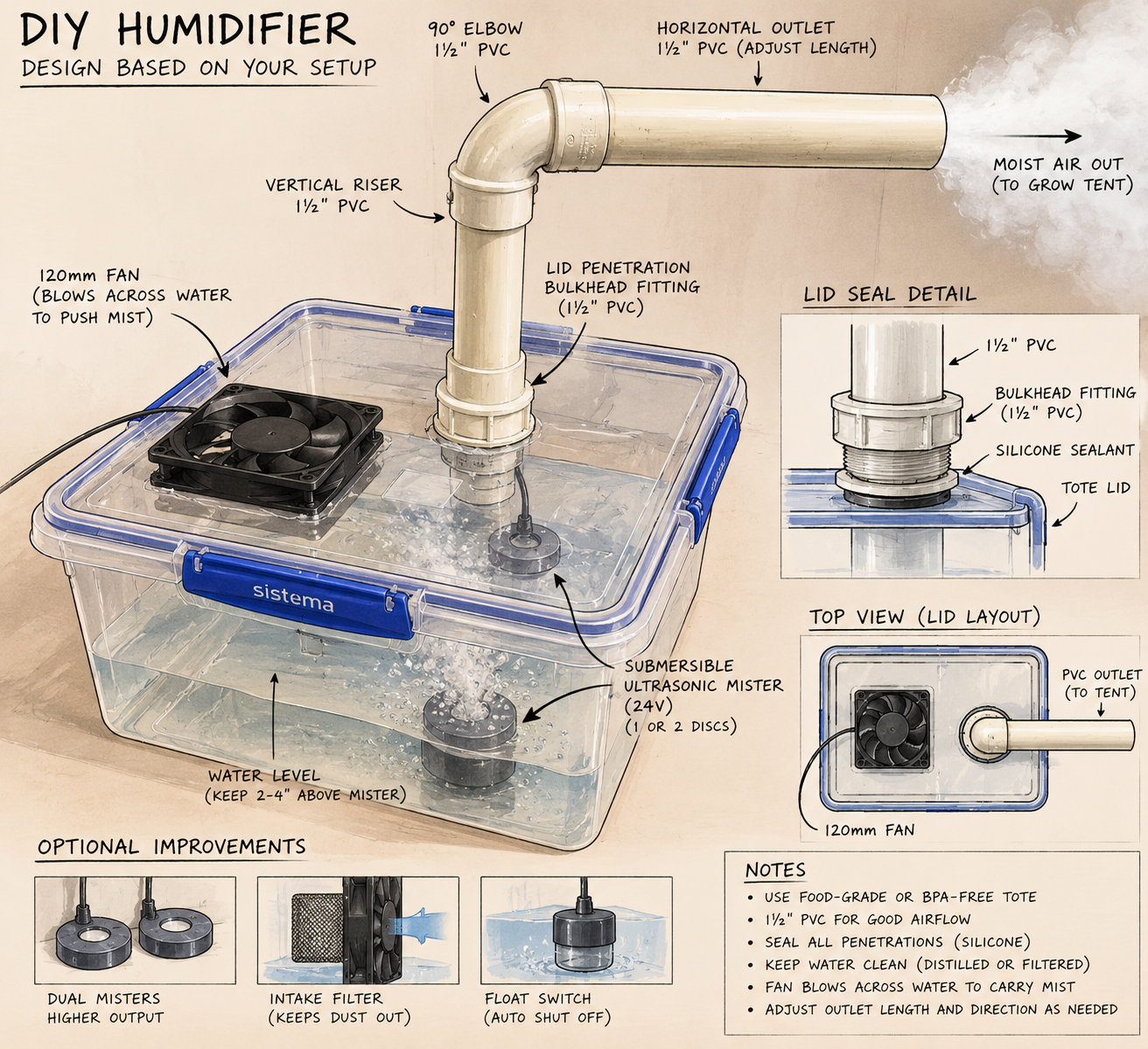
What started as a simple line item in my notebook, buy humidifier, has turned into an entire design problem. And humidity doesn’t exist independently of everything else. Ventilation affects how quickly moisture leaves the tent, temperature influences evaporation, and the amount of fresh air required will determine how much water I need to replace.
I enjoy that kind of problem-solving, even when it means revisiting something I thought I’d already figured out. It’s also a reminder that understanding the general requirements of a project isn’t quite the same as working through the details of making it function.
Learning as I Go, With a Plan
I have a fairly organized approach to projects, probably because of the work I do professionally. I’ve spent years working with industrial processes and the commissioning of automotive paint lines, where equipment, utilities, environmental conditions, and sequencing all need to come together for a system to function properly.
A mushroom lab is obviously a much smaller undertaking, but some of the thinking carries over. I started with a general outline of what I needed, broke the project into smaller tasks, identified dependencies, and gradually began assembling materials and equipment.
My notebook reflects that process. There are equipment lists, material quantities, species comparisons, substrate ideas, and sketches of ventilation arrangements. Some items are highlighted, others crossed out, and plenty have been revised as I’ve learned more.
It’s not a perfectly organized engineering document. It’s a working notebook, and that’s exactly what I need it to be. I’m learning as I go, but I’m learning with a plan.
The plan changes when I discover something new, and I don’t particularly mind that. Some of the most interesting parts of the project have come from realizing that my original approach wasn’t necessarily the best one. The goal isn’t to get every decision right the first time. It’s to build something that works and understand enough about it to improve it when necessary.
Preparing for the First Grow
Once the remaining construction is finished, the next phase will be testing and commissioning the room. Before I introduce any cultures or substrates, I want to understand how the environment actually behaves.
How much air am I moving? How quickly does humidity rise or fall? Can I maintain stable temperatures? How much water does the system consume, and what happens when the exhaust fan runs?
I’ve already purchased basic temperature and humidity monitoring equipment, but I still need to finalize timers, controls, and sensors for carbon dioxide and humidity. I want to observe the room under different operating conditions and make adjustments before asking it to support a crop.
After that comes the cultivation equipment and materials. I’ll need jars, growing bags, substrates, grain spawn, liquid cultures, and a workable approach to preparing and sterilizing materials. One of the decisions I’m still weighing is whether to purchase pre-sterilized supplies or prepare more of them myself.
I already own a stovetop pressure cooker, but I’m evaluating whether it’s suitable for the work I want to do. I may end up producing smaller batches rather than investing immediately in larger equipment, which wouldn’t necessarily be a bad thing. I’m not trying to establish a commercial mushroom operation, at least not now.
Smaller experiments may actually make more sense while I’m learning, particularly if I want to compare different species, substrates, and growing conditions without committing large amounts of material to any single attempt. There’s plenty of room for the project to evolve, and plenty of opportunity to make mistakes. I expect both.
A Room Full of Possibilities
I sometimes think about how strange this entire undertaking would have sounded to me years ago. I was the guy who didn’t particularly like mushrooms, and now I’m building a dedicated room in my basement to grow them. I’m spending my free time thinking about airflow, humidity, grain spawn, and which species might perform best under different conditions.
It’s a good reminder of how far an interest can develop when you give it some room.
I can already imagine what the lab will eventually produce. Fresh oyster mushrooms for dinner, lion’s mane to experiment with in different recipes, and harvests to share with friends and family. Some will be dried for storage, incorporated into tea blends, or used in homemade preparations. I like the idea of being able to walk downstairs, check on what’s growing, make a few adjustments, and eventually bring something upstairs to use in the kitchen.
But that’s still the future.
Right now, when I walk into the room, I mostly see unfinished work. The ceiling needs sealing, the floor needs coating, and lighting and ventilation components still need their final installation. The humidification system hasn’t been finalized, the environmental controls need to be tested, and I haven’t even started working with the growing materials.
There are days when the remaining work feels like quite a bit, particularly when finishing one task seems to uncover three more. But I don’t regret taking it on, because the satisfaction hasn’t depended entirely on producing mushrooms. At least not yet.
There’s been plenty of satisfaction in figuring out how to create the conditions that might eventually make those harvests possible. A few months ago, this was little more than a framed-off room with an old grow tent inside. Today, it’s a space with a purpose, infrastructure, equipment, and a plan that’s becoming more detailed as I work through it.
Eventually, I hope to be standing in that room surrounded by mushrooms, with something new to cook, share, or experiment with.
For now, I’ve got a lab to finish building.
 Kaizoku Path
READ NEXT ARTICLE
 Kaizoku Path
READ PREVIOUS ARTICLE