The Things We Carry: England and Poland
Some places are new. Others are familiar. We bring something of ourselves to both.
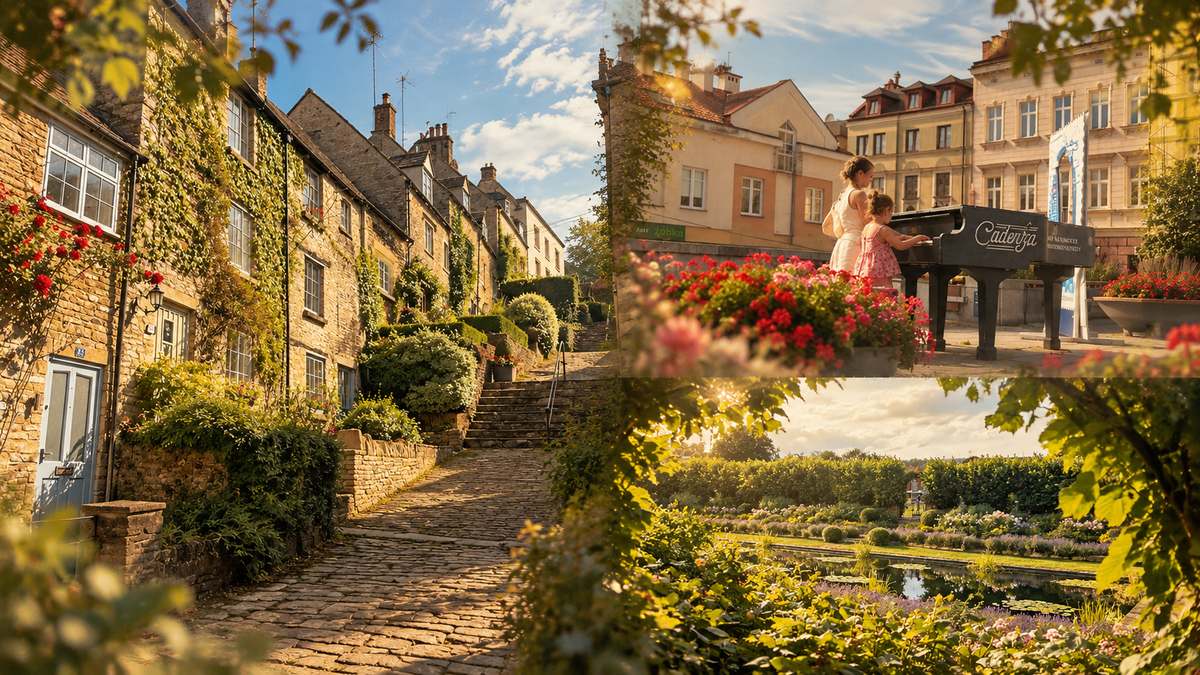
Three weeks across England and Poland, revisiting familiar places, discovering new ones, and finding unexpected connections between the things I love at home and the things I notice when I travel.
Field Notes VI:
I’ve come to realize that we rarely arrive somewhere new empty-handed. Beyond the luggage, passports, and whatever we’ve managed to cram into our carry-ons, we bring along years of accumulated interests, experiences, tastes, and influences. Whether we recognize it or not, those things shape what catches our attention, where we choose to spend our time, and what we eventually remember.
Two people can visit the same city, walk the same streets, and eat at the same restaurants, yet come home with entirely different stories. I’ve always found that interesting, particularly as my own interests have expanded over the years.
This summer, my family and I spent roughly three weeks traveling through England and Poland. We started in London, spent the better part of the trip visiting family in southeastern Poland, and returned to England for a few days in the Cotswolds before heading home.
It was a trip that brought together quite a few things I already care about: food, gardening, architecture, history, craftsmanship, and family traditions. Some were interests I’ve actively pursued for years. Others were influences I hadn’t fully recognized until I encountered them somewhere else.
And naturally, there were a few discoveries I hadn’t seen coming.

London: A City of Many Worlds
We started by driving to Toronto and catching a flight to London, where we stayed near St. James’s Park. It didn’t take long for me to appreciate how easy the city was to navigate. London’s Underground made moving between neighborhoods almost ridiculously convenient, especially compared with metropolitan Detroit, where visiting several parts of the city usually involves driving, parking, and figuring out where to go next.
In London, we could step onto the Tube and emerge a few stops later in a neighborhood with an entirely different character. The architecture changed, the restaurants changed, and so did the atmosphere. I loved the variety, and I loved being able to experience so much of it without a car.

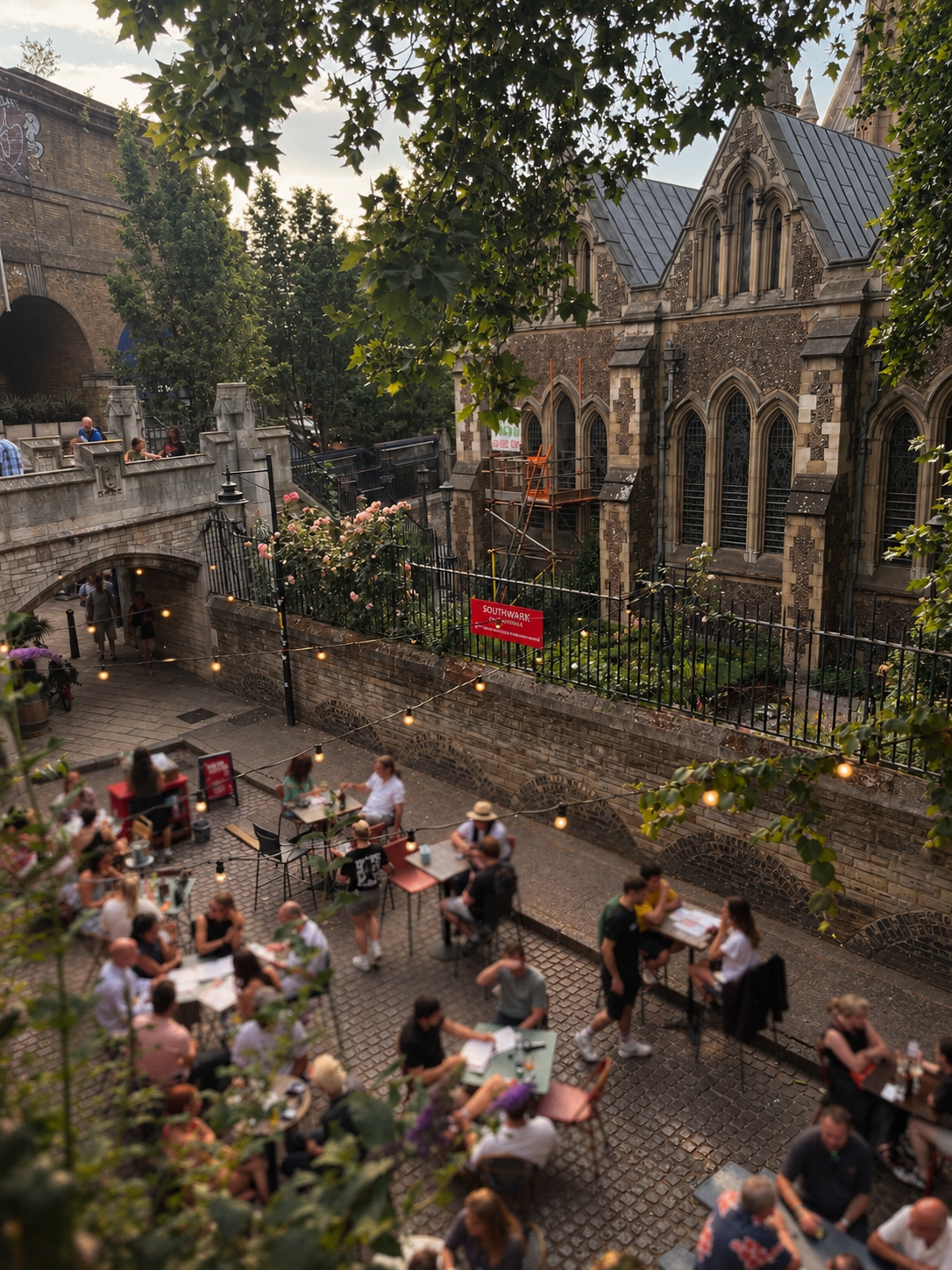
The city itself was beautiful. St. James’s Park was practically on our doorstep, and I found myself paying particular attention to the gardens and landscaping throughout London. There was a certain looseness to many of the plantings, with flowers, shrubs, and different textures growing together in arrangements that felt carefully considered without appearing overly controlled. I didn’t think too deeply about why I liked them at the time, but that observation would come back to me later in the trip.
Food, on the other hand, required considerably less contemplation.
London’s international food scene was something I’d been looking forward to, particularly the Indian cuisine. Between my interest in cooking and the number of dishes I’ve experimented with at home, I was eager to experience some of those flavors in a city known for its extraordinary range of restaurants.
But one of my favorite food discoveries happened almost by accident.
We’d taken a boat tour along the Thames, ending near Tower Bridge. Rather than booking a return trip, we decided to walk along the river and see where we ended up. Eventually, we stumbled into Borough Market, just as many of the vendors were beginning to close.
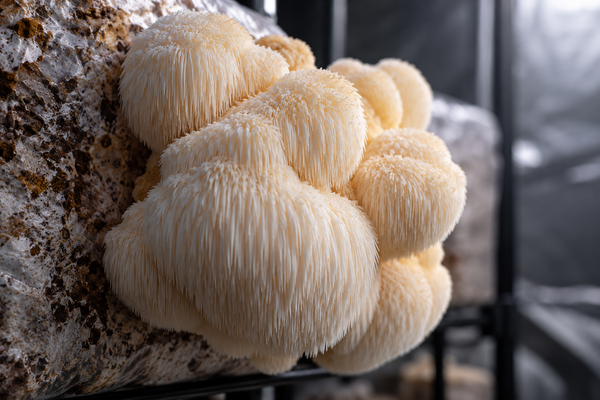
There was still enough activity to get a sense of the place, and one stall immediately caught my attention. They were preparing mushroom risotto beside an incredible display of fresh mushrooms, including king oysters, enoki, and several other varieties.
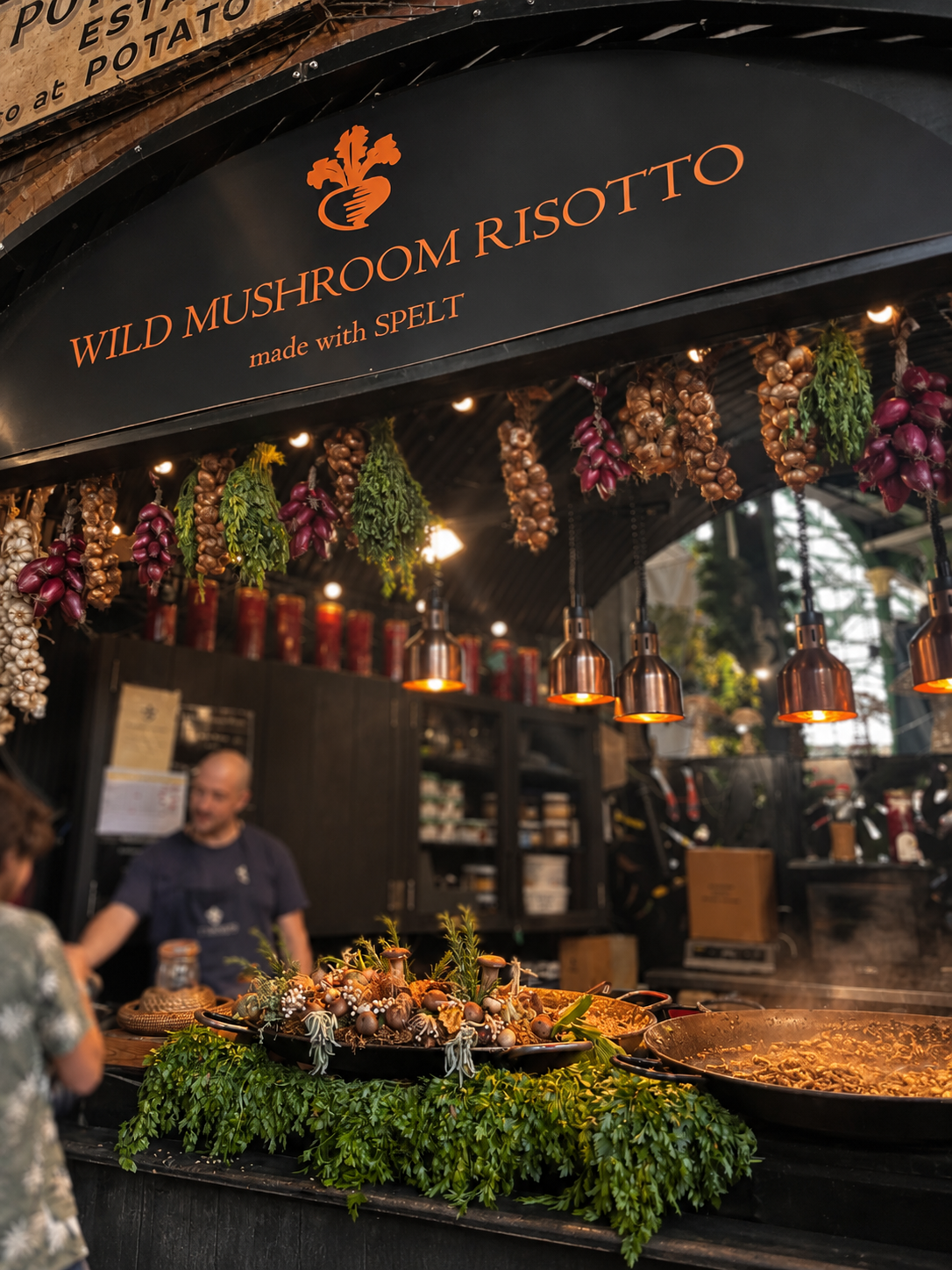
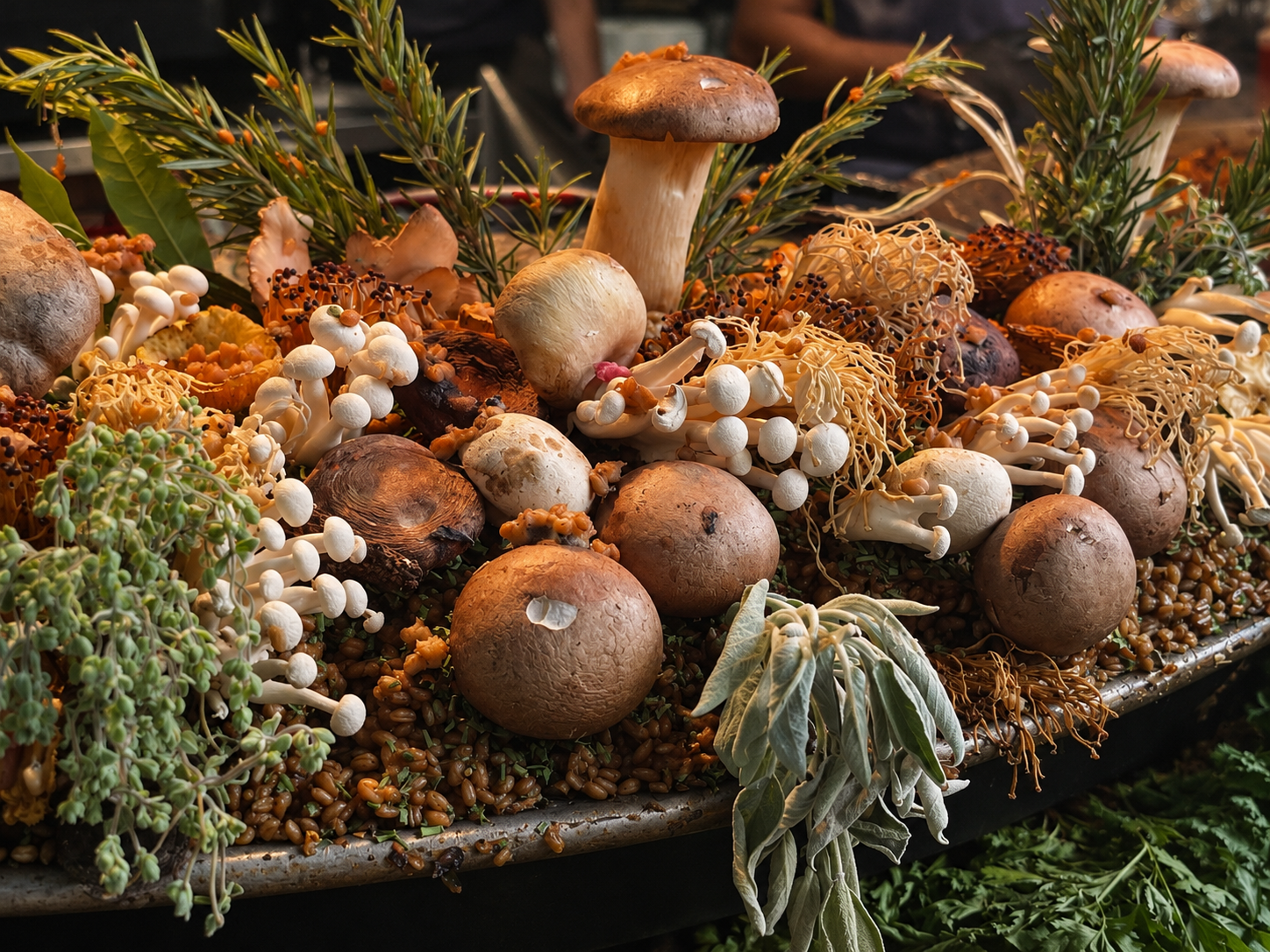
I’ve spent a considerable amount of time learning about mushroom cultivation and building a space for it in my basement, so I was probably more excited by that display than the average tourist had any right to be. The risotto was fantastic, and after sampling a few other things, we decided we’d have to return the following day when the market was fully open.
A Second Helping of Borough Market
The next day, Borough Market was in full swing, and there was almost too much to choose from. Every direction offered something worth trying, and committing to a single meal seemed like a terrible use of the opportunity. So I worked my way through smaller dishes, stopping wherever something caught my attention.
One of the standouts was a plate of shrimp pad Thai from a Thai food stall. Pad Thai isn’t exactly an adventurous choice for someone who already loves Thai food, but this was easily among the best versions I’ve ever eaten. Sometimes the familiar dishes are the ones that surprise you most.
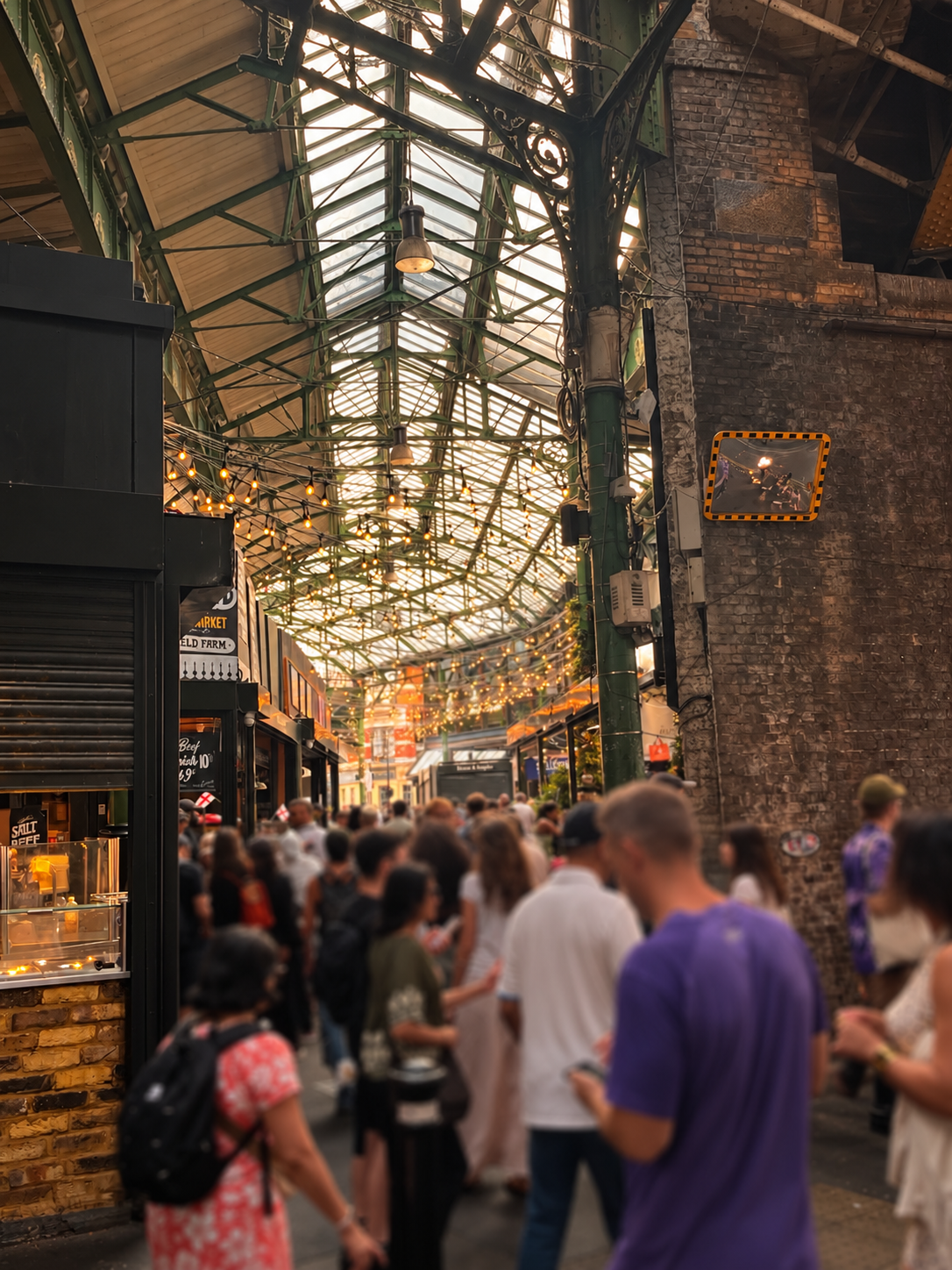
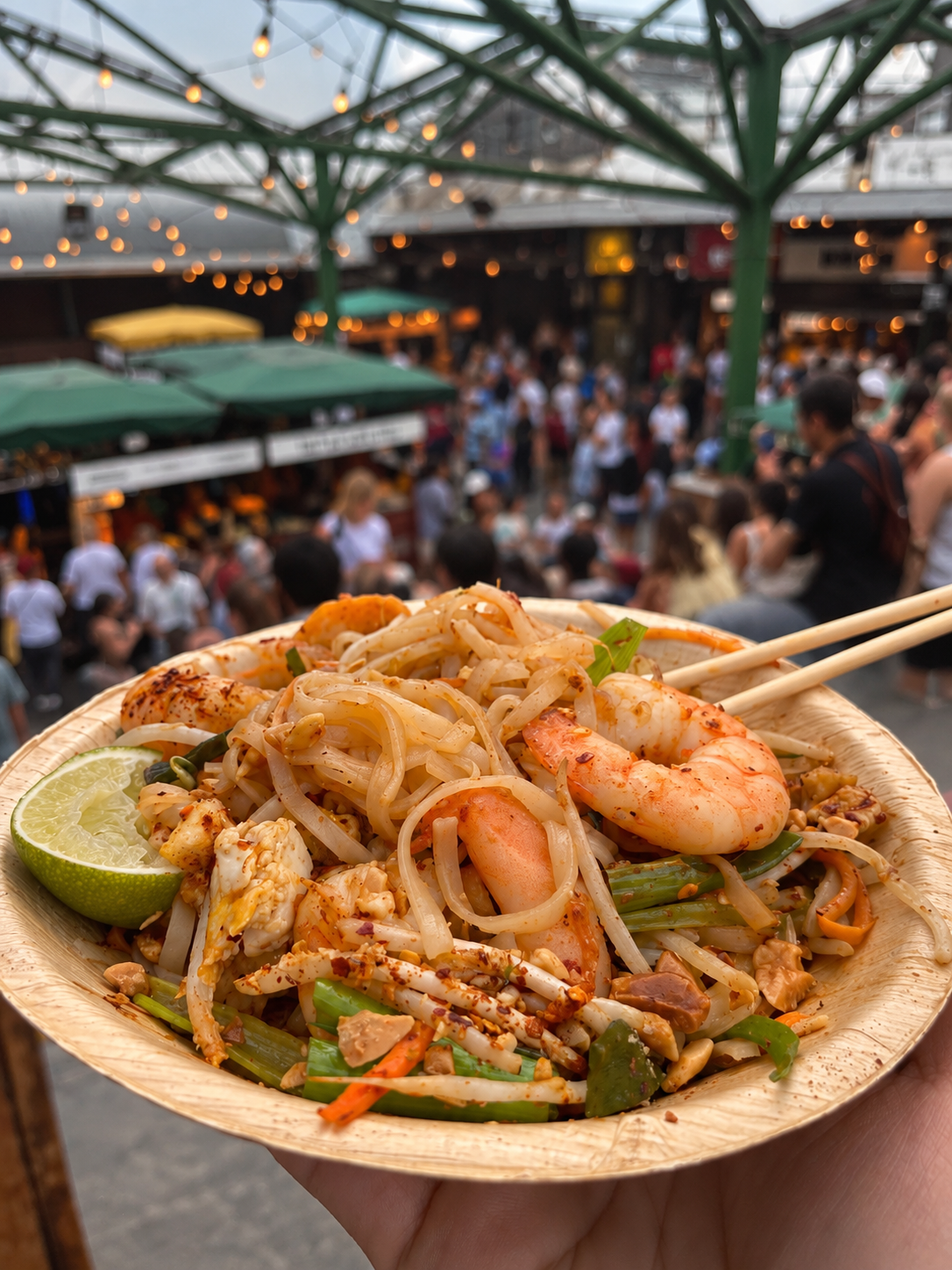
Then there were the tea shops and spice vendors. I’ve always enjoyed tea, and some of the blends and ingredients on display went well beyond what I was accustomed to finding back home. The spice stalls were equally tempting, particularly with ingredients I could use for curries and other Indian dishes. I brought home a selection of spices and teas, knowing they’d eventually find their way into my kitchen.
That’s one of the things I enjoy most about discovering food while traveling. It doesn’t have to remain something you experienced once on vacation. A few weeks later, a particular spice blend or a new way of preparing something can turn up in an ordinary dinner at home.
Then there were fish and chips, meat pies, and sausage rolls. England seems to have perfected the art of making all three of these items available at practically every level of sophistication. Fancy ones, ordinary ones, and ones that looked like they had no business being as good as they were. I tried plenty, and I don’t remember being disappointed by any of them.
We continued exploring London on foot, moving through neighborhoods with completely different personalities until the kids had finally had enough. Then we’d find the nearest Tube station and make our way back toward the apartment.
What I enjoyed most was how much variety the city offered within such a manageable distance. You didn’t have to travel particularly far to encounter a completely different collection of foods, cultures, and surroundings. Sometimes an entirely different world was waiting just a few train stops away.
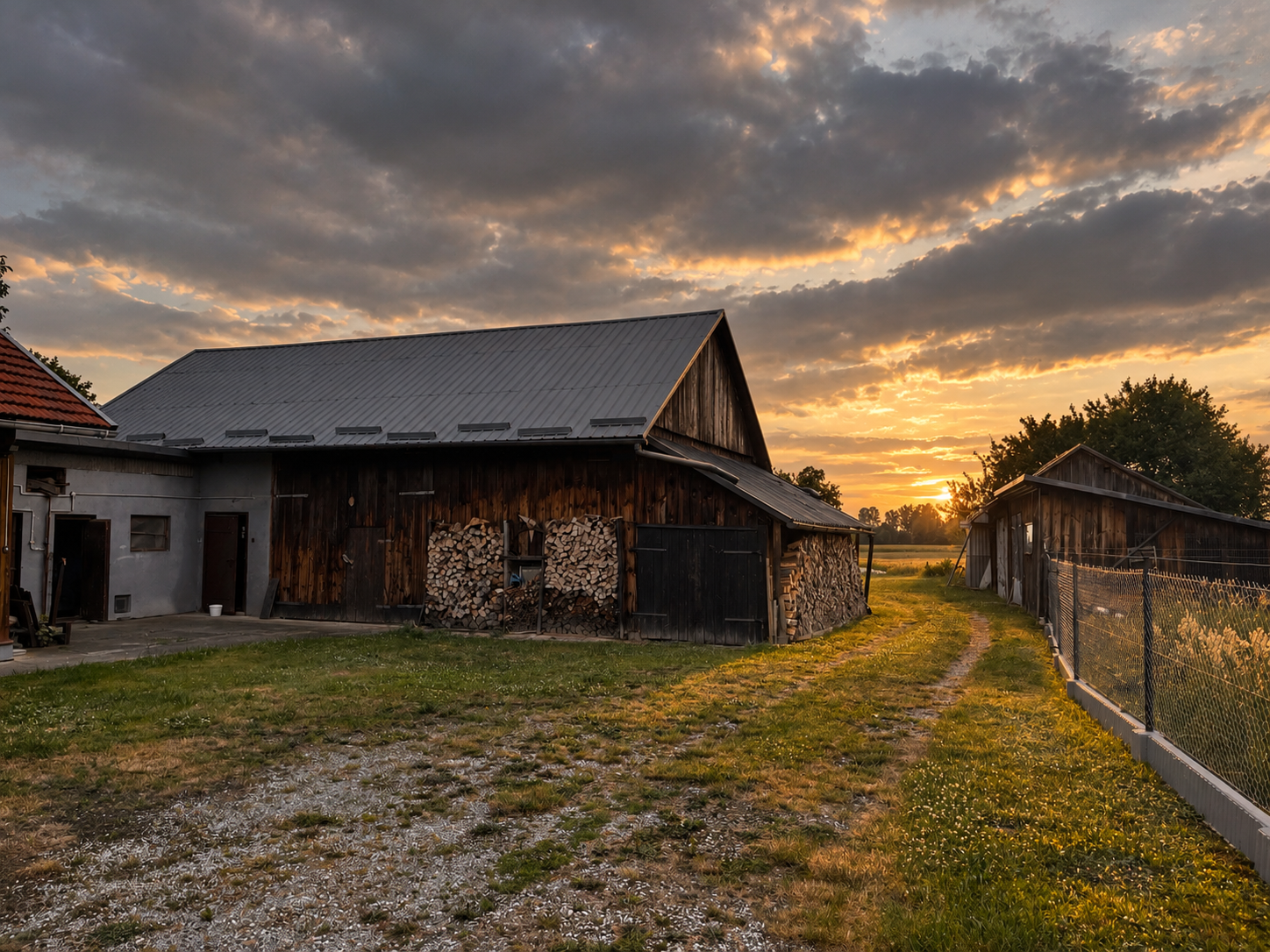
Poland: Familiar Ground, Different Landscape
From London, we flew to Poland.
This part of the trip was different because Poland isn’t somewhere I was discovering for the first time. It’s a place I’ve known for most of my life.
Growing up, my sister and I spent nearly every summer there, staying with our grandmother in the village where my mother was raised. Once my mother finished college and began working, sending us to Poland for the summer became a regular part of our childhood.
Those visits left a lasting impression on me. The Poland I remember was a different world from suburban Detroit, with small farms, open pastures, gardens, old houses, and a pace of life that felt distinctly removed from what I knew back home. I romanticized a lot of it, and to some extent, I still do.
But Poland has changed enormously.
I’d noticed the transformation during my previous visit nine years earlier, but this time it was impossible to miss. The long, narrow ribbon farms that once defined parts of the countryside have gradually given way to subdivisions. Cow pastures I remembered from childhood now contain homes and businesses. Empty spaces between older communist-era apartment blocks and historic buildings have filled with modern construction.
There are enormous urban shopping malls, some of which put ours to shame.
Even the village where we stayed, at my grandmother’s former home where my aunt now lives, has changed dramatically. My aunt has renovated the house beautifully, and the surrounding area has evolved to the point where some of my old childhood stomping grounds are almost unrecognizable.
I knew what used to be there. Now something else was.
There’s a strange tension in returning to a place that exists so vividly in your memory. I’m genuinely happy to see Poland prosper, and the improvements in infrastructure, businesses, and public spaces have clearly made life better for many of the people who live there. At the same time, I can’t help missing some of the landscapes and places I remember.
But plenty of those changes were for the better, particularly from the perspective of my children.
The village now has a beautiful park with playgrounds, a splash area, tennis and basketball courts, and exercise facilities. Nearby are places to eat, get gelato, go bowling, and take the kids for indoor activities. It was almost like someone had taken a collection of American suburban amenities, improved a few of them, and compressed everything into a tiny Polish village.
Traditions That Never Really Left
For all the modernization, some aspects of everyday Polish life remain remarkably familiar. One of the things I appreciate most is how deeply food traditions are still embedded in ordinary households.
Gardens aren’t simply decorative. They often produce something. Cucumbers are grown for pickling, while currants, sour cherries, vegetables, herbs, and fruit trees grow alongside flowers and ornamental shrubs. We arrived after strawberry season, but the cabinets were already stocked with homemade jams and preserves.
None of this was presented as some elaborate artisanal undertaking. It was simply what people did. That distinction matters to me because I’ve spent much of my adult life experimenting with similar things at home. Pickling, canning, breadmaking, sausage making, and cooking from scratch are all things I genuinely enjoy, but they’re also connected to a way of life I grew up observing.
In Poland, many of those practices never really disappeared.
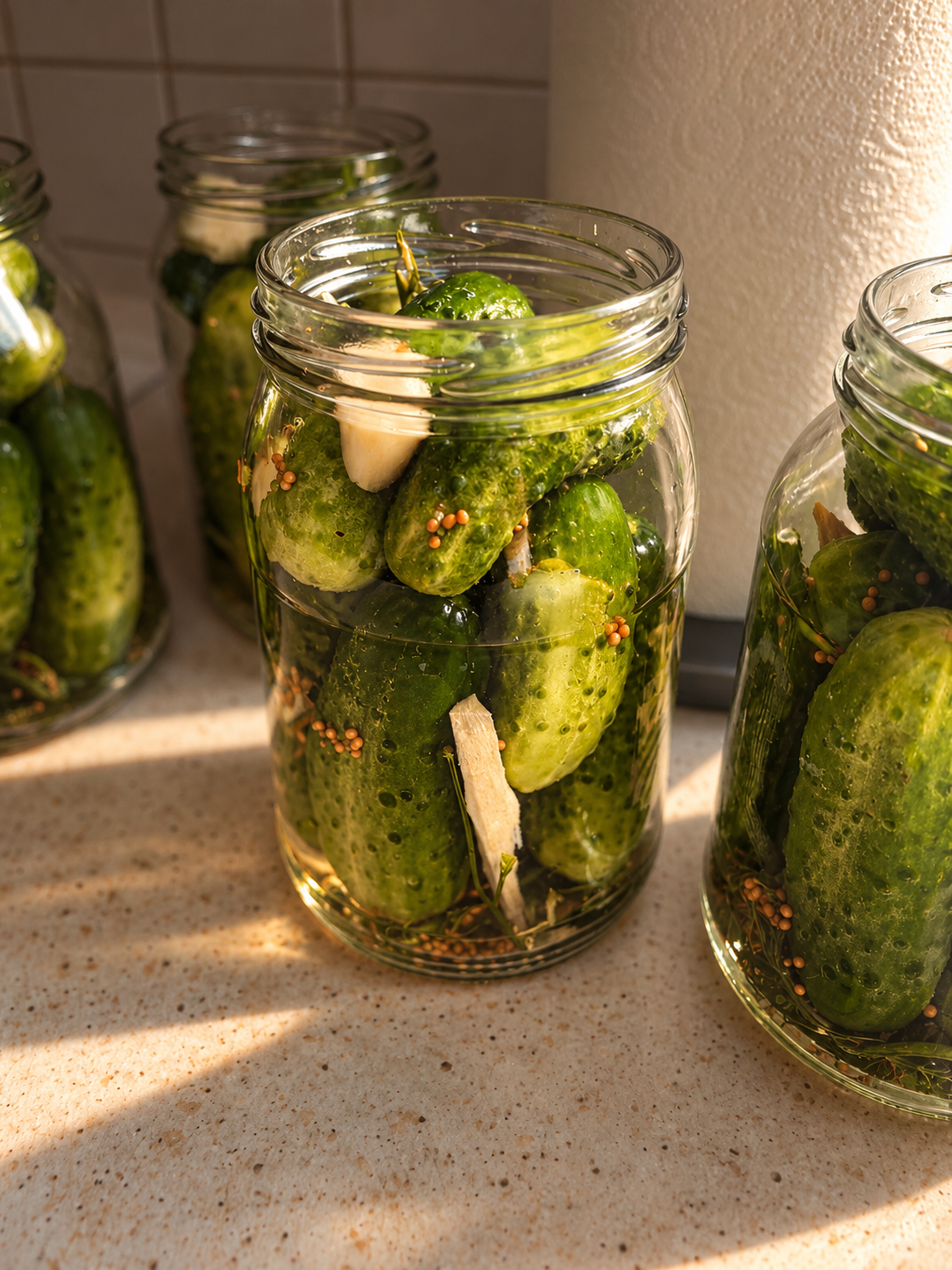
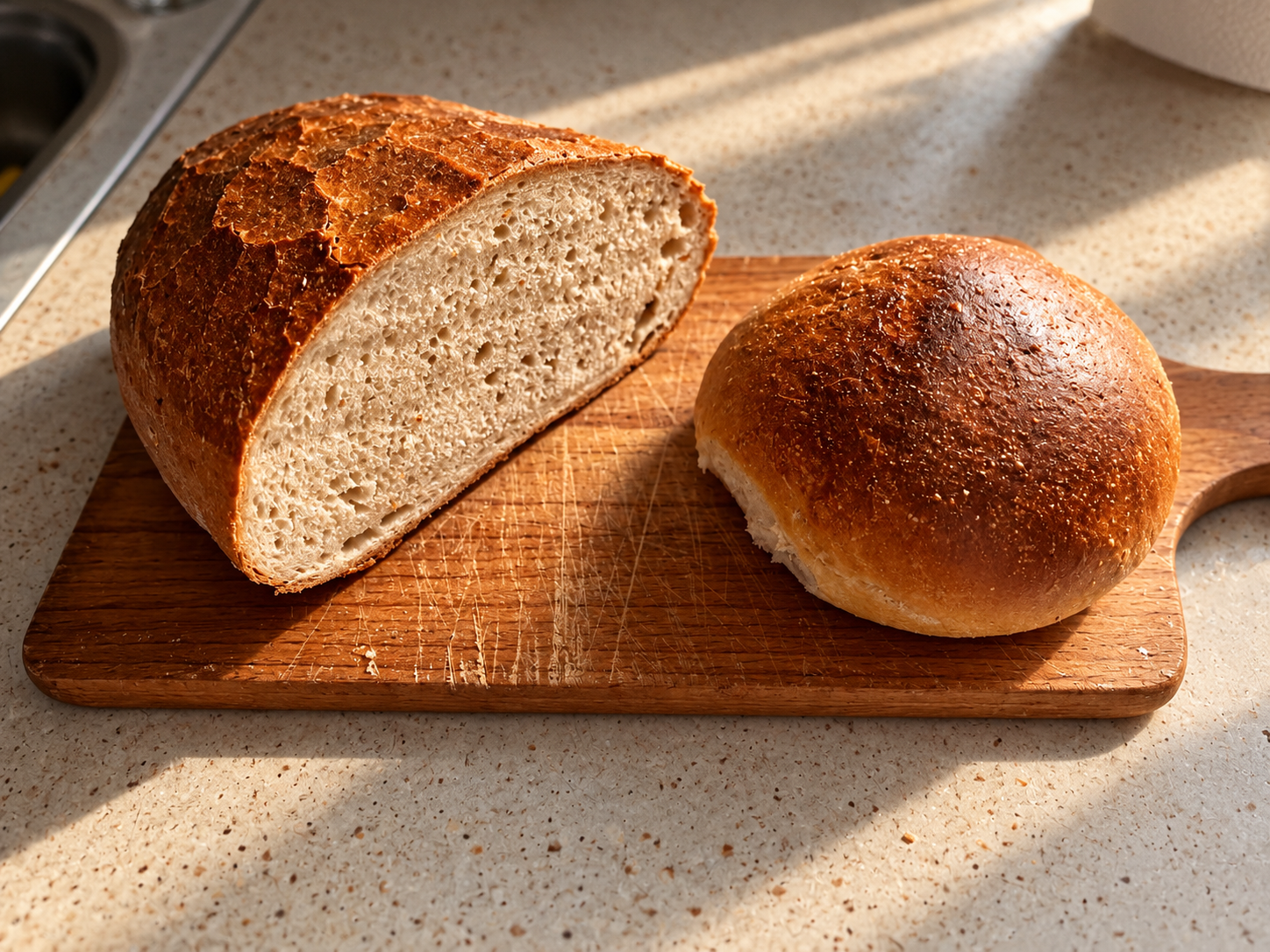
One of the clearest examples is a bakery near my family’s village, a place I’ve written about before because its bread has stayed with me for years. My mother ate bread from that bakery, as did my grandmother and great-grandmother. The same stone ovens have continued producing bread through generations of our family, using locally sourced wheat and methods that have remained largely unchanged.
The bread itself is extraordinary. It has a thick, crunchy crust with little cracks and webbing across the surface, and a distinctive sourdough tang that I haven’t found an equivalent for back home. People travel from surrounding communities to buy it, and it’s one of the few remaining bakeries of its kind in the area.
What fascinates me is that this bread isn’t treated like some rare luxury. It’s just bread. Really, really good bread.
The same appreciation extends to the meats and cheeses that accompany it. Polish breakfasts and evening meals often revolve around open-faced sandwiches, with an assortment of local cheeses, sausages, pâtés, smoked meats, and vegetables.
We ate wild boar pâté, different varieties of kielbasa, and thinly sliced smoked pork loin. Combined with that bread, garden vegetables, and a few homemade pickles, it made for an incredible spread without requiring anything particularly elaborate.
I kept thinking about how much of that approach I’ve tried to recreate in Michigan. Not necessarily the exact foods, but the practice of making things, preserving things, and maintaining traditions even when modern conveniences make them unnecessary.
It’s something I’ve carried home from Poland over the years, whether I recognized it at the time or not.
Kraków, Salt Mines, and a Few Excellent Meals
We made time to visit Kraków, a city that has always been special to me. I spent a semester studying abroad there, so returning felt familiar in a way that visiting a new destination never quite can.
Unfortunately, the weather was brutal. Temperatures climbed to around 41°C, roughly 106°F, which made extended sightseeing a little less appealing than I would have preferred. Still, it was wonderful to be back.
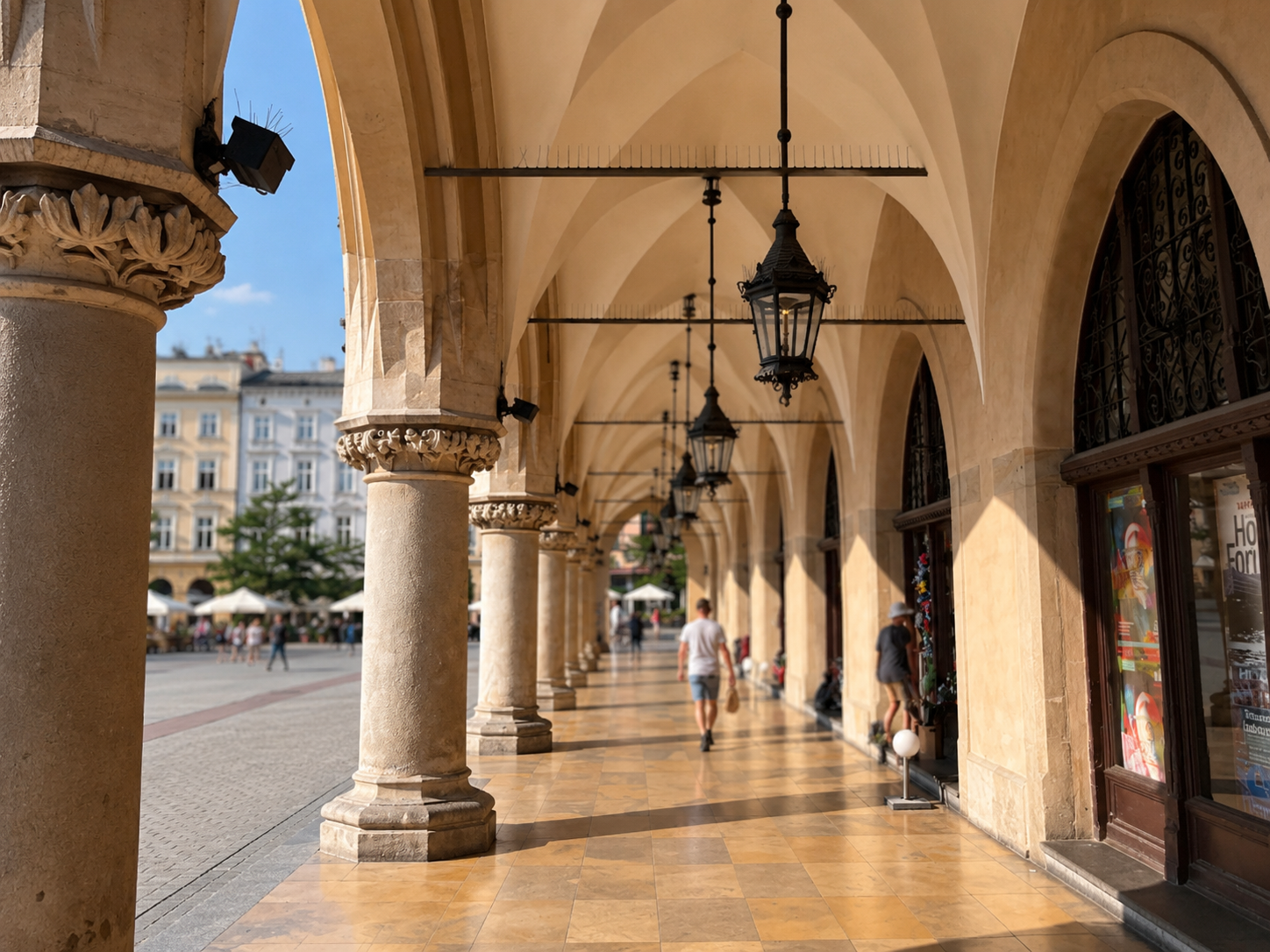
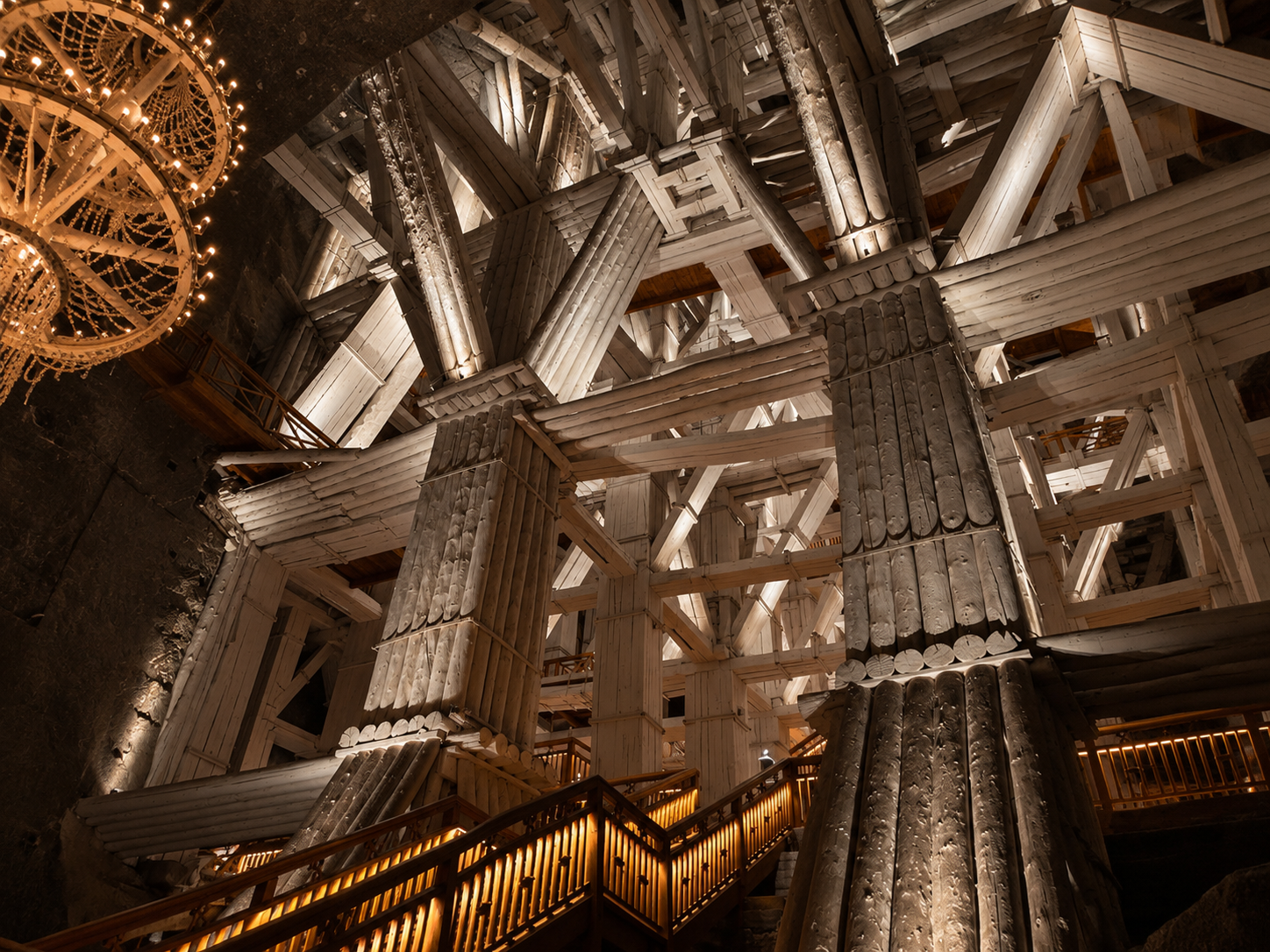
We visited the Wieliczka Salt Mine, which was one of the most impressive experiences of the trip. The scale of the underground workings is remarkable, but what interested me most was the craftsmanship. The chambers, passages, and elaborate spaces carved into the salt are reminders of the extraordinary human effort involved in creating something like that.
I found myself thinking about the people who worked there and what it must have taken to construct those spaces with the tools and methods available to them. It’s one thing to appreciate a beautiful or impressive structure. It’s another to consider the knowledge and labor that went into making it possible.
Back above ground, we returned to one of my favorite activities: eating.
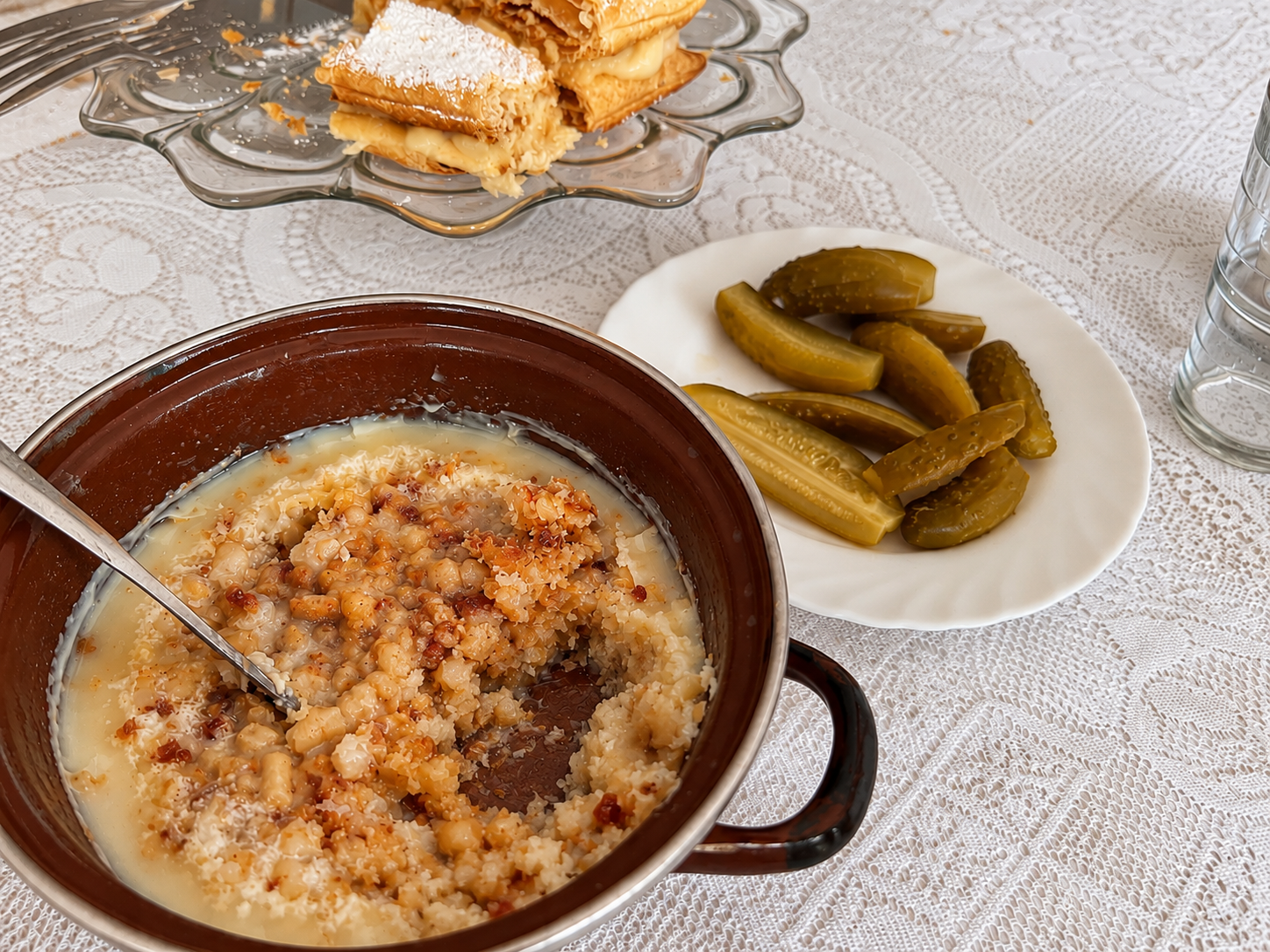
At Chłopskie Jadło, a restaurant built around traditional Polish country cooking, we enjoyed sausages, bread, pickles, and smalec, a spread made from rendered pork fat with little pieces of meat and cracklings mixed through it. We’d also eaten homemade smalec at my aunt’s house, and spread over good bread with a pickle on the side, it’s fantastic.
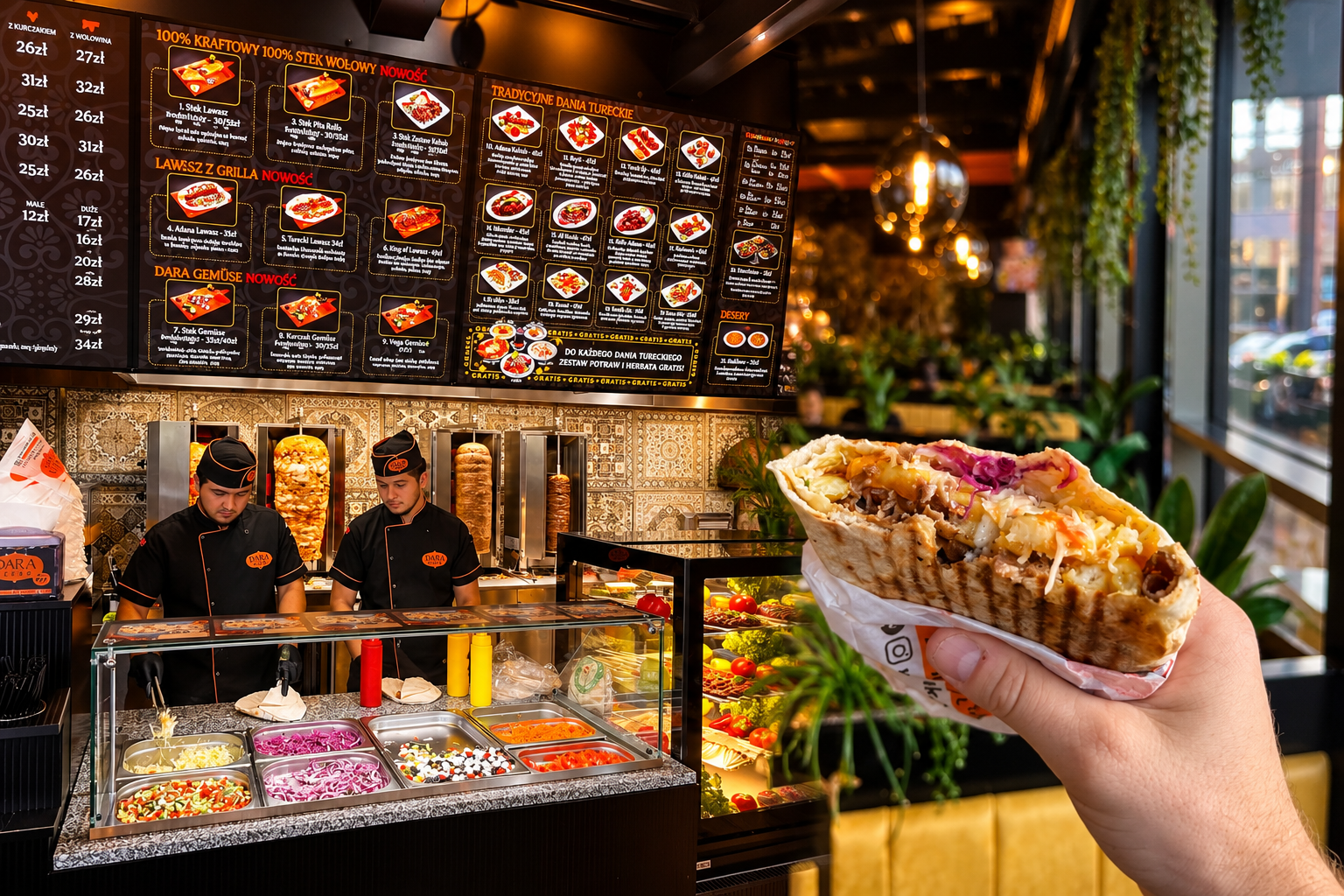
And then, of course, there were the döner kebabs.
I’ve mentioned my unreasonable affection for döner kebabs in previous articles, and Poland offered plenty of opportunities to indulge it. Years ago, finding a kebab generally meant visiting the center of a larger city, somewhere like Kraków or Poznań. Smaller towns didn’t have nearly as many options.
Not anymore.
Kebab stands are practically everywhere now, including my family’s village. Naturally, I considered it my responsibility to sample as many as reasonably possible.
What I enjoy is how differently each place approaches essentially the same food. The meat, bread, vegetables, sauces, and proportions can vary considerably, and those little differences change the entire experience. Some were better than others, but I enjoyed the research regardless.
Ice cream was another unexpected highlight. I’ve had gelato in Italy and visited some excellent ice cream shops in major American cities, but the flavors we encountered in Poland were something special. There was an ice cream inspired by Raffaello, the coconut-and-almond confection. My wife found a flavor reminiscent of banana cream pie, and passion fruit appeared in combinations with chocolate and other ingredients I wouldn’t necessarily have thought to pair together. The flavors were bold, inventive, and genuinely exciting.
Then there was Camelot. Tucked into Kraków’s historic center, Camelot is an old, bohemian-style café filled with antiques, character, and the sort of atmosphere that immediately makes me want to settle in for a while. I loved the place the moment we walked in.
I tried an espresso tonic for the first time, which was a discovery in itself, but the standout was a milkshake made with wild blueberries. Not the large, pale-centered blueberries commonly sold in American grocery stores, but the tiny, intensely flavored European wild blueberries with dark purple flesh that can stain your mouth for hours. Blended into a milkshake, they were incredible.
It was one of those simple things I knew I’d be recreating when I got home. And I did.
Gardens, Familiar Influences, and New Perspectives
Another recurring fascination throughout the trip was gardening. I noticed it in London, in the gardens surrounding Polish homes, on the grounds of Łańcut Castle, and eventually throughout the Cotswolds.
What caught my attention wasn’t any particular flower or plant variety. It was the overall composition.
Perennials, annuals, wildflowers, shrubs, and other plants growing together in arrangements that appeared almost spontaneous. There was clearly intention behind them, but they retained a natural quality rather than the rigid symmetry of a formal garden.
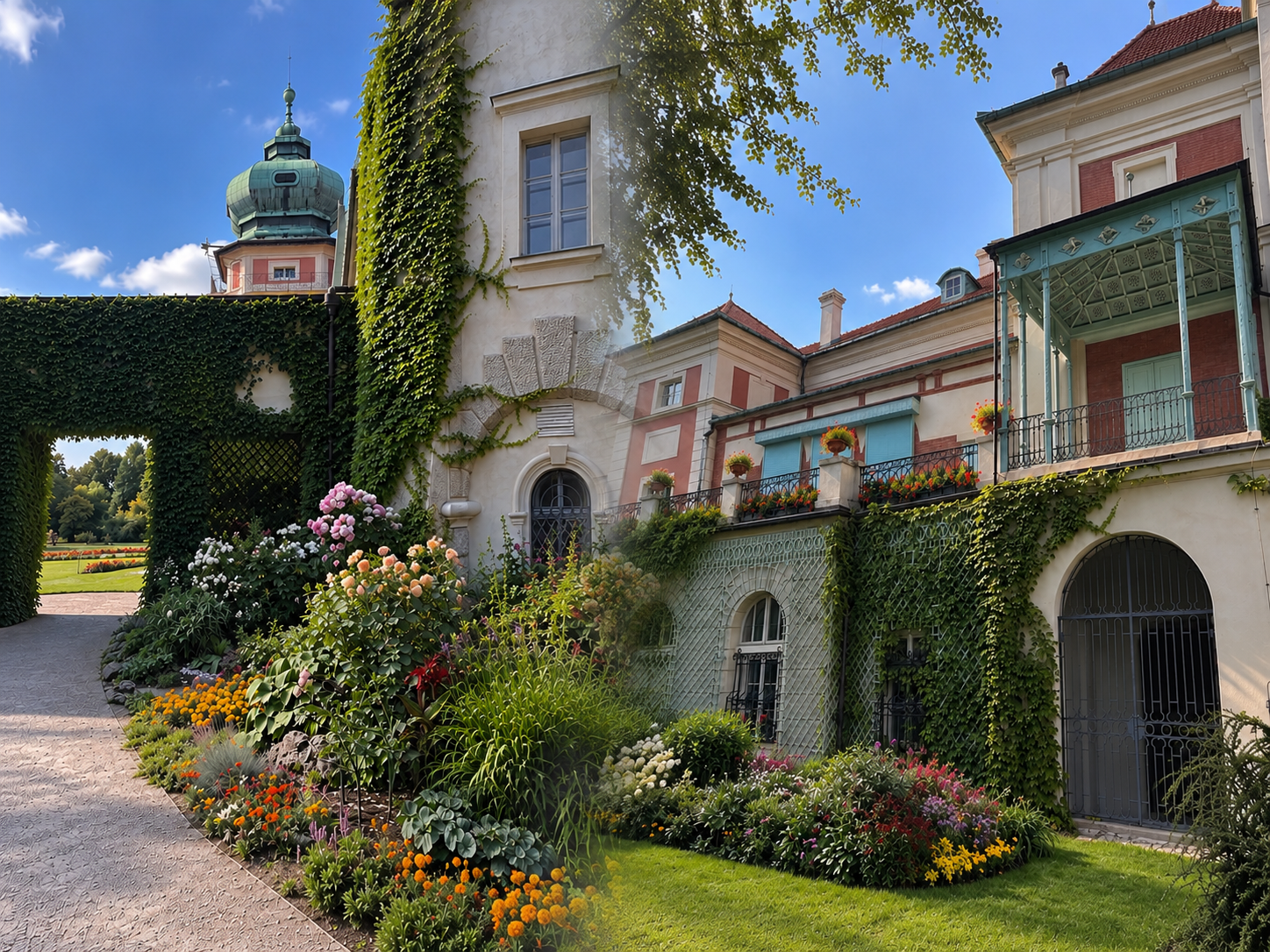
At Łańcut Castle, the grounds were particularly beautiful. The combination of historic architecture, mature landscaping, and naturalistic planting made the entire setting feel cohesive. Similar arrangements appeared around ordinary homes, where ornamental gardens often blended with fruit trees, herbs, and other edible plants.
As we continued traveling, I began recognizing something familiar in those landscapes.
My father has always taken gardening seriously. Growing up, our landscaping was meticulously maintained, and I may have inherited some of those standards. I’ve written before about my complicated relationship with gardening (see Why I Garden Despite Hating It). I love creating a beautiful landscape. Maintaining it is another story.
But this trip helped me recognize that much of the gardening I’ve been drawn toward over the years has an English influence. The mixture of plants, layered textures, and slightly untamed appearance within a thoughtfully maintained space was something I’d seen in my father’s landscaping, in Polish gardens, and in my own attempts to create something similar at home.
I’d never really stopped to think about where that preference came from. Seeing those landscapes in England, and recognizing similar influences in Poland, helped me connect a few dots.
Sometimes you don’t fully recognize where a preference originated until you encounter it somewhere else.
A Little More Time in the Village
We’d originally planned to see considerably more of Poland. Warsaw was on the list, along with the Bieszczady Mountains south of where we were staying.
As the trip progressed, we began reconsidering. The kids were having an incredible time with their cousins. They spent their days playing around the village, visiting the park, and enjoying a kind of freedom that reminded me of my own childhood summers there.
They could run around until evening, surrounded by family and familiar neighbors, in an environment where that kind of childhood still seemed very much alive. It reminded me of growing up in the 1990s, when spending an entire afternoon outside with other kids wasn’t something that required much organization. I wanted my daughters to experience that.
Frankly, after all the traveling, visiting relatives, and moving from place to place, the wife and I were happy to spend more time in the village ourselves.
So we skipped Warsaw and the mountains. Not because they weren’t worth visiting, but because we were enjoying our time with family. Maybe we’ll return in three years instead of waiting another nine.
I like the idea of leaving behind some unfinished business. There will be other opportunities to explore. Time with family, particularly while the kids are young, isn’t quite as easy to recreate.
There’s another part of this that matters to me. The village environment I experienced as a child has influenced the way I’ve tried to build my own life back in Michigan. When my wife and I were looking for a place to settle, proximity to family mattered. Today, my parents, my in-laws, our siblings, and their children all live in the same township.
It isn’t a Polish village, obviously, but the idea of having family nearby, sharing everyday life, and allowing relationships to exist beyond holidays and special occasions is something I’ve carried with me for a long time.
Seeing my children enjoy that same closeness in Poland was particularly satisfying.
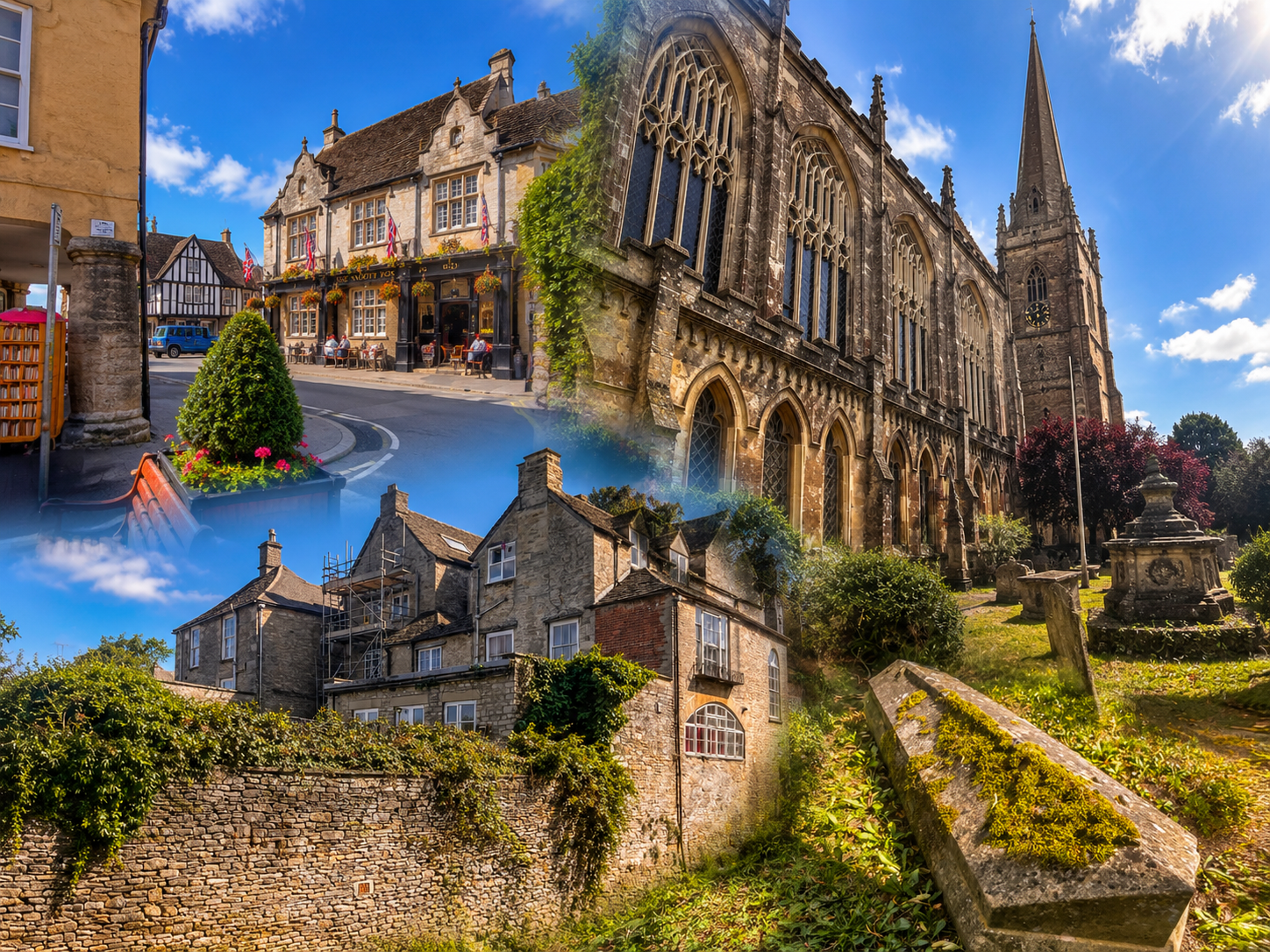
Tetbury: A Different Side of England
After Poland, we flew back to London and continued toward the Cotswolds, where we’d booked a stay in Tetbury.
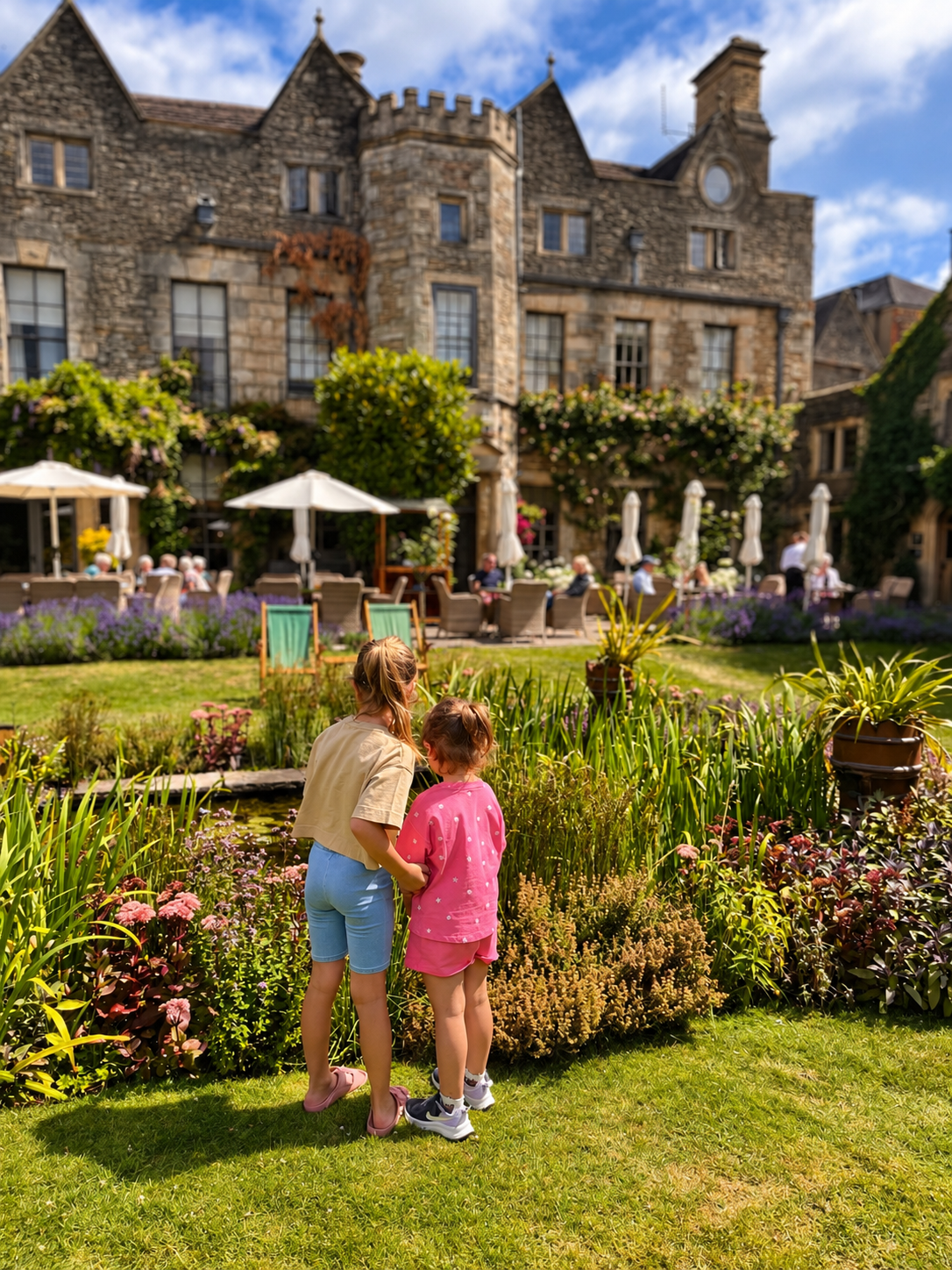
We checked into a beautiful 16th-century manor house that had been converted into a boutique hotel. The building was full of character, with old stone, historic details, and the sort of atmosphere that makes you wonder about all the people who have passed through it over the centuries.
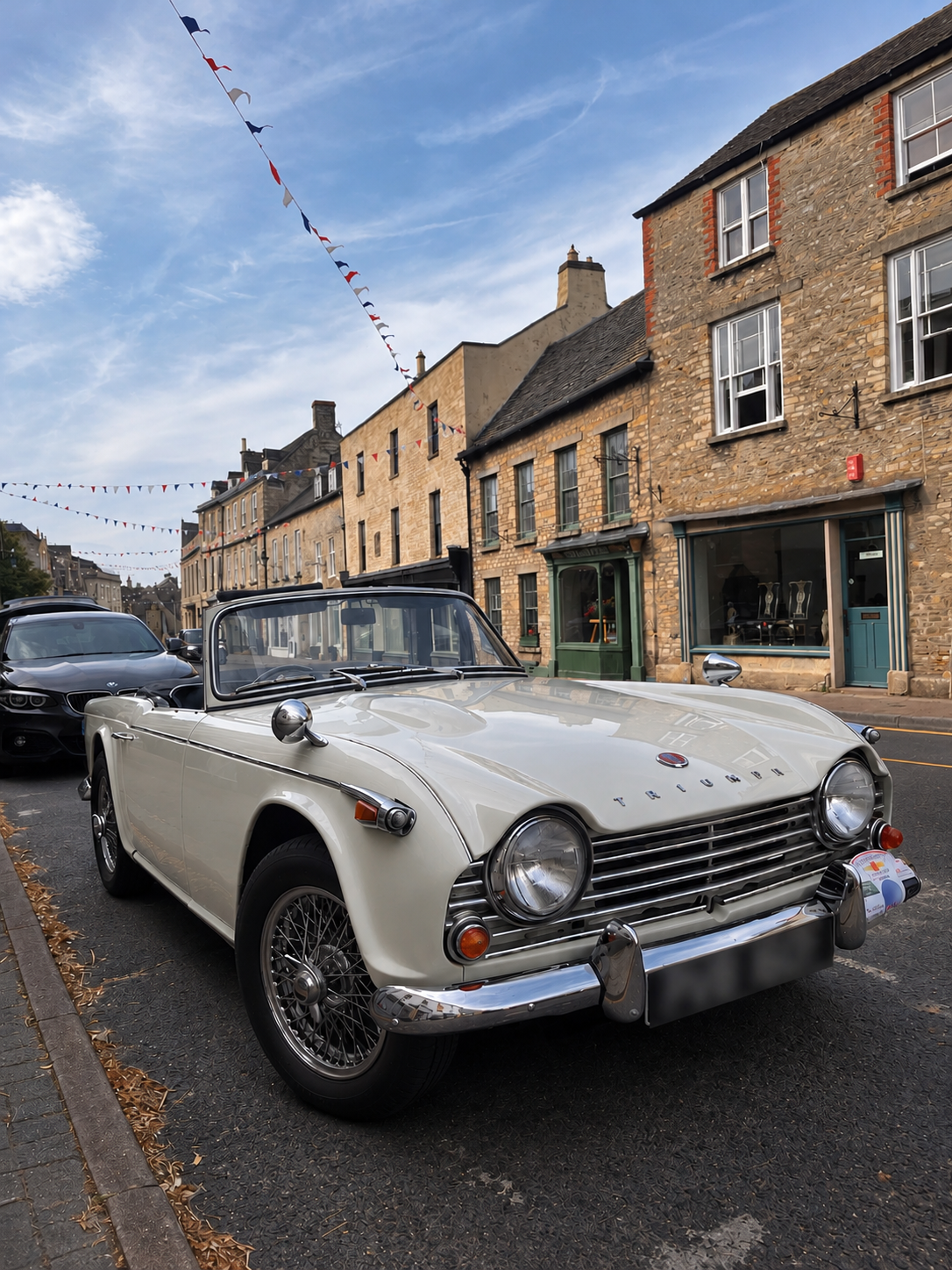
We headed out to explore town and almost immediately, I loved it.
Tetbury was beautiful in a way that felt lived-in rather than staged. Old buildings, small shops, cafés, bakeries, and butcher shops were woven into the streets. Outside one butcher shop, they were cooking English-style burgers, while inside were sausages and other prepared meats ready to take home.
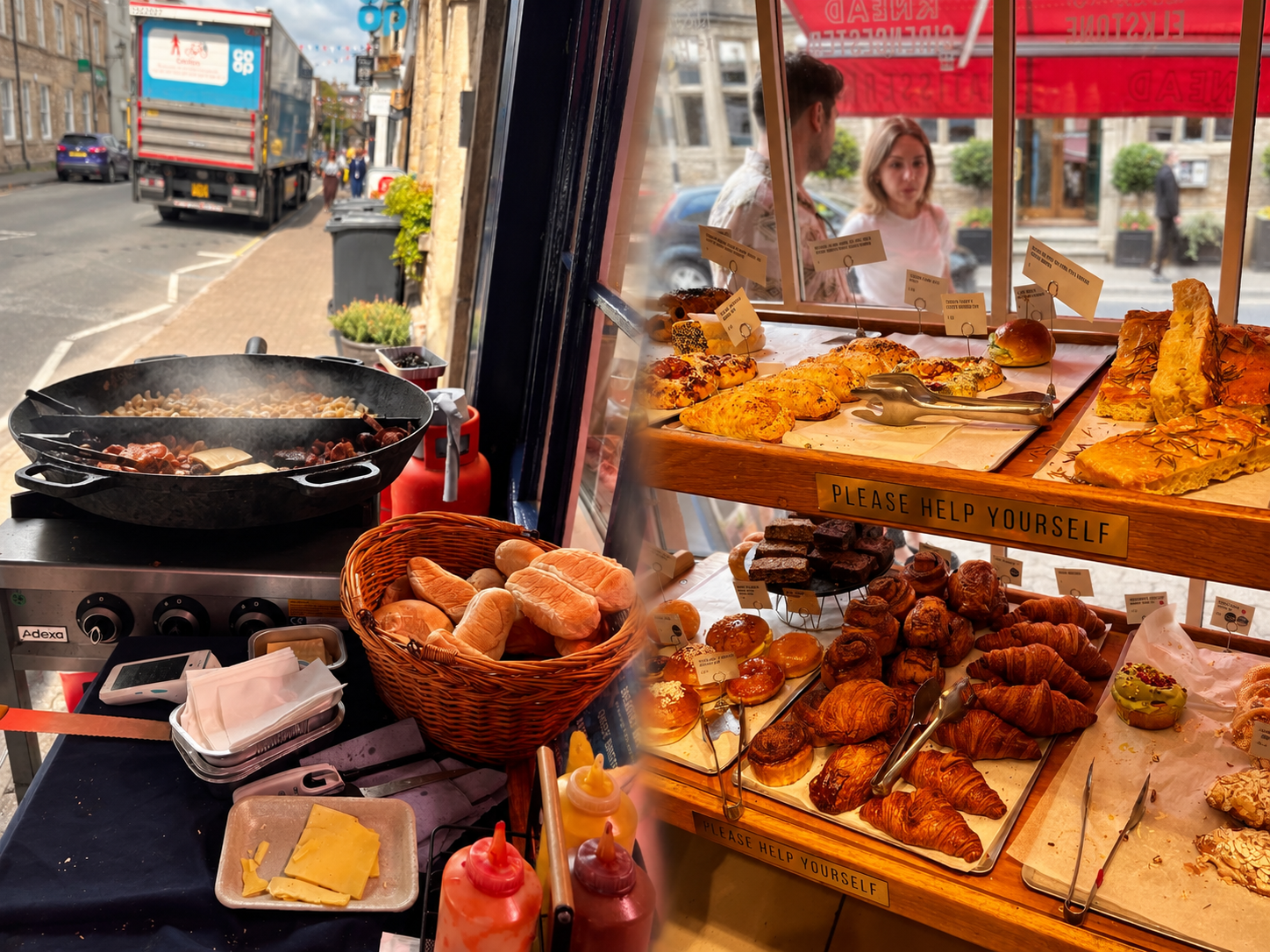
The bakeries offered excellent pastries and baked goods, and we found plenty of good coffee along the way. The food was consistently impressive, and in some ways, I enjoyed eating in Tetbury even more than in London. Not because it offered the same international variety, but because traditional English food felt more accessible and less buried beneath the enormous range of options in the capital.
Then there were the antique shops. Tetbury has an extraordinary collection of them, with some featuring objects that appeared to date back centuries, displayed alongside contemporary art and more modern decorative pieces. That contrast fascinated me. Old furniture, unusual objects, paintings, architectural pieces, and things whose original purpose wasn’t always immediately obvious.
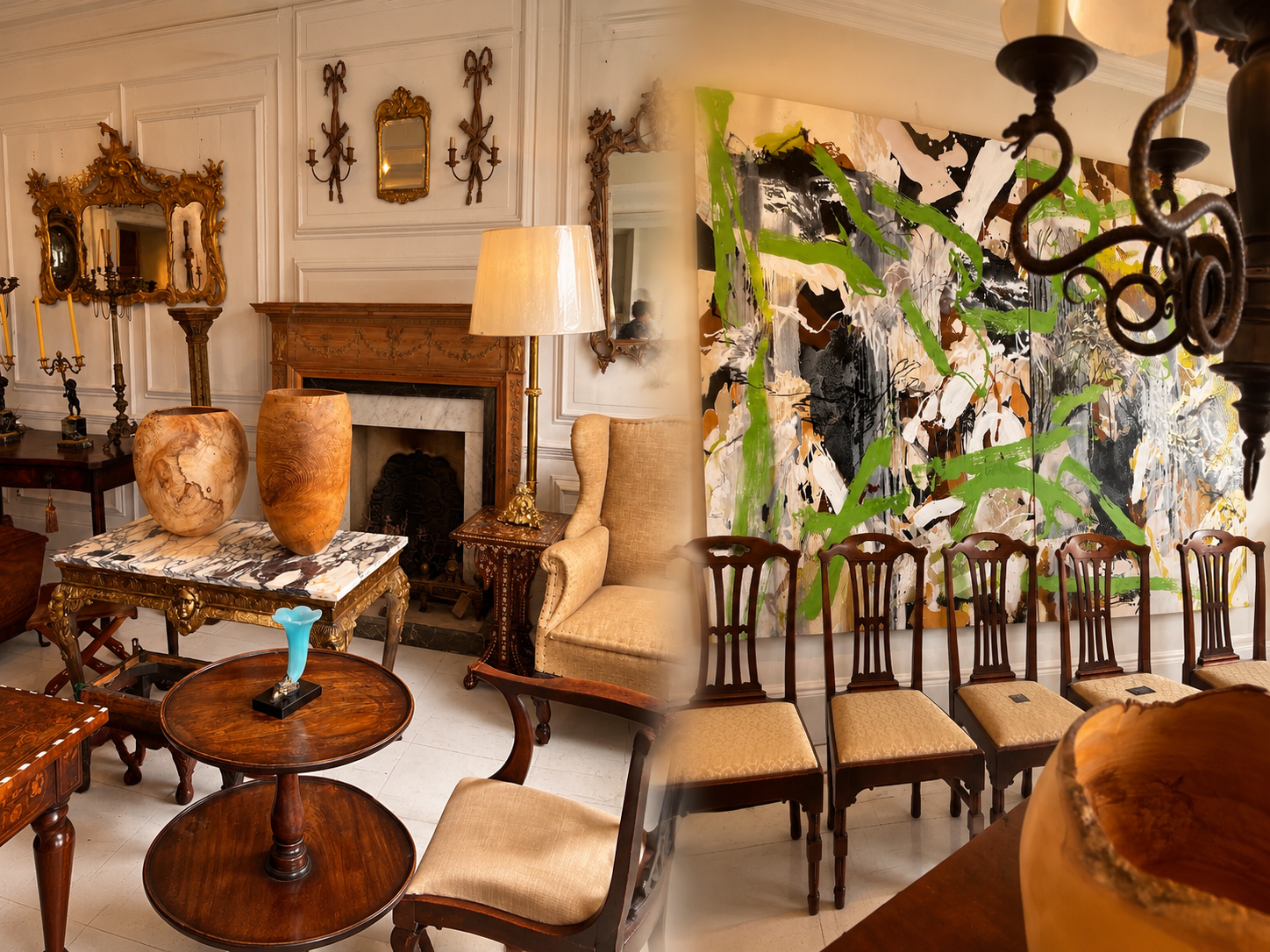
At one point, we wandered into an old church surrounded by gravestones dating back centuries. Inside, they happened to be holding a rummage sale, and I ended up purchasing a few small antique odds and ends to bring home.
Those are the kinds of souvenirs I enjoy most. Not necessarily something that announces where it came from, but an object that reminds me of a particular place and experience.
The gardens were another highlight. Throughout Tetbury, flowers and greenery spilled around old stone buildings and garden walls. The planting styles echoed much of what I’d admired earlier in the trip, but here the connection to English gardening felt especially obvious.
It wasn’t that I’d suddenly discovered an entirely new aesthetic. I’d found myself standing in the middle of one I’d been drawn to for years.
Staying in Tetbury
Our original plan was to use Tetbury as a base for exploring the wider Cotswolds. We’d considered visiting several villages, and Stonehenge had even entered the conversation. But by this point, we were nearing the end of a three-week trip, and we were tired.
Even after scaling back our plans in Poland, we’d spent an enormous amount of time traveling, visiting people, eating, walking, and generally trying to absorb everything around us. Tetbury was comfortable, the town was beautiful, and the food was good. The kids had a playground they enjoyed, and we realized we didn’t particularly feel like leaving.
So we stayed, and we drank tea instead.
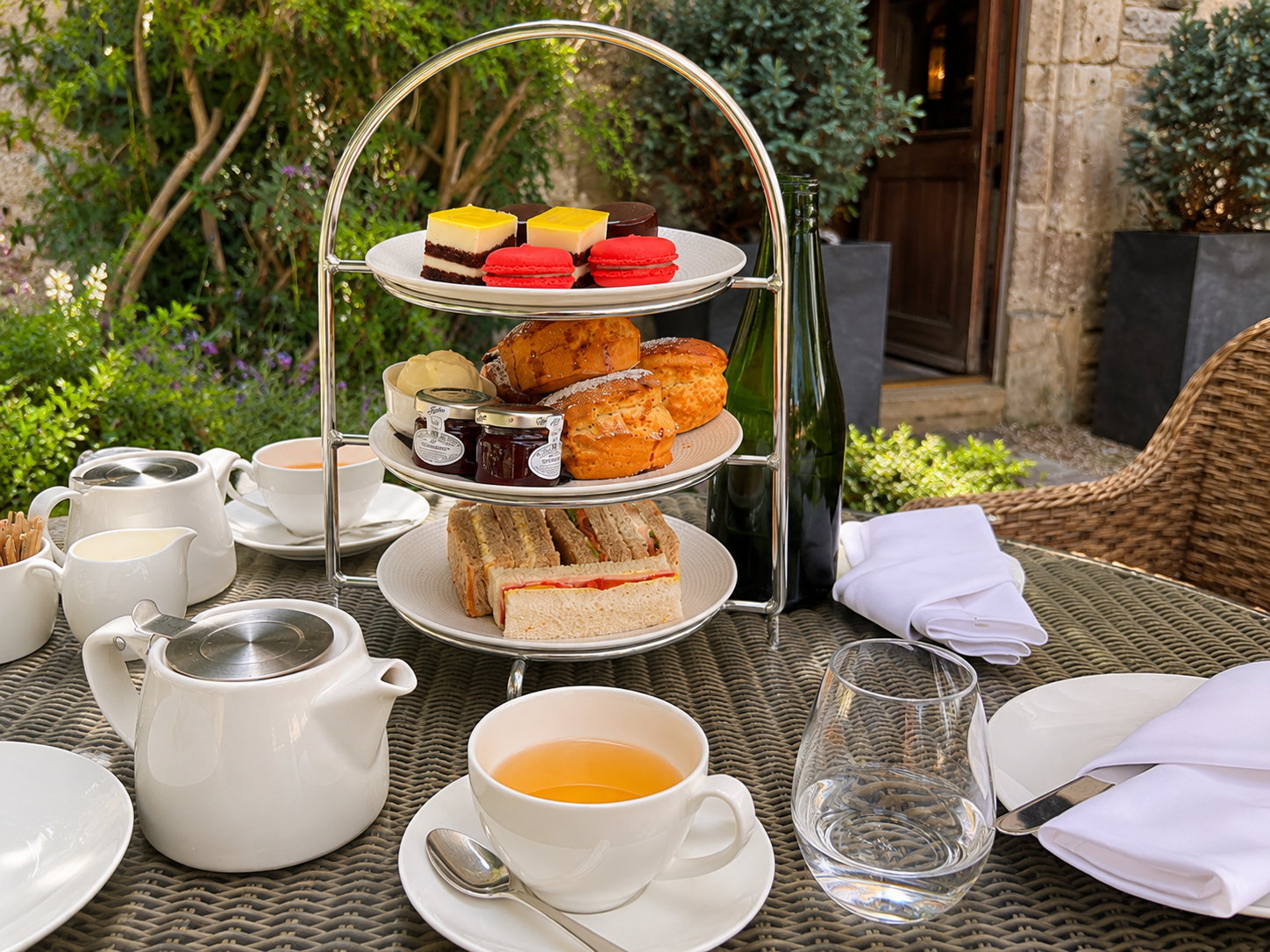
It wasn’t the grand tour of the Cotswolds we’d originally imagined, but I wouldn’t change it. The town had enough character to keep us interested, and after three weeks of travel, spending a few quiet days there felt like the right way to finish.
Eventually, we made our way back to London, flew to Toronto, and drove home. Three weeks, two countries, and a considerable number of meals later, we were back in Michigan.
What We Bring Home
Looking back, what strikes me isn’t simply the variety of places we visited. It’s how differently I might have experienced them at another point in my life.
Twenty years ago, I might have walked through Borough Market without paying much attention to the mushrooms. I probably wouldn’t have spent nearly as much time studying the gardens around Łańcut Castle or appreciating the arrangement of plants outside a cottage in Tetbury.
My interests have changed and expanded over the years, and with them, so has the way I experience the world.
The mushroom cultivation experiments in my basement made a risotto stall more interesting. Years of landscaping projects made English gardens feel familiar. My enthusiasm for breadmaking gave me an even greater appreciation for a bakery I’d known since childhood. And my interest in cooking meant that a spice shop in London or a particularly good kebab stand in Poland could become a memorable part of the trip.
Those connections weren’t things I’d planned. They happened because I brought those interests with me. The trip also reminded me that carrying something forward doesn’t necessarily mean keeping it unchanged.
Poland is modernizing rapidly. The village of my childhood looks different, and many of the landscapes I remember have disappeared. Yet families still grow vegetables, make preserves, buy bread from old bakeries, and gather around meals that have changed very little.
Modern life and tradition aren’t necessarily at odds. I’ve spent much of my adult life finding ways to incorporate pieces of that older world into my own, whether through food, gardening, family, or simply the way we use our home. I don’t live in the same environment I experienced during those childhood summers, but plenty of its influences remain part of my everyday life.
Someone interested in architecture might have returned from this same trip with an entirely different collection of observations. A musician, a painter, a historian, or a public transit nerd would have noticed things I probably walked straight past.
It means the world doesn’t necessarily become less interesting as we get older and more familiar with it. In some ways, it becomes more interesting because we’ve accumulated more ways to engage with it.
Every so often, something we encounter along the way gives us another interest to bring along on the next trip. Sometimes it’s a new food to recreate, a gardening idea, or a small antique from a church rummage sale. Other times, it’s simply recognizing that something you’ve loved for years has roots you never fully understood.
We carry those things with us, and if we’re paying attention, we usually come home carrying a little more.
 Kaizoku Path
READ PREVIOUS ARTICLE