I Went to Newark and Came Home With a Sauce
A closed restaurant led us into Newark’s Ironbound, where an unexpected Peruvian discovery found its way into my everyday cooking.
An ordinary business trip, a closed restaurant, and an unexpected discovery in Newark’s Ironbound neighborhood. What began as a search for dinner became a new addition to my own kitchen, and a reminder that sometimes the most interesting things we bring home from our travels aren’t souvenirs at all.
Field Note VII:
Dinner Was Supposed to Be the Easy Part
Work takes me to all sorts of places, and while the travel itself can become routine, I’ve always appreciated the opportunity to explore somewhere unfamiliar. Most business trips follow a fairly predictable pattern. There’s the work itself, a hotel, dinner somewhere nearby, and then another day of much the same. Depending on the schedule and how exhausted I am, sometimes dinner is simply a matter of finding something convenient and calling it a night.
On this particular trip to Newark, New Jersey, I was traveling with a colleague from South Africa. We had decided to venture into the Ironbound neighborhood for dinner, originally setting our sights on a tapas restaurant known for its atmosphere. It was more of a destination than a neighborhood hole-in-the-wall, and seemed like a promising way to spend the evening.
Unfortunately, when we arrived, it was closed.
We could have pulled out our phones, searched for the next highest-rated restaurant, and headed straight there. Instead, we kept walking, paying attention to the streets and whatever happened to catch our eye. Without much of a plan, we found ourselves moving farther into the neighborhood, away from the more polished stretches and into an area that felt decidedly residential.
A Neighborhood With Some Character
The part of the Ironbound we wandered into wasn’t particularly polished or curated for visitors. Restaurants and small businesses were tucked between houses, and the streets had the unmistakable character of a neighborhood where people actually lived. It was the sort of place that might appear a little sketchy to someone unfamiliar with it, though I wasn’t particularly bothered. Having spent plenty of time around Southwest Detroit, I was comfortable with the rougher edges of town, even if these particular streets were new to me.
What I appreciated was how unpretentious everything felt. There wasn’t an obvious effort to make the area fashionable or attractive to outsiders. It was simply a neighborhood going about its business, with little restaurants and storefronts occupying whatever space was available.


At one point, we passed a local pharmacy whose sign simply read DRUGS.
My South African colleague found this hilarious, and I had to agree. No clever branding, no elaborate name, no attempt to dress up what the place actually did. Just DRUGS, written right there on the building. There was something charming about the complete lack of pretense. It was exactly the sort of small, peculiar detail that tends to stick with me when I travel.
Eventually, while scanning the storefronts for somewhere to eat, I noticed a sign for a Peruvian restaurant. That was enough to get my attention.
A Familiar Cuisine in an Unfamiliar Place
I’ve had a soft spot for Peruvian food for some time, particularly ceviche and the citrusy, spicy marinade known as leche de tigre. My appreciation for it began at a fantastic South American restaurant in Detroit, where I’d been introduced to some of the flavors that make Peruvian seafood dishes so distinctive.
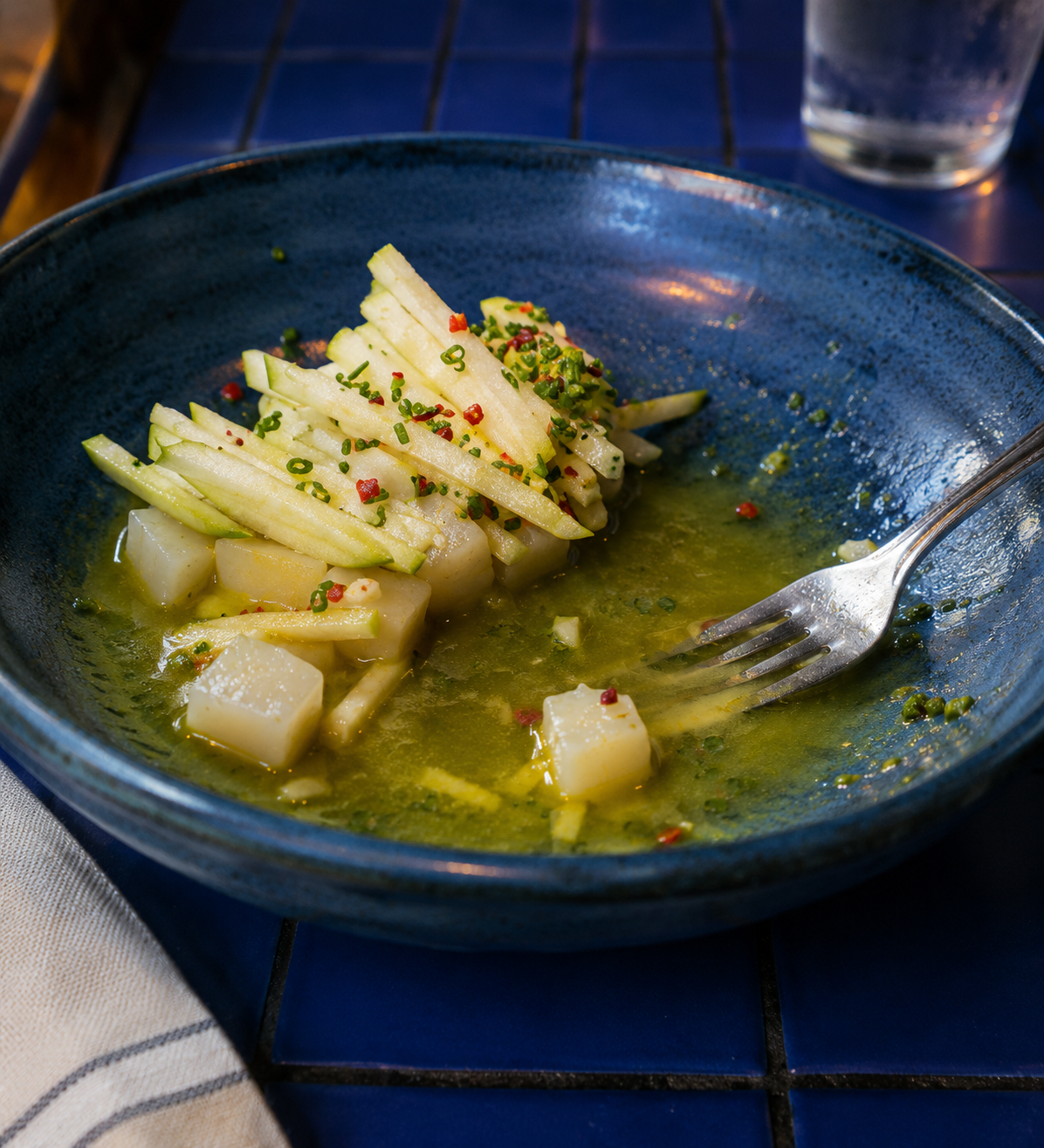
That experience had already followed me into my own kitchen. I’d experimented with making ceviche at home, including a few attempts using scallops and homemade leche de tigre. Some of those experiments turned out surprisingly well, and I’d developed enough familiarity with the cuisine to be excited whenever I encountered an opportunity to try another interpretation.
So when I spotted the Peruvian restaurant in the Ironbound, I suggested we give it a shot.
Once inside, we quickly discovered that English wasn’t going to be particularly useful. Spanish was the language of the room, and my own command of it was limited enough that ordering dinner required a little improvisation. Between a handful of words, some patience, and a willingness to figure things out, we managed just fine.
There was something enjoyable about that small adjustment. We were visitors in a restaurant that wasn’t necessarily catering to us, and rather than expecting everything to be immediately familiar, we simply worked with what we had. The experience felt authentic to the neighborhood we’d been walking through, and the evening was already turning out to be more memorable than the original dinner plan might have suggested.
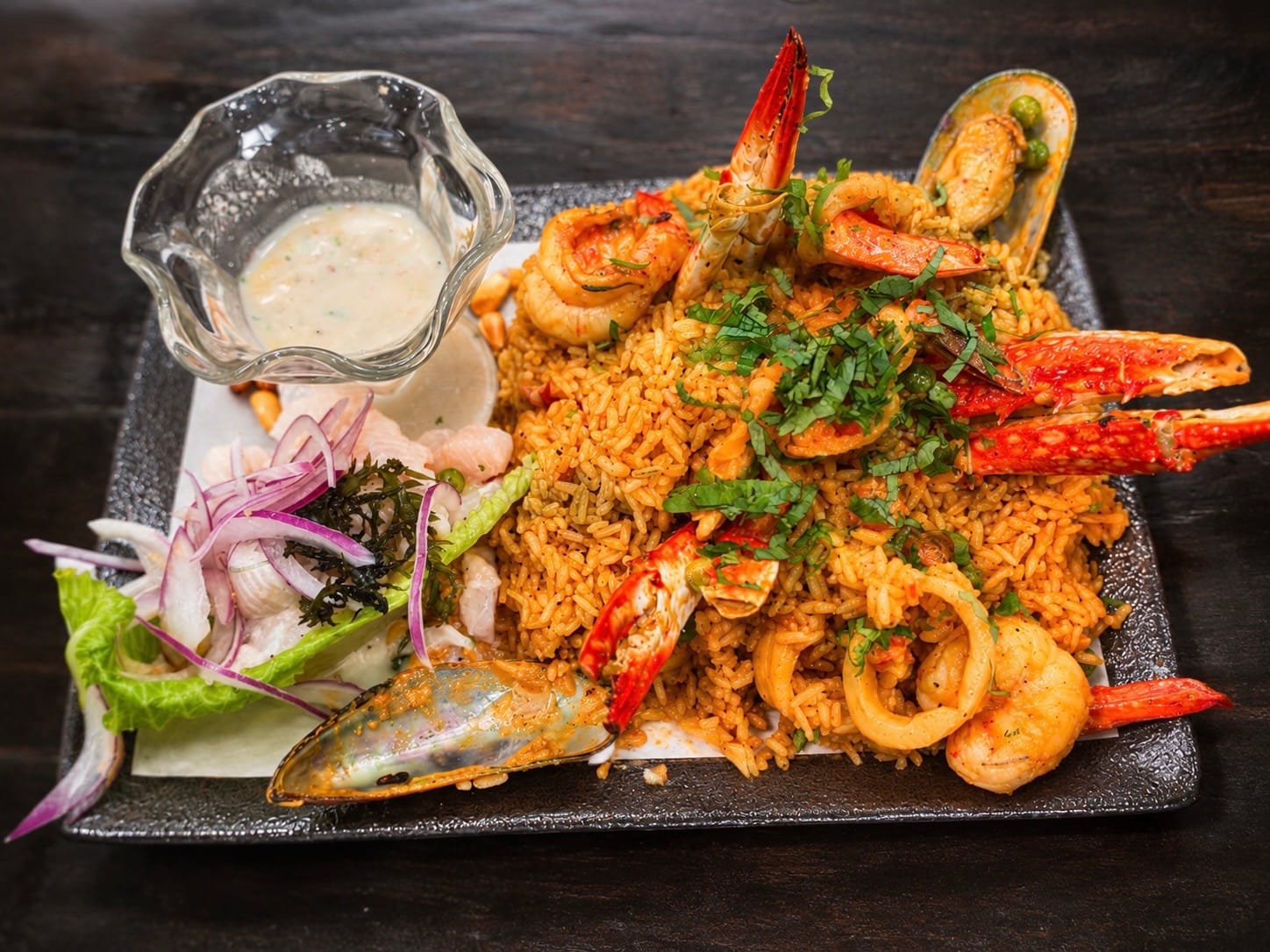
Naturally, I ordered ceviche. I was particularly interested in the leche de tigre, partly because I already knew how much I enjoyed it and partly because I was curious to compare it with the versions I’d tried and made myself. For my main course, I ordered a plate of mixed seafood over rice. It was a satisfying meal, exactly the kind of thing I’d hoped to find when we walked through the door.
But the thing I ended up remembering most wasn’t the ceviche.
The Green Sauce
Sitting on the table were two sauces. One was pale yellowish-beige, creamy, tangy, and somewhat reminiscent of a lemony mayonnaise. It was pleasant enough, but didn’t particularly stand out.
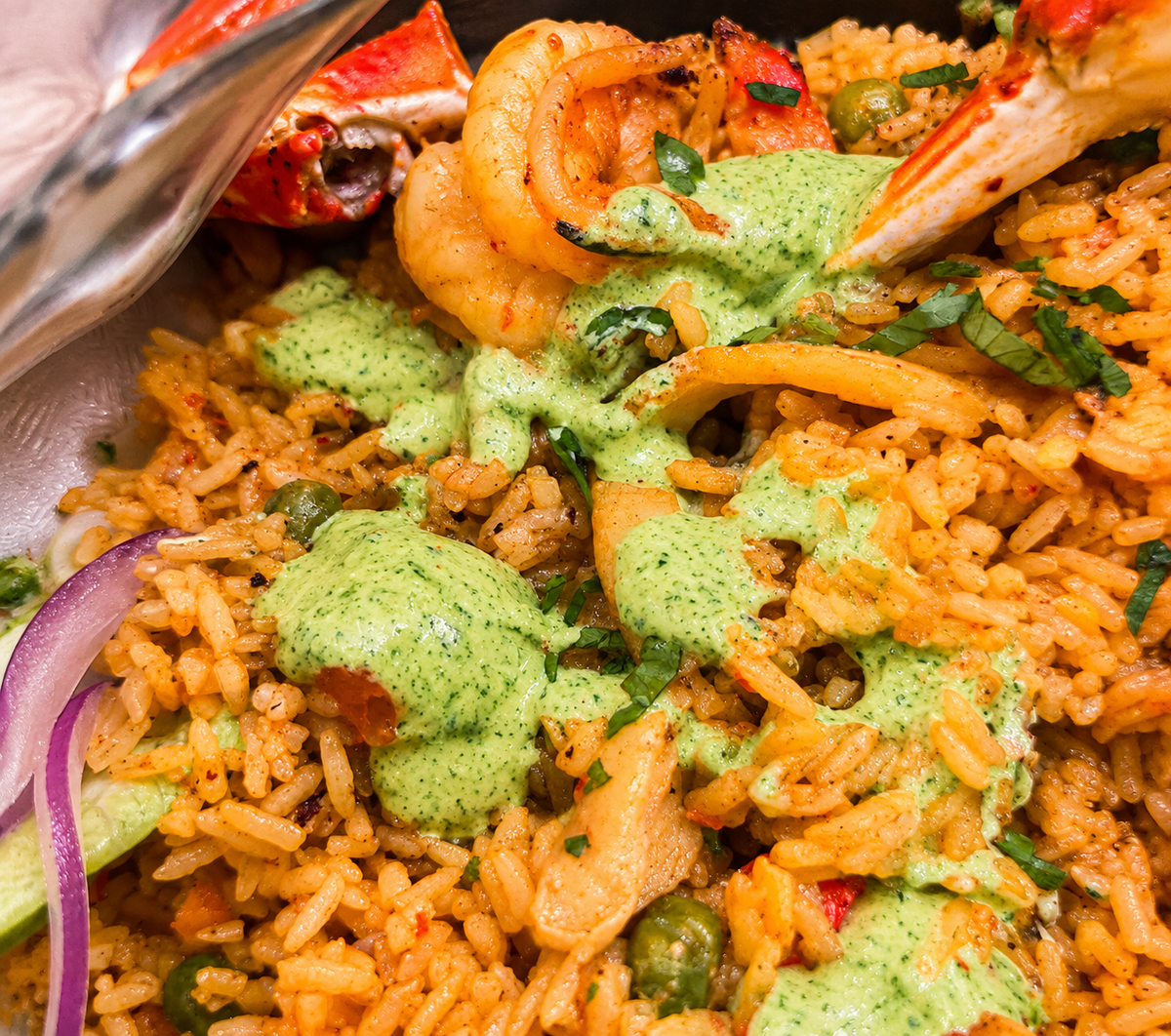
The other was green. I tried a little with the seafood and rice and immediately went back for more. It was creamy, bright, and carried a substantial amount of heat, with enough acidity and flavor to complement just about everything on the plate. Before long, I was loading it onto the rice, the seafood, and anything else that seemed like it could benefit from another spoonful.
I couldn’t get enough of it.
The sauce was ají verde, a Peruvian green sauce commonly built around fresh peppers, herbs, and a creamy base. Recipes vary considerably, but the combination of heat, richness, and acidity gives it a versatility that became obvious almost immediately.
I’d gone into the restaurant looking forward to the ceviche and leche de tigre, flavors I already knew and appreciated. Instead, I found myself completely taken with a condiment I hadn’t expected to be the highlight of the meal.
By the time we left, I was already thinking about how to recreate it. That evening could easily have simply ended up as a good dinner in an interesting neighborhood and another small memory from a work trip. But I was curious enough about the sauce that I wanted to do something with the discovery.
Bringing Something Home
Not long after returning to Michigan, I started researching ají verde recipes, looking into the ingredients and figuring out how to make a version of my own. I sourced what I needed and began experimenting, adjusting the balance of heat, acidity, and creaminess until I had something I was happy with.
One of the first opportunities to share it came during a gathering on Lake Huron. I made a batch for a larger crowd, and it went over well enough that I knew it wouldn’t be the last time.
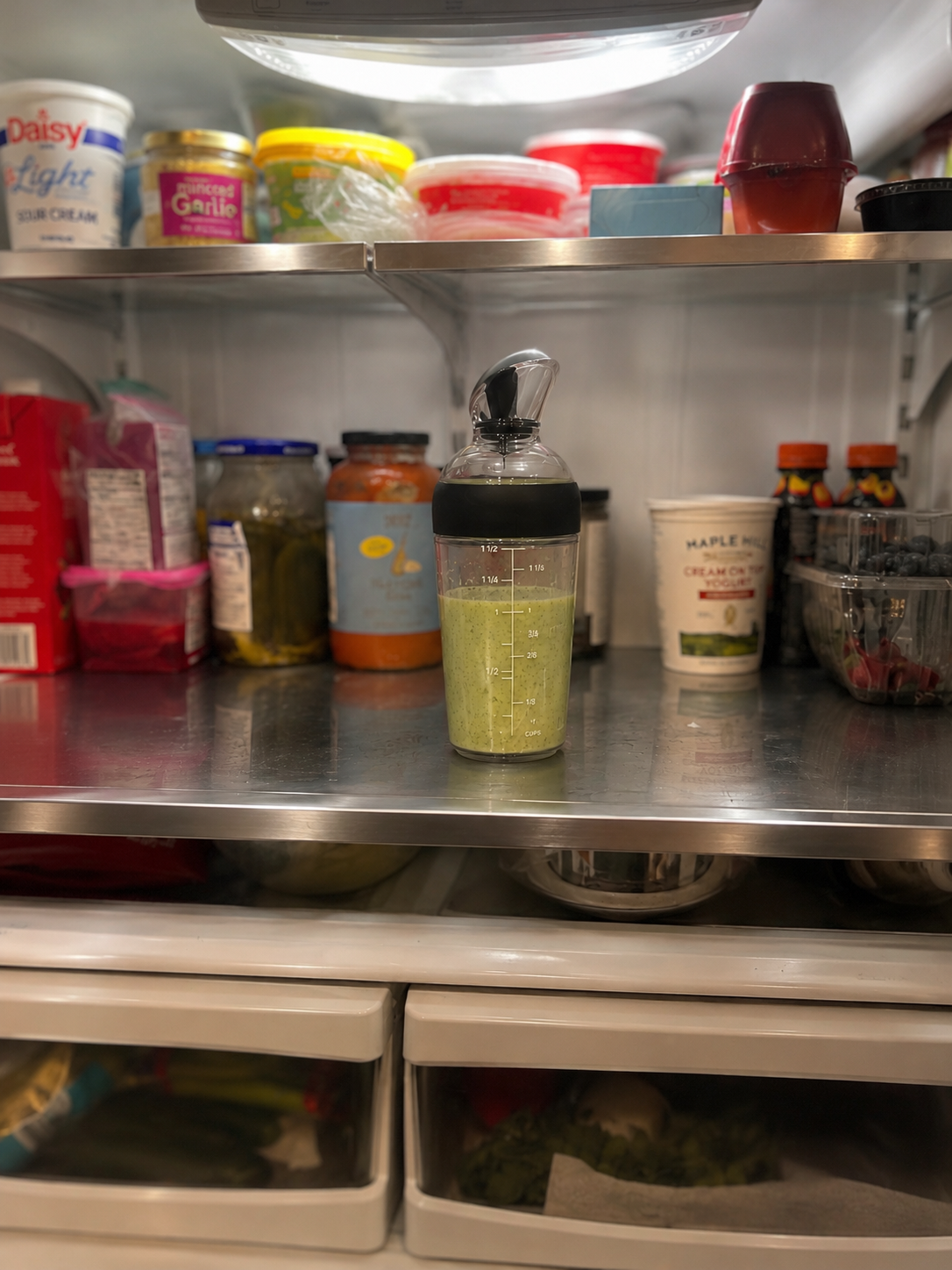
Back home, I made it again, and it quickly became one of those condiments that seems to work with almost anything. Tacos, chicken and rice, protein bowls, salads, and whatever else happened to be on the menu. It’s the sort of sauce that makes an otherwise ordinary meal feel a little more considered, without requiring much additional effort.
In other words, it’s a that-shit-goes-on-everything kind of sauce.
What I enjoy most about it now is that there’s a small story attached to something as mundane as lunch. A bowl of rice and chicken might not seem particularly remarkable, but a spoonful of homemade ají verde connects it to an evening wandering through Newark, a neighborhood pharmacy with a ridiculous sign, a restaurant where I had to stumble through my Spanish, and a meal I hadn’t planned on eating in the first place.
The sauce has become part of my own cooking, but it still carries a little of that experience with it.
What We Bring Back
I think one of the more satisfying things about curiosity is that an experience doesn’t necessarily have to end when you leave a place. Sometimes something catches your attention strongly enough that you want to understand it better, experiment with it, and find a way to incorporate it into your own life.
That doesn’t have to mean taking on an elaborate project or developing an entirely new hobby. It can be something as simple as a condiment that makes an ordinary meal a little more interesting.
I’ve always liked the idea of bringing something home from my travels, but the things that stay with me aren’t necessarily objects or souvenirs. More often, they’re ideas, flavors, techniques, or little details that eventually find their way into my everyday routines. They become part of the accumulated experiences that shape how I cook, create, and spend my time.
There’s something especially satisfying about discoveries that happen without much planning. I wasn't in Newark to explore Peruvian cuisine. I wasn't searching for a particular sauce, and I certainly hadn’t set out to find something that would become a regular fixture in my kitchen. We were simply two colleagues looking for somewhere to eat after a day of work.
The restaurant we’d originally planned to visit was closed, so we kept walking. Somehow, a perfectly ordinary business trip followed me all the way home.
 Kaizoku Path

READ NEXT ARTICLE
 Kaizoku Path

READ PREVIOUS ARTICLE