Architecture of Curiosity
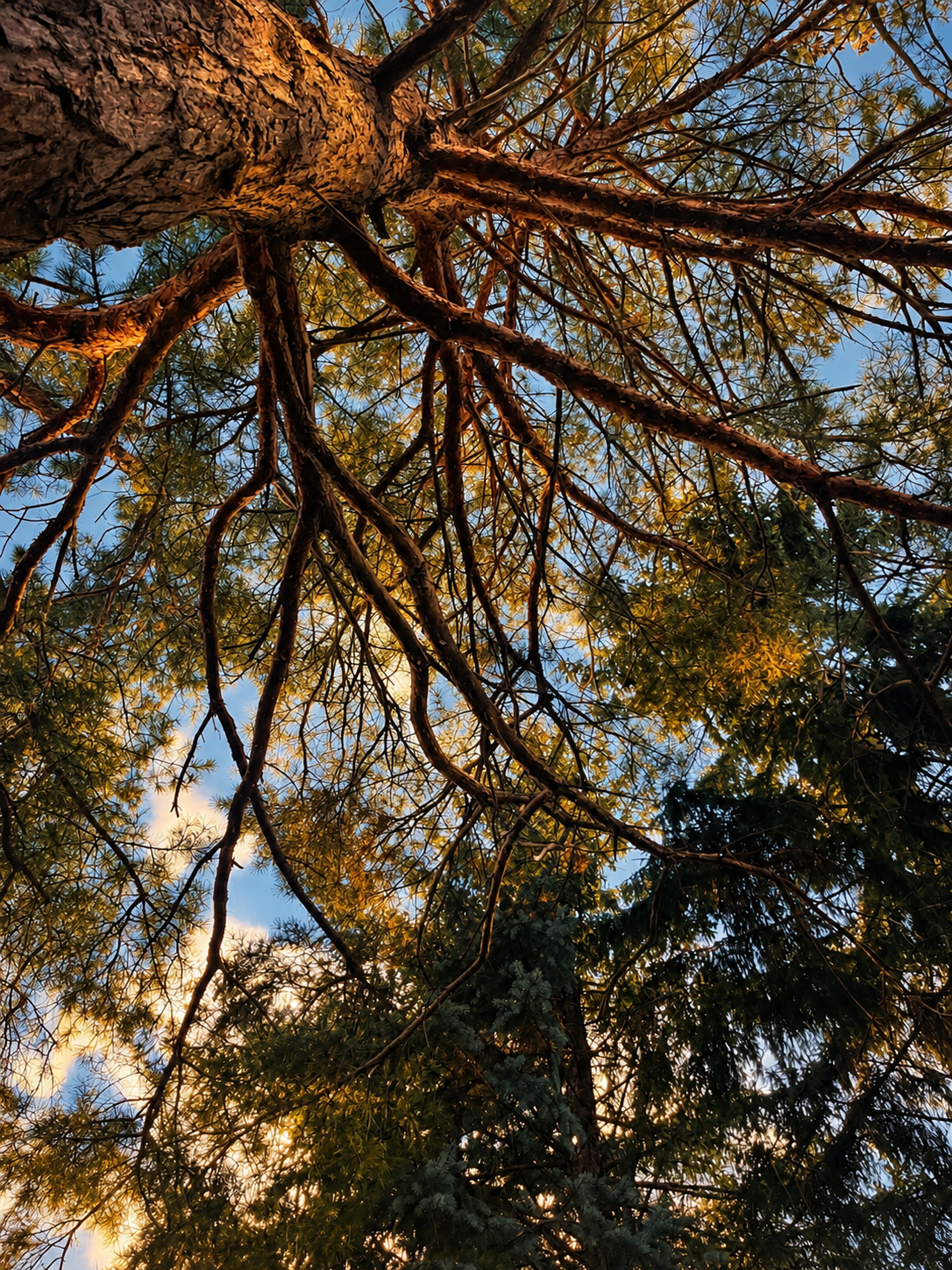
On curiosity as the starting point. It's the instinct that turns ordinary things into worlds worth exploring and gives the rest of the path somewhere to begin.
Edition I:
Editor’s note: This became Edition I long after the Editions that follow it were written. I eventually realized I had started the story too far downstream. Curiosity was there first, so I moved everything else back to make room for it.
Curiosity Comes First
For a long time, I didn’t think much about curiosity as a defining part of my life. I knew I had a lot of interests. I knew I had a tendency to get unusually deep into things. I knew that one question could somehow turn into three weeks of research, a pile of equipment, a half-built project in the basement, and several conversations with people who probably regretted asking what I’d been up to.
I just didn’t think of those things as connected.
When I started writing Kaizoku Path, I began somewhere downstream. I wrote about presence, about creating spaces that make participation easier, and eventually about integrating all of this into a life that still contains work, family, responsibility, maintenance, and everything else. Those ideas made sense individually, but something was missing at the beginning.
Eventually I realized the problem was obvious: Why did I need any of this architecture in the first place?
Curiosity.
Without it, there would be considerably less to integrate. I wouldn’t need spaces capable of holding several interests at once. There would be less tension between going deep into something and remaining present for the rest of my life. There wouldn’t be nearly as many projects competing for attention, tools waiting to be used, questions I want answered, or half-formed ideas sitting around until something brings them back to life.
Curiosity creates the abundance. The rest is largely me figuring out what the hell to do with it.
The Science Lab
One of the earliest versions of this happened underneath a spruce tree when I was a kid.
A buddy came up with the name The Science Lab, but once the idea existed, I was completely in. Beneath the branches was this little hidden world where we collected things, experimented, and generally behaved like children who had been given access to nature but very little actual scientific supervision.
At some point there was a wolf spider and a centipede involved. We made potions out of berries, weeds, water, and whatever else seemed like it belonged in a potion. Things were collected, observed, combined, relocated, and occasionally subjected to experiments that probably would not survive a modern institutional review board.
Then the Science Lab expanded.
That was the pattern even then. Something caught my attention and I wanted to know what else it could become. The initial idea was rarely enough. Once there was a hidden space under a tree, it needed more things inside it. Once something interesting showed up, I wanted to understand it. Once I understood a little, another question appeared.
I didn’t have language for any of this at the time. I was just playing.
Looking back, though, the mechanism feels extremely familiar.
Following the Question
That same pattern still runs through almost everything I become interested in.
I don’t usually decide that I need a new hobby and then go shopping for one. Something catches my attention. It could be a meal, an animal, a building technique, a piece of equipment, a place, a sound, or some weird detail I didn’t know existed twenty minutes earlier. Then a question appears.
Usually it’s some version of: Can I do this? Can I make this? Can I build something around this?
A meal I like becomes a question about how it’s made. That becomes ingredients, technique, equipment, regional differences, and eventually an attempt in my own kitchen. Seeing a particular kind of enclosure becomes a question about what animal could live there, which becomes habitat design, lighting, substrate, ventilation, behavior, and eventually an entire fucking room in my basement.
The internet makes this extremely dangerous.
There is almost no bottom anymore. Every question leads to somebody who has spent twenty years obsessing over the exact thing I discovered Tuesday afternoon. There are forums, videos, papers, books, obscure suppliers, people breeding things in garages, people fabricating equipment in sheds, and some guy on YouTube who has apparently dedicated his adult life to explaining why everyone else is doing it wrong. I love that.
The appeal isn’t simply accumulating information. At some point I usually want to cross the line between knowing about something and participating in it. I want to make the sauce, build the enclosure, grow the mushroom, repair the thing, use the tool, or at least understand enough that the object in front of me is no longer just a black box.
That’s when curiosity becomes physical.
Some Questions Last a Long Time
Not every curiosity burns hot for a few weeks and disappears. Some become absurdly long relationships.
I first had döner kebab in Kraków in 2007. I loved it, and apparently eating something good once was not sufficient. Nearly twenty years later, I’m still fucking with it.
Over that time I’ve tried different meats, marinades, sauces, breads, techniques, and ways of getting closer to what I remember. I’ve made versions that were good and versions that were disappointing. I’ve adjusted things, abandoned things, returned to things, and recently started wondering whether what I really need is a small vertical spit setup so I can finally attack the problem from another direction.
This is objectively ridiculous behavior for a sandwich.
But I love that the question has lasted that long.
There is something satisfying about an interest that refuses to completely resolve. Every improvement reveals another variable. Every attempt changes what I notice the next time. The thing I was originally trying to recreate gradually becomes its own practice.
Sausage making was like that for a while too. In my twenties, I went deep enough that it became part of brewery pop-ups and occupied a considerable amount of my attention. Eventually that intensity faded. I still make sausage, but now it might happen every other Christmas instead of consuming whole stretches of my life.
I don’t see that as losing interest. Sometimes an interest eventually finds the amount of space it actually needs.
Dormant, Not Dead
I’ve become less concerned about whether every interest remains active.
For years, I think I unconsciously treated curiosity as something that needed continuity to count. If I got balls deep into something and then stopped, perhaps I had abandoned it. Maybe the equipment sitting around represented another unfinished thing.
I don’t really see it that way anymore. The fact is that some interests go dormant.
DJing can disappear for a while and come back when the room, equipment, or mood changes. Mountain biking can sit quietly until a trail or season pulls it forward again. Boxing can move in and out depending on what else is happening. Antique restoration taught me things about materials, furniture, age, and construction that still affect what I notice even when I’m not actively restoring anything.
Reptiles might be the clearest example. As a kid, I was fascinated by animals. Between A-Team re-runs, whatever movies my dad recorded on VHS, and later Toonami, nature documentaries occupied an enormous amount of my attention. Honestly, it still kind of does. Reptiles were part of that world.
Then, for roughly twenty years, they weren’t.
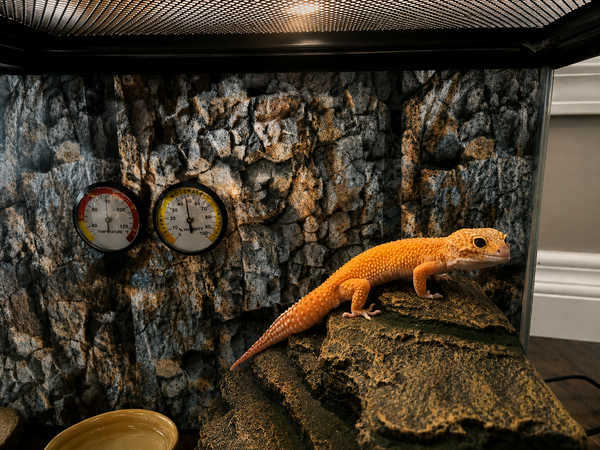
The interest didn’t seem particularly relevant to my adult life until I visited the Reptarium, a local private reptile zoo/ experience, and something in my brain came back online. That eventually led to my wild plan to build a reptile room, which led to Ember, our leopard gecko. Ember led to better enclosure design, which led to questions about other species, which led to habitat construction, bioactive systems, lighting, and ventilation.
That’s what I mean by dormant. The original curiosity never really disappeared. It just stopped having somewhere to go.
Sometimes it takes a new environment, a different stage of life, or one unexpected encounter for an old thread to become visible again.
Nothing Stays in Its Lane
The longer I’ve paid attention to this, the less useful the word hobby feels. Hobbies sound self-contained. Mine don’t behave that way.
Growing mushrooms leads into environmental controls, food, biology, filtration, fabrication, and eventually questions about what else could benefit from the same infrastructure. Reptiles lead into ecology, plants, lighting, construction, ventilation, and animal behavior. Cooking can turn into travel, history, gardening, fermentation, equipment, and design.
One thing keeps contaminating another.
Even interests that seem completely unrelated tend to leave something behind. Years of restoring furniture change how I look at an old book shelf. Making food changes the way I experience a restaurant. Building things changes the way I look at a room. Keeping animals changes the way I notice habitat. Travel changes what I cook when I get home.
The useful part isn’t necessarily becoming an expert in all of it, which is nearly impossible. It’s that the world starts containing more doors.
Every time I learn how one piece of the physical world works, the threshold for entering another seems to get a little lower.
The Cost of More
There is another side to this that I don’t want to romanticize. Curiosity costs money. Making shit requires buying an incredible amount of shit.
Tools, materials, books, equipment, ingredients, enclosures, lights, hardware, replacement hardware because I bought the wrong hardware the first time. Even interests that begin inexpensively have a remarkable ability to develop a specialized equipment category I previously didn’t know existed.
Time is the bigger cost. Every hour spent researching, making, building, or learning something is an hour that can’t be spent somewhere else. That’s where curiosity starts colliding with marriage, kids, work, maintenance, sleep, friends, and the basic reality that I still only get twenty-four hours.
There have been periods where I’ve handled that badly.
I can get deep enough into a project that everyone around me technically receives what they need while I am mentally somewhere else. I can turn a normal conversation into an unsolicited status update about mushroom-lab ventilation. I can spend an hour researching a problem that did not exist in my life three days earlier and has somehow become urgent.
Curiosity can make life feel bigger, but it can also become another way of disappearing from it.
That’s part of why presence became so important to me. The goal can’t simply be to follow every interesting thing as far as it will go. I have a family and a job and a house and relationships I care about. There are times when the right answer to an interesting question is not now.
There are also questions where the answer is simply no.
An old Porsche is a good example. Would I enjoy learning everything about one, wrenching on it, sourcing parts, understanding the mechanical history, and turning it into another long-running project? Absolutely.
Do I need to introduce an old Porsche into my current life? No. Probably fucking not.
Curiosity generates possibilities faster than I can responsibly live them. Part of growing into it has been learning that I don’t need to convert every interest into ownership, a project, a new identity, or another thing taking up square footage.
Sometimes noticing something is enough.
An Abundance That Needs Structure
I don’t think the amount of curiosity has necessarily decreased as I’ve gotten older. If anything, I may be worse.
What’s changed is my ability to build a life that can hold more of it without letting it run everything else over.
That’s where the rest of Kaizoku Path started to make more sense to me.
Presence matters because curiosity can pull me deeply into something, sometimes deeply enough that I stop noticing what else is happening around me. At the same time, curiosity is also one of the most reliable ways I find presence in the first place. Give me something I’m genuinely interested in and I stop checking the clock. I notice details, engage physically, and the background noise drops.
I don’t think one necessarily comes before the other. Curiosity pulls me into presence, and presence gives me enough attention to notice what might be worth becoming curious about.
Space matters because interests need somewhere to exist. If every project has to be packed away completely after every session, the threshold for returning to it becomes much higher. A workbench, a notebook within reach, an enclosure under construction, or a project allowed to remain mid-process can keep a thread alive without demanding constant attention.
Integration matters because none of this gets a private life of its own. Curiosity has to coexist with work, marriage, kids, travel, dishes, mowing the lawn, sleep, and the thousand other ordinary things that aren’t interruptions to life. They are life.
What has matured isn’t necessarily the amount of curiosity. It’s my ability to build a life capable of holding it.
The appetite can remain expansive while the execution becomes slower, more deliberate, more researched, and sometimes cheaper because I’ve learned not to immediately buy my way into every new idea. I can reuse something, wait, sketch it out, let an idea sit for six months, or decide that I don’t need to do it at all.
That’s different from trying to become less curious. I don’t want less. I just want enough structure that more doesn’t become destructive.
The Easier Version
Sometimes I imagine what my life would look like if I didn’t operate this way.
It would probably be considerably more streamlined. I could buy what I need without wondering whether I could make it. Trips could just be relaxing. Food could taste good without becoming a twenty-year investigation. The basement could simply be finished instead of incubating things. I wouldn’t need another fucking piece of equipment. There would be considerably fewer unfinished projects.
Probably easier.
And to be clear, I don’t think everybody needs to live like this. Some people genuinely don’t experience the same pull toward multiple interests, projects, questions, and experiments. That isn’t a deficiency. This isn’t an argument that everyone should start collecting hobbies or turn their basement into a laboratory.
I’m trying to understand why I need it.
If I strip curiosity out of my life, the big pieces remain. I still have my family, my work, my home, my relationships, vacations, dinners, and all the things that obviously matter. What changes are the spaces between them.
Those spaces get hollow surprisingly quickly.
The hour between work and dinner becomes scrolling. A long drive becomes something to get through. An empty Saturday afternoon becomes television because nothing else is pulling at me. Waiting becomes boredom. Winter becomes something to endure until spring. A basement becomes square footage. A meal becomes a meal and then it’s gone.
Curiosity changes the texture of those spaces.
A long drive can become a podcast, research, a voice note, or me soundboarding some idea out loud like a lunatic. Twenty minutes can move a project forward. A meal in another city can become something I spend the next year trying to recreate. A walk can turn into noticing a plant, a piece of driftwood, a building, or some other thing that sends me in a direction I couldn’t have predicted before I left the house.
I don’t need all of those moments to become productive. Plenty of questions go nowhere, and plenty of interests eventually fade. Some cost money I probably didn’t need to spend, create messes, or end with equipment sitting on a shelf for two years until I suddenly need it again.
But they keep the ordinary world from flattening.
Curiosity increases the amount of life available inside the life I already have. The world doesn’t necessarily become more interesting; I become capable of finding more in it.
Take that away and I think the psychedelic glasses come off. Everything is still there, but it starts looking a little more basic.
So I’ll take the unfinished projects, the weird equipment, the questions that last twenty years, the interests that disappear and come back, and the occasional realization that I’ve somehow spent my evening researching something that doesn’t exist yet.
Those are problems worth learning how to manage because the alternative may be cleaner, cheaper, and probably easier.
To me, it would also be a hell of a lot less alive.