The Art and Satisfaction of Breadmaking
How a simple homemade loaf became an ongoing exploration of baking, fermentation, family traditions, and the pleasure of making something worth sharing.
Project Ledger VI
It Started With a Recipe
Bread has always been present in my life. Growing up in a Polish family, it wasn’t treated as anything particularly remarkable. It sat alongside soups, stews, and family meals without much discussion or ceremony. Good bread was simply part of eating, something you expected to find on the table.
My interest in actually making it came much later, through a friend with whom I’ve shared a long-running enthusiasm for food projects. Back in college, we started making our own sausage, an interest that eventually grew into doing pop-ups at local breweries. Over the years, we’ve exchanged recipes, experimented with different methods of preparing food, and occasionally gotten ourselves into projects that require far more equipment and preparation than a normal meal.
Bread entered the picture when he came across a relatively simple recipe, tried it himself, and had great results. He insisted I give it a shot.
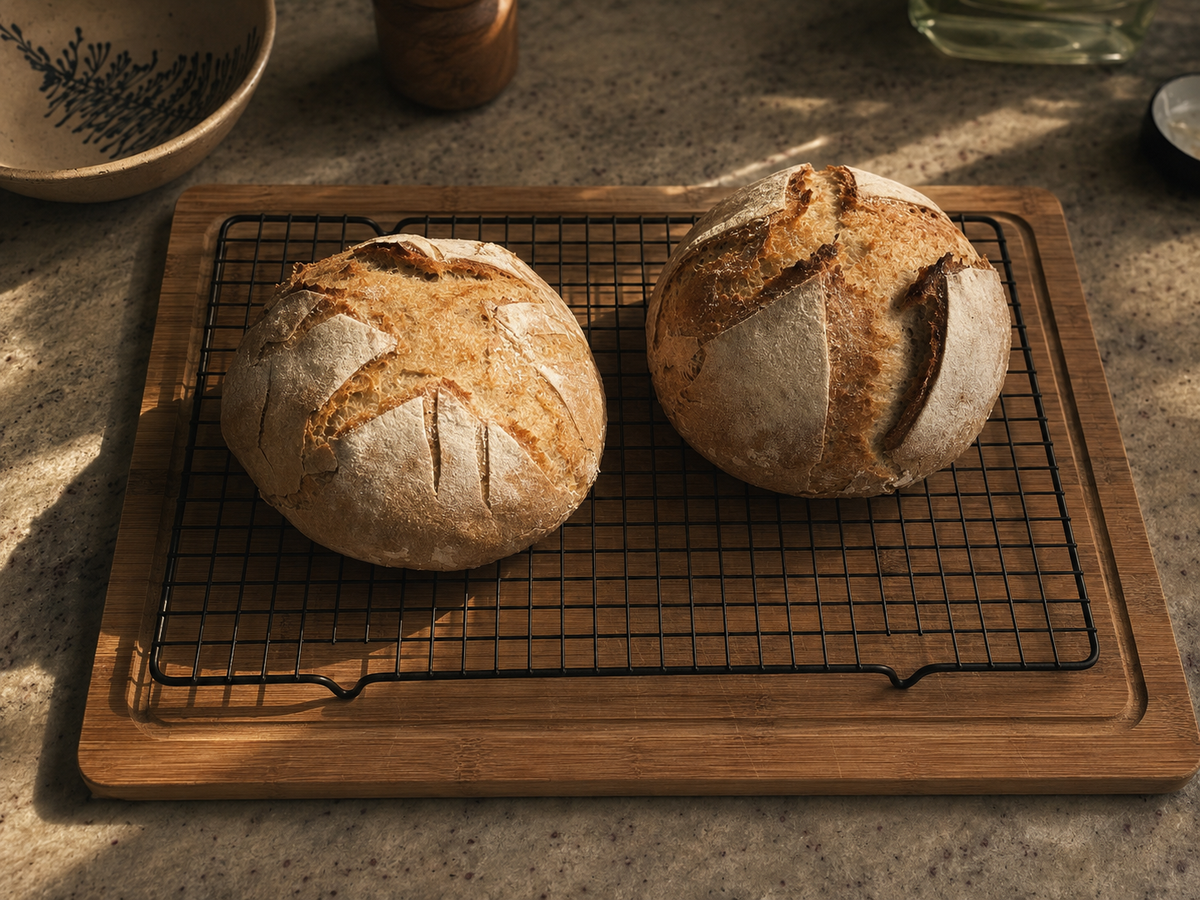
So I did. And the bread turned out fantastic.
There wasn’t some elaborate introduction to artisan baking or a sudden decision to become a bread guy. I followed a recipe my buddy recommended, pulled a loaf out of the oven, and realized I’d made something considerably better than I expected.
My wife and daughters loved it, too. Before long, I was baking it for family gatherings, parties, and holidays. The bread would hit the table, people would tear into it, and occasionally someone would come looking for me afterward to ask where it came from.
That was pretty satisfying, especially considering how little had gone into getting started.
Learning the Loaf
What initially appealed to me was the simplicity of the process. Flour, water, salt, and yeast could be turned into something with a crisp crust, a soft interior, and enough character to stand on its own.
But as I continued baking, I started paying more attention to the variables. I adjusted the amount of yeast, changed the water content, experimented with different flours, and played with fermentation times. Small changes could produce noticeably different results, and each loaf gave me another opportunity to figure out what worked.
Some batches came out better than others. Occasionally the crust was exactly what I wanted, but the interior was denser than expected. Other times the dough behaved differently because I’d changed the hydration or allowed it to ferment longer. I wasn’t following a formal training program or trying to perfect some legendary bread recipe. I was making incremental improvements to something I already enjoyed.
That kind of experimentation is familiar territory for me. I’ve always enjoyed what I call food projects, whether it’s making sausage, pickling vegetables, canning, or taking a brisket and turning it into corned beef. These are things that involve a little more planning and hands-on work than simply preparing dinner. You start with raw ingredients, follow a process, make adjustments, and eventually end up with something you couldn’t have bought in quite the same form.
Breadmaking fits comfortably into that world.
I especially enjoy the beginning and end of the process. Mixing the ingredients, bringing the dough together, and seeing it take shape are engaging parts of the work. So is the final stage, when the loaf goes into the oven and the transformation becomes visible.
Everything in between is largely a matter of patience, although learning how to manage that waiting period is a skill of its own.
Working Around Time
One of the more interesting parts of breadmaking is figuring out when the bread actually needs to be ready.
If I’m making a loaf for breakfast, I might mix everything the evening before and let the dough ferment overnight. If we’re having guests for dinner, I can start in the morning and let the process unfold throughout the day. The timing changes depending on the occasion, and I have to work backward from when I want to pull fresh bread out of the oven.
Fermentation doesn’t operate according to a perfectly convenient schedule. Temperature, yeast quantity, hydration, and the amount of time available all influence how the dough develops. Over time, you learn to recognize when it’s ready rather than relying entirely on the clock.
I enjoy that combination of planning and observation. There’s enough technique involved to keep things interesting, but most of the process happens while I’m doing something else. I don’t need to stand over the dough for hours. I can mix it, leave it alone, return to it when needed, and eventually bake it.
That’s one of the reasons bread works so well as an occasional practice. It doesn’t require me to clear an entire day or turn baking into a rigid routine. It can fit around a normal weekend, a family gathering, or whatever else is happening at home.
And when the timing works out, there’s something especially satisfying about taking a fresh loaf out of the oven just before people are ready to eat.
The Pleasure of Sharing It
As much as I enjoy making bread, there’s another level of satisfaction in watching other people enjoy it.
Over time, the loaf became something I’d bring to gatherings or prepare when we had people over. It developed a reputation among friends and family, which is a funny thing to say about something made from four basic ingredients.
I’m not usually hovering around the table waiting for reactions. I’ll put the bread out, get on with whatever else is happening, and eventually someone will track me down to tell me how good it is.
Sometimes the loaf barely survives the meal.
There’s a particular satisfaction in making food that people genuinely look forward to eating. Not because it’s elaborate or expensive, but because you took the time to make something good and share it.
That connection has always been part of my interest in food. Making sausage with a friend, preparing something for a gathering, or experimenting with a recipe is enjoyable on its own, but food becomes more interesting when it leaves the kitchen and becomes part of an occasion.
Bread is especially good at that. You put a loaf in the middle of the table, cut into it, pass it around, and it becomes part of the meal without needing much explanation.
Looking at Bread Differently
One unexpected consequence of learning to bake bread is that I started paying much closer attention to the bread I encountered elsewhere.
I’ve become more particular about bakeries, crusts, textures, and the kinds of loaves I enjoy. Once you’ve spent time experimenting with fermentation and flour, it’s difficult not to notice those things when you eat someone else’s bread. You begin to appreciate the decisions and techniques behind something you previously took for granted.
That shift in perspective made one experience in Poland especially meaningful.
During a visit, I had the opportunity to eat bread from the same bakery that had served generations of my family. My mother, grandmother, and great-grandmother had eaten bread made there, baked in the same stone ovens, using methods that had remained largely unchanged.
There was something remarkable about that continuity.
The crust was hard and substantial, with the kind of texture that makes you work a little to break through it. The sourdough had a distinct tang, and the whole loaf carried a character that felt inseparable from the place it came from.
I’d grown up with Polish bread, but this was different. I wasn’t simply eating something familiar. I was appreciating the craft behind it and the fact that generations of people in my family had experienced something remarkably similar.
It made me think about how much knowledge can exist inside an ordinary food. The choice of flour, the fermentation, the oven, and the habits of the people making it all contribute to the result. Some of those practices have been refined and passed down for longer than any of us have been alive.
My own homemade loaf is a much simpler undertaking, but learning to make it has given me a greater appreciation for that larger tradition.
Where One Loaf Leads
The funny thing about getting comfortable with one kind of bread is that it makes you curious about all the others.
I’ve already branched into making biscuits, which turned out ridiculously good, and there’s a growing list of breads I want to explore next.
Sourdough is an obvious direction. I’ve spent enough time adjusting yeast quantities and fermentation schedules to become interested in what happens when I begin working with a maintained starter and naturally occurring yeasts and bacteria. It’s a different approach to fermentation, with its own techniques, challenges, and possibilities.
I’m also interested in developing the kind of flatbread used for döner kebabs, particularly the versions I’ve eaten in Europe. I’ve had some fantastic kebabs over there, and the bread is a huge part of what makes the whole thing work. I’d like to figure out how to produce something similar at home, with the right texture and structure to hold everything together.
Then there’s injera, the Ethiopian fermented flatbread traditionally made with teff flour. That’s an entirely different direction, with a different grain, fermentation process, texture, and role in the meal. It’s exactly the kind of thing that catches my attention once I start digging into a subject.
None of these are projects I need to tackle immediately. They’re possibilities that have emerged from learning one relatively simple skill.
That’s what I enjoy about these kinds of pursuits. A friend shares a bread recipe, you make a few loaves, and before long you’re researching fermentation, experimenting with other grains, noticing bakeries when you travel, and thinking about breads from entirely different parts of the world.
The original project doesn’t disappear. It becomes a starting point for something broader.
⸻
A Practice Worth Keeping
I don’t bake bread every day, and I have no ambitions of becoming a professional baker. There are stretches when I make it regularly and others when I don’t touch the flour for weeks. It remains one of several food projects I return to when the occasion or curiosity calls for it.
What keeps me interested is the combination of making something with my hands, learning through repetition, and having something worthwhile to share when it’s finished.
The process is approachable enough that I can return to my familiar loaf without much thought, but there’s still an enormous amount I haven’t explored. Different flours, different fermentation methods, different cultures, and entirely different kinds of bread offer plenty of room to keep learning.
I also like that breadmaking doesn’t have to become anything bigger than it is. A good loaf for a family dinner is already a worthwhile result. If it eventually leads to a sourdough starter, a new flatbread recipe, or another food project I haven’t considered yet, even better.
What started with a recipe passed along by a friend has become another way to explore food, connect with family traditions, and bring something homemade to the table.
And I still get a kick out of someone taking a bite, looking around, and asking who made the bread.
Kaizoku Path isn't about leaving your life behind.
It's about discovering the adventure inside of it.
More Editions, Field Notes, and Project Ledgers can be found at kaizokupath.com