Gathering Driftwood and Moss from Lake Huron
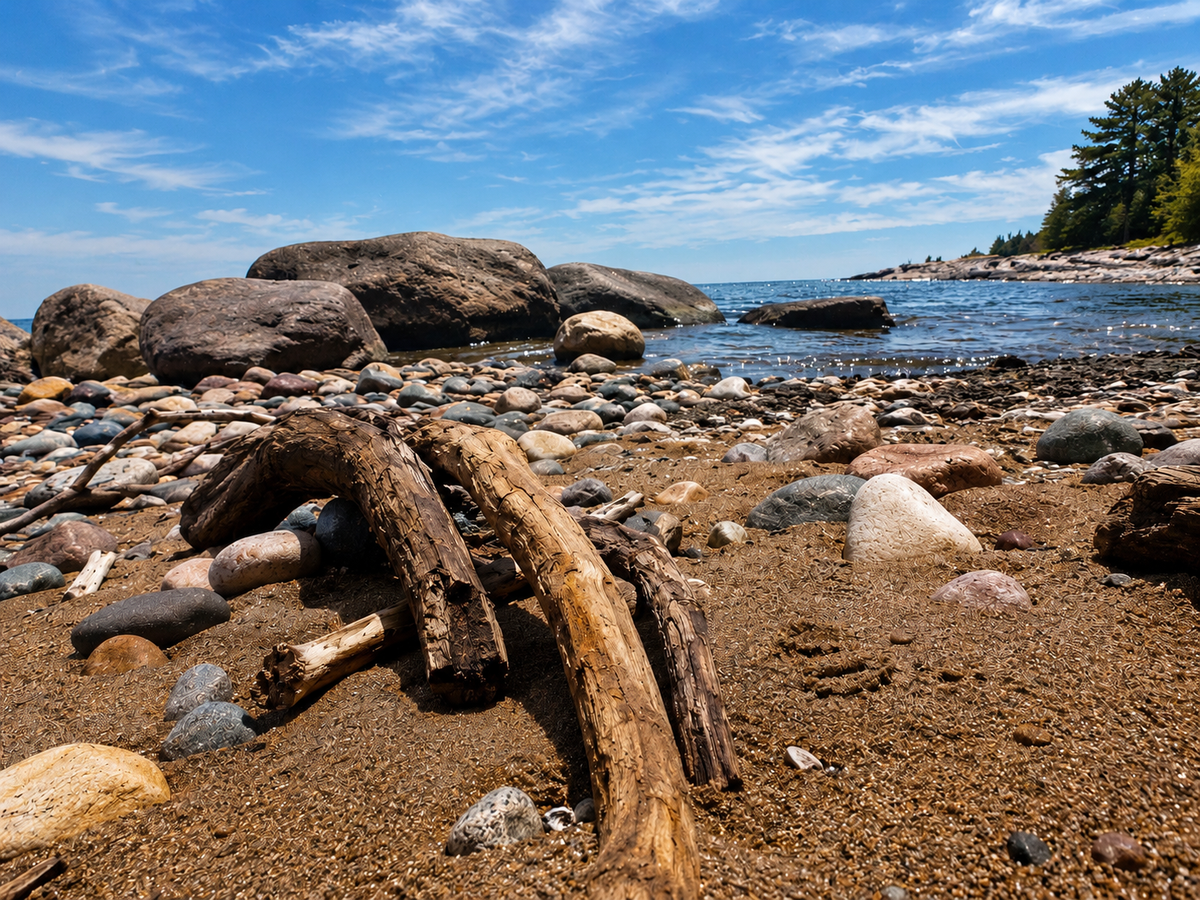
Gathering natural materials along Lake Huron for future reptile habitats, and discovering how a particular interest can change the way we see familiar places.
Project Ledger V
After the Crowds Left
The long holiday weekend had finally come to an end. The crowds thinned out, the seasonal traffic eased, and the boats became less frequent. By Monday afternoon, Lake Huron had returned to its normal rhythm. The city people packed up their coolers, folded their beach chairs, and headed back toward meetings, emails, and obligations waiting for them at home.
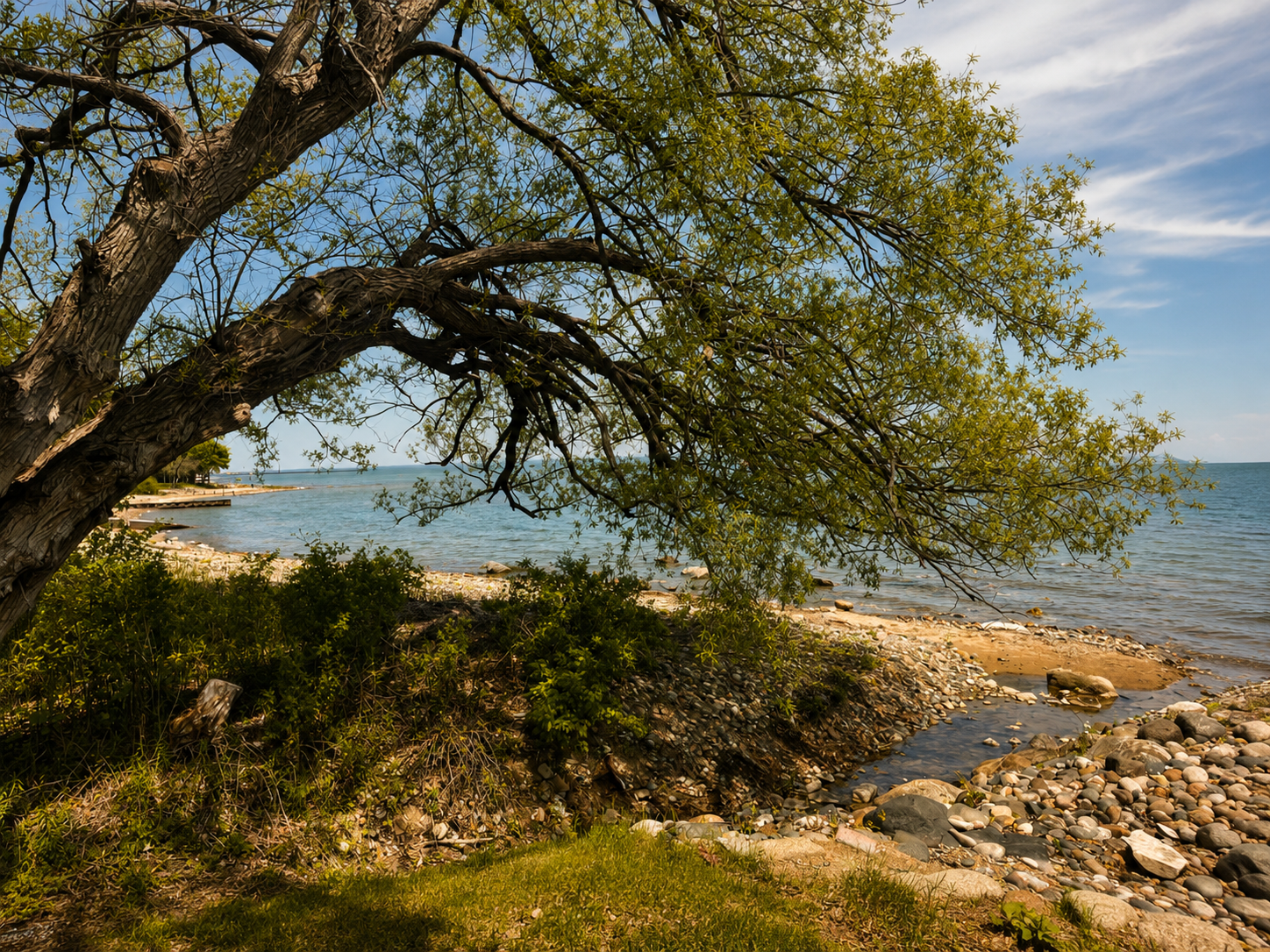
Not us. We stayed a little longer.
The lake house technically belongs to my parents, but after enough years it begins to feel like it belongs to all of us in some way. My daughters know the shoreline. My wife knows the rhythm of the place. Every visit adds another layer to a collection of family memories that has been building for years.
Part of the weekend was spent with my parents. Part of it was just our little family slowing down and enjoying Lake Huron after everyone else had gone home.
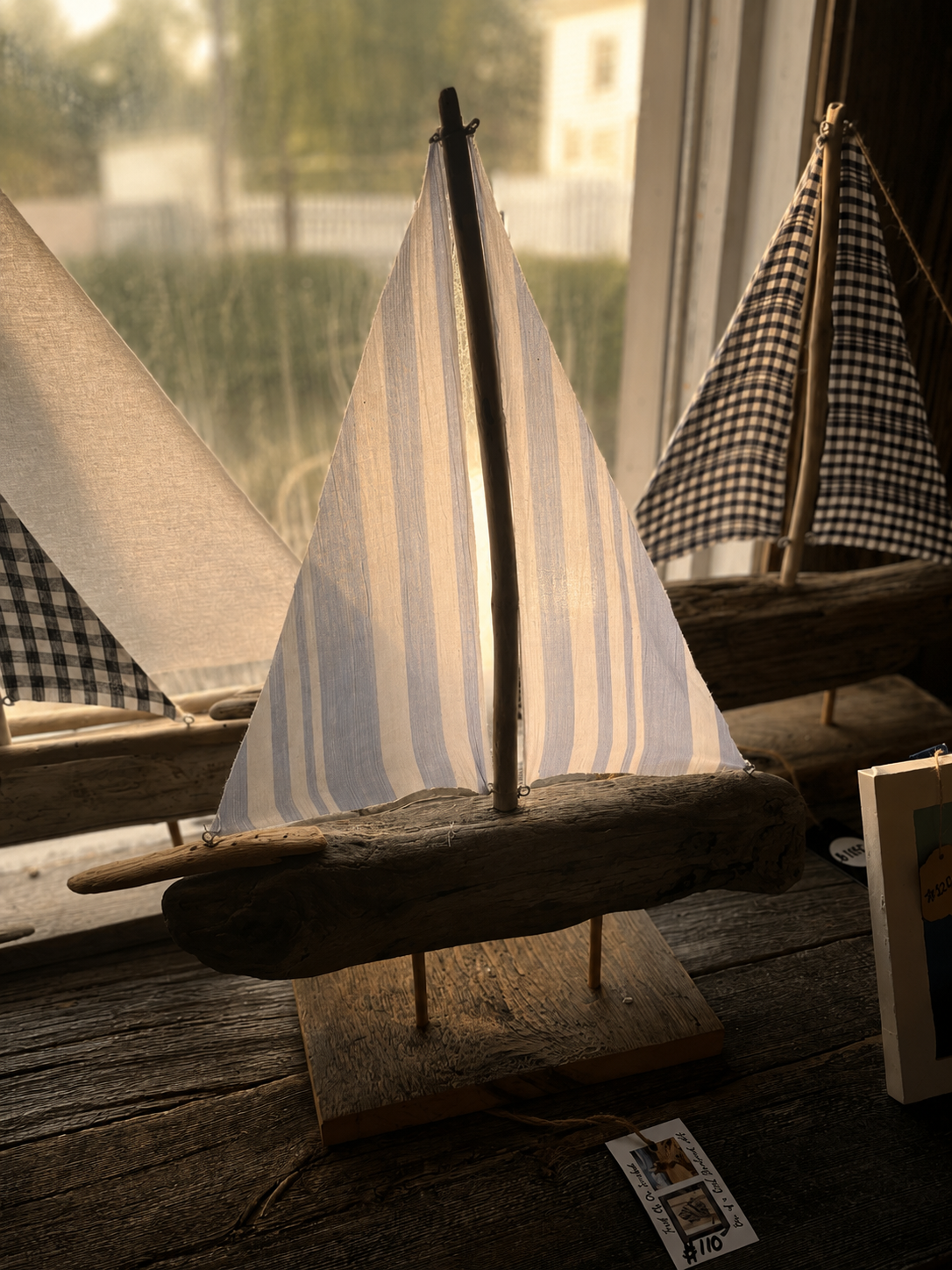
We browsed local art galleries and gift shops, ate meals overlooking the water, and sat in Adirondack chairs facing a lake that was still too cold to swim in despite the sunshine. We watched freighters move slowly across the horizon, looked for wildlife, and walked the shoreline. The day unfolded at its own pace.
I had also been meaning to collect some driftwood for future reptile enclosures. With the lake right there, it seemed like a good opportunity to bring home a variety of pieces without making a separate trip out of it. There wasn’t much of a plan beyond that. We were enjoying a few quiet days up north, and I had a small project I could fold into the weekend.
Gathering Driftwood
Lake Huron has never been short on driftwood. I’ve walked past it countless times over the years, usually without paying much attention. My dad might look at a piece and see something worth throwing on a fire. This time, I was looking at it through an entirely different lens.
The shoreline was littered with weathered branches and trunks shaped by years of wind, water, ice, and storms. Some were partially buried in sand, while others were wedged between rocks or resting in shallow water. These weren’t the neatly arranged decorative pieces sold in reptile shops or aquarium stores. They came in every imaginable shape and condition.
I found myself stopping repeatedly to examine individual pieces. How large was it? What shape did it have? Was the wood still solid enough to use, or had it deteriorated too far? Could a particular branch become a climbing structure, emerge from a patch of moss, or serve as the centerpiece of a future enclosure?
I wasn’t looking for one perfect piece. I wanted to build up a small collection of different shapes and sizes that I could draw from as future projects took shape. Having those materials on hand would give me a useful starting point whenever I was ready to build something.
At the time, I didn’t even own most of the animals these materials might eventually support. A newt project had recently captured my attention, but that was still months away, with plenty of details left to figure out.
That didn’t make the collecting any less interesting. Once I started looking at the shoreline this way, pieces that had always been there suddenly became worth stopping for. Before long, I was carrying armloads of driftwood back toward the house.
Collecting Moss
A short distance inland, another familiar part of the property caught my attention.
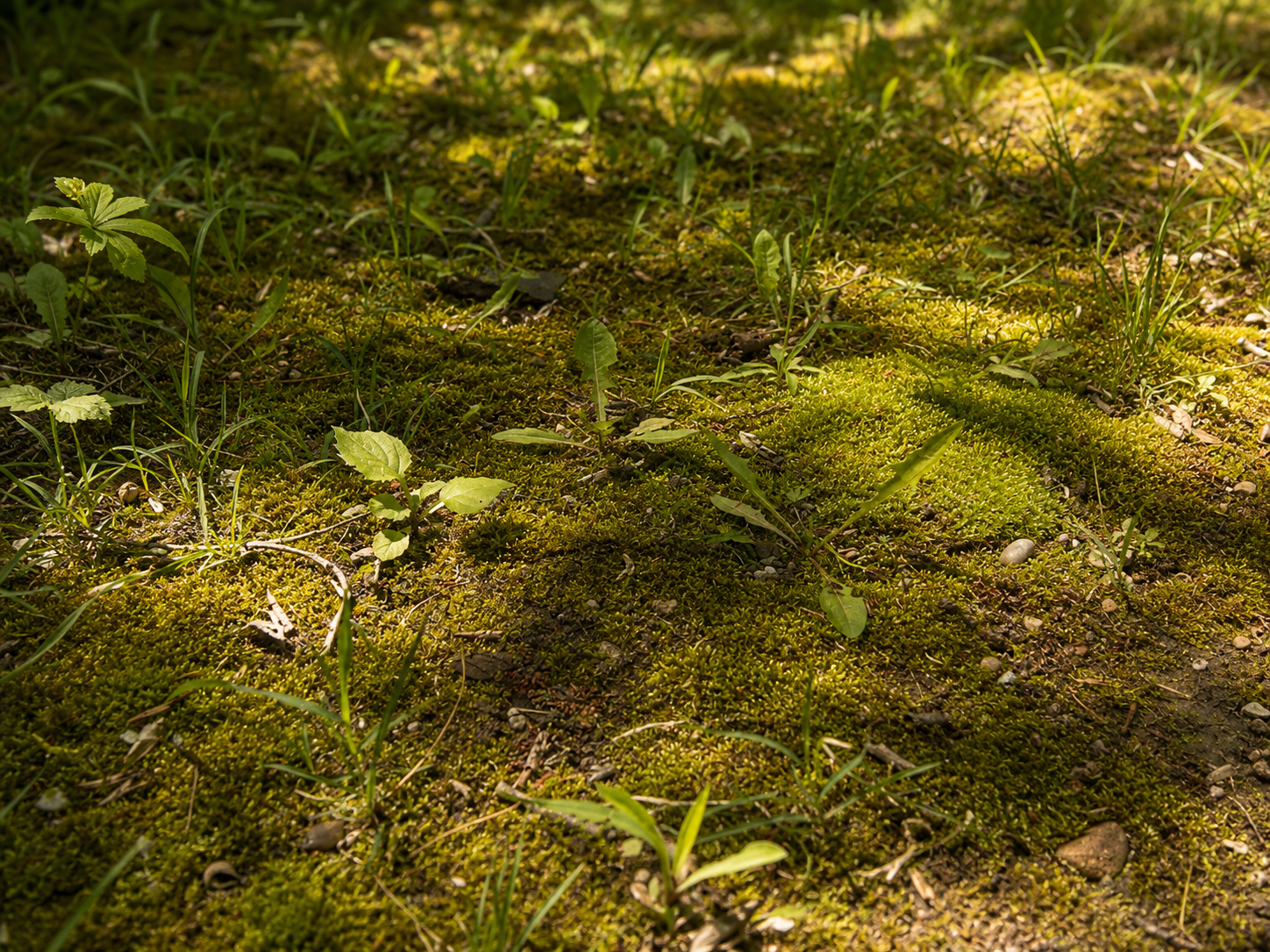
Patches of moss covered portions of the forest floor. Some formed dense cushions, while others spread outward in soft carpets beneath the trees. Tiny orange sporophytes rose above the green surface, adding texture and color that I probably wouldn’t have appreciated quite the same way on an ordinary walk.
I’d passed these patches plenty of times while gathering firewood. They weren’t new discoveries in the sense that I’d never seen them before. What had changed was what I was looking for.
With reptile habitats on my mind, I started considering the moss as something I might actually cultivate and use. Instead of seeing another patch of green on the forest floor, I was wondering what species it might be, how it grew, what conditions it preferred, and whether I could keep it alive at home.
Of course, moss is never just moss. A patch of forest moss is an entire little ecosystem, containing insects, fungi, microorganisms, eggs, soil life, and plenty of other things that aren’t immediately visible.
Naturally, I brought some home anyway.
The more I considered it, the more interesting the idea became. The future newt project was still five to eight months away. Rather than treating the moss as something I needed to install in an enclosure immediately, I could start a separate experiment first. A propagation bin, a small moss nursery, and an opportunity to learn how to cultivate and expand it over time.
The weekend hadn’t suddenly become a mission to collect everything I could find. We were still spending time together, relaxing by the lake, and enjoying the property. I had simply found another way to engage with a place I already knew well.
The Work Begins
The romantic part of the story ended once everything arrived back home. The practical work began.
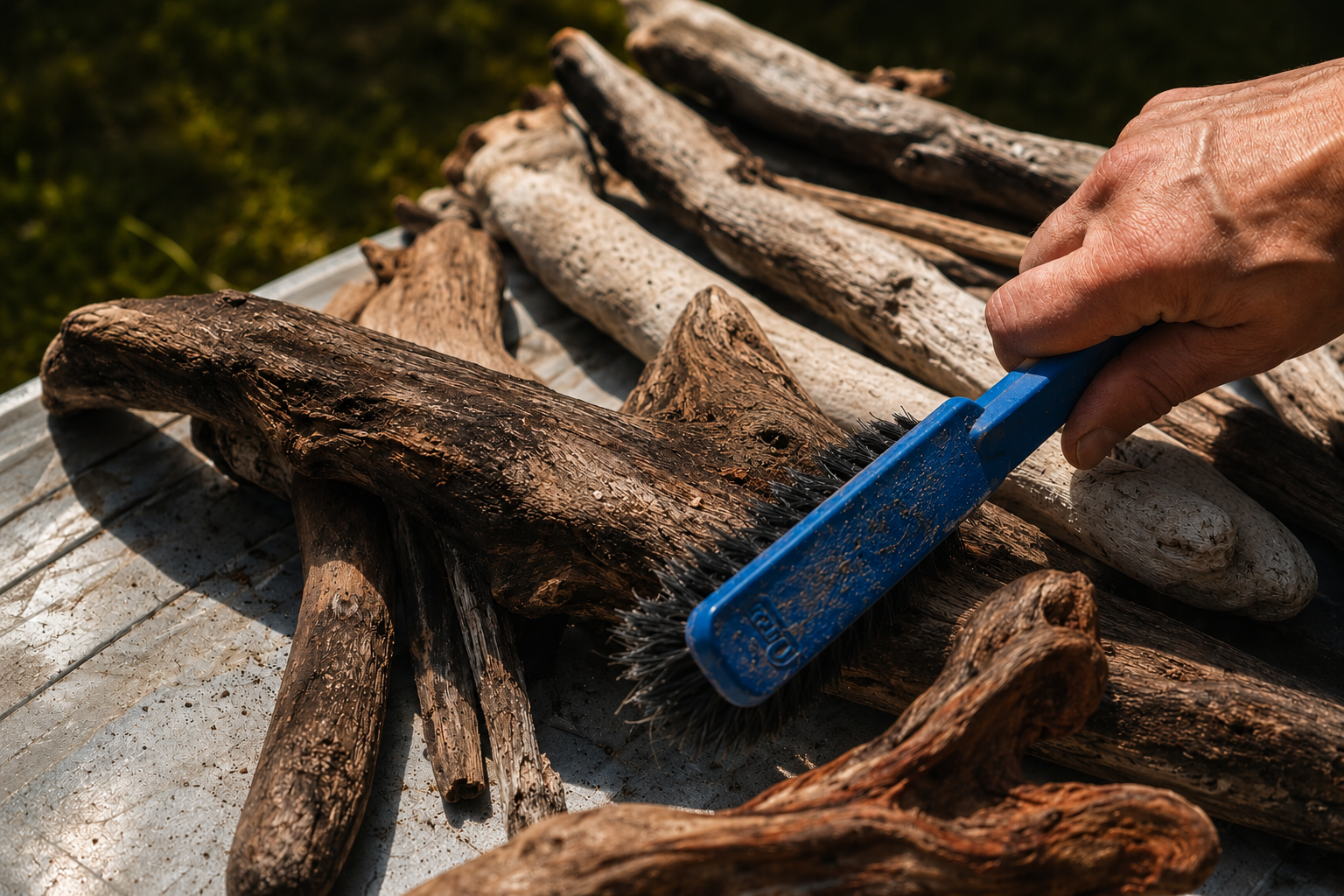
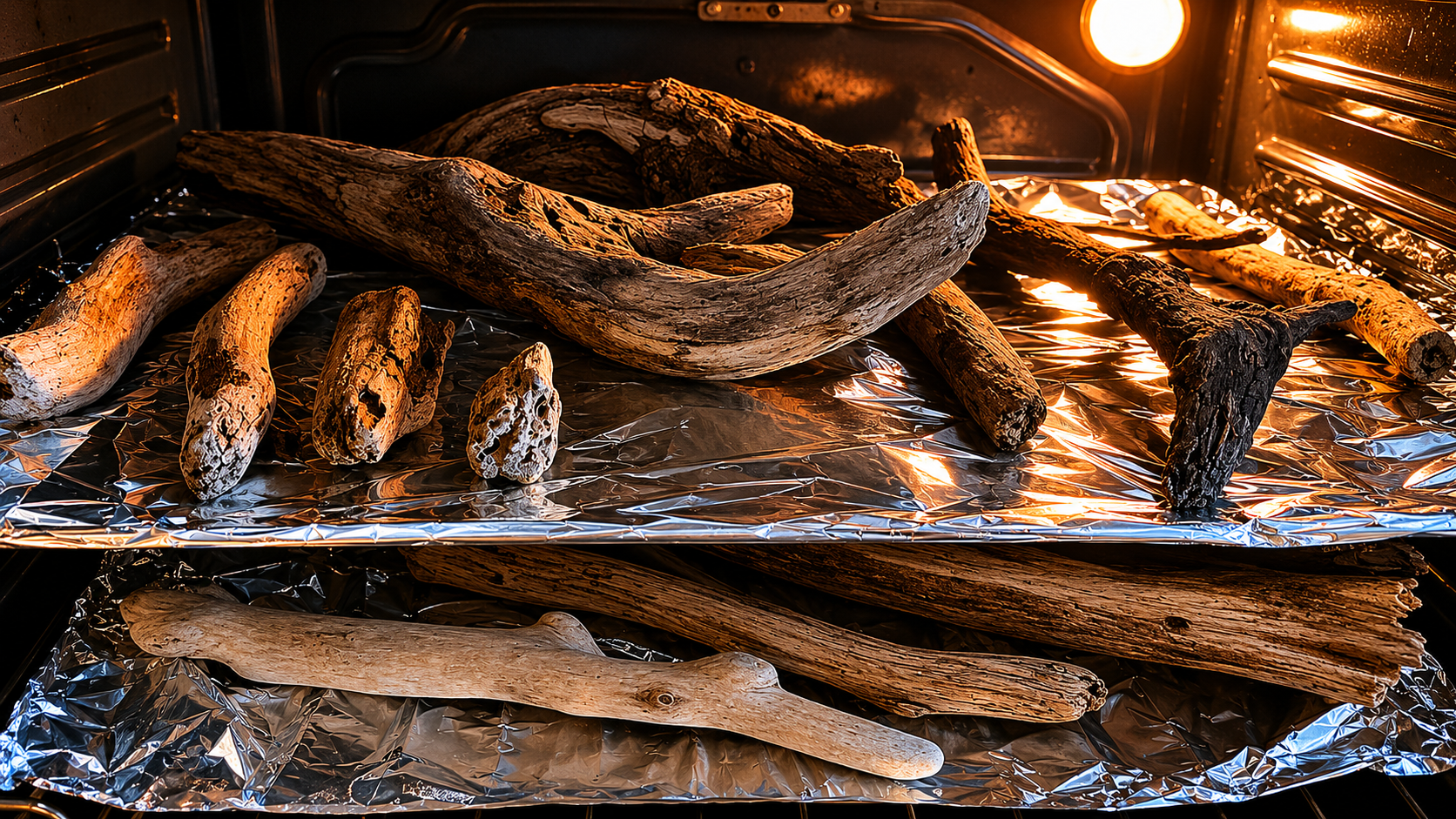
Every piece of driftwood needed to be inspected and cleaned. Years of sand, dirt, algae, and shoreline debris had accumulated in cracks and crevices. Armed with a brush, I spent part of an afternoon scrubbing each piece by hand.
The process was surprisingly satisfying. As the dirt disappeared, the character of the wood began to emerge. Twisted grain, weathered textures, and shapes that looked sculpted rather than grown.
After scrubbing came boiling water, followed by time in the oven. Several hours at approximately 230 degrees transformed the kitchen into something that smelled vaguely like a forest preserve. Piece by piece, the driftwood was cleaned, dried, and prepared for storage.
Most of the pieces emerged looking exactly as hoped.
A few remained under observation. Two of them, despite all the scrubbing, boiling, and baking, still smelled suspiciously like piss. Those pieces earned themselves an extended stay in quarantine. The garage became their temporary holding area while I decided whether they would eventually make the cut.
Not every piece of wood that looks interesting on a beach is necessarily worth bringing into an animal enclosure. Collecting it is one thing. Figuring out whether it’s suitable for its intended purpose is another.
A Longer Timeline
The moss faced a longer timeline.
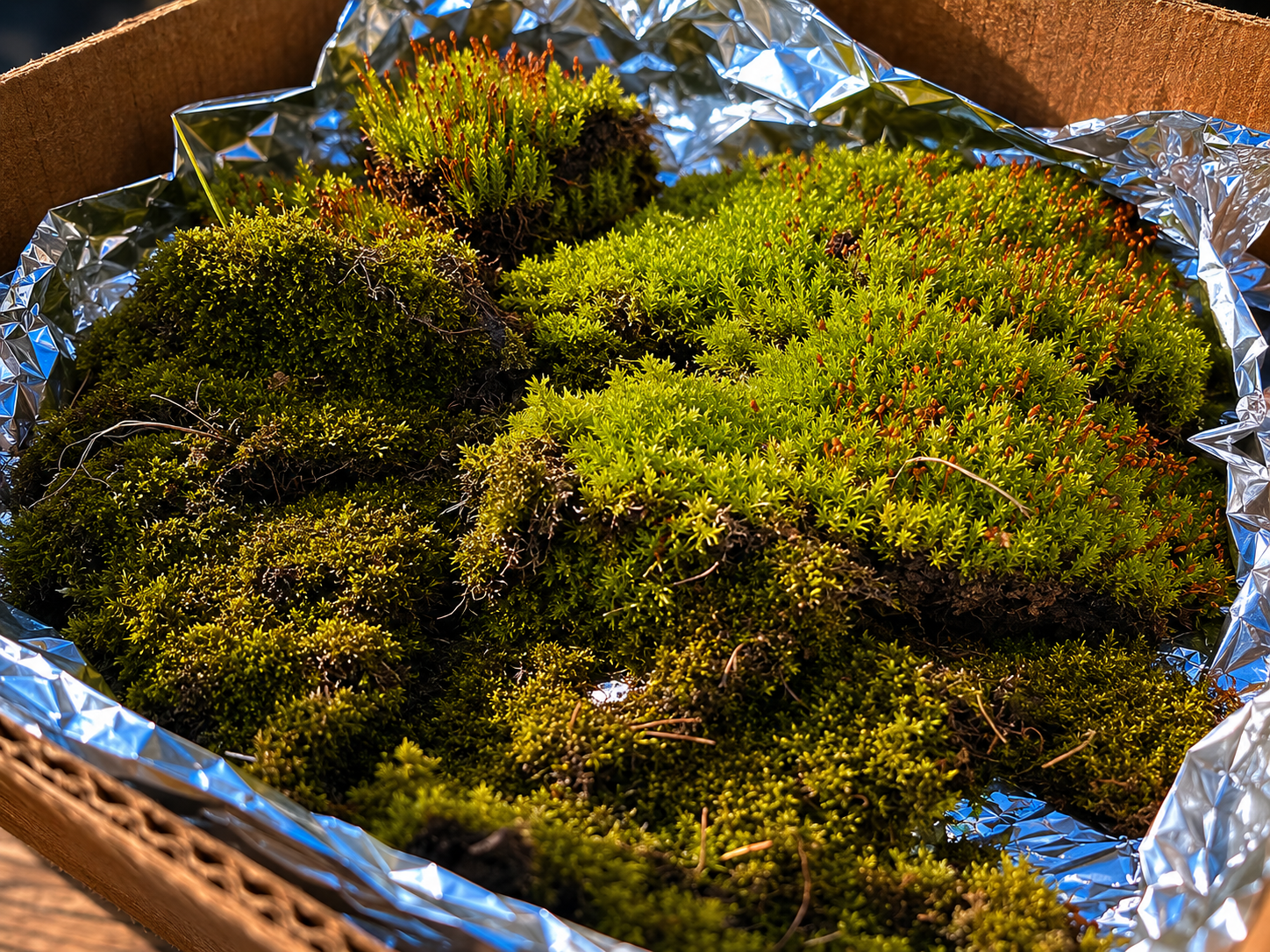
Rather than rushing it into an enclosure, the plan was patience, quarantine, observation, and eventually propagation. I wanted to see what survived, what thrived, and what I could learn about keeping these little patches of forest alive under controlled conditions.
There was also the question of everything that had come home inside them. Before introducing wild-collected material into a captive habitat, I needed to better understand what I was working with and whether it would be suitable.
The further I got into the process, the more familiar it all felt. Many of my projects begin long before there’s anything recognizable to show for them.
The mushroom lab existed as sketches and notes before it became a physical space (see The Basement Incubator).
My return to drawing began with a single sketch before I had any larger plans for where it might lead (see Drawing Returns).
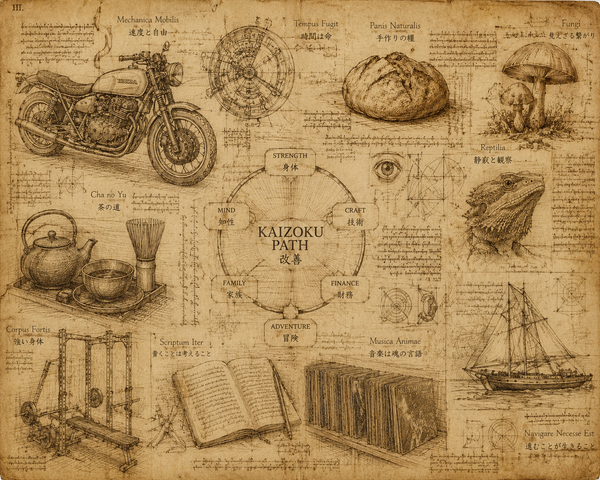
Kaizoku Path itself spent years existing as scattered interests before I began to recognize what connected them.
The driftwood and moss were another version of that process. I had materials, a few ideas, and enough curiosity to start experimenting. The finished habitats could come later.
Paying Attention
At the time, there were no completed bioactive enclosures, no new reptiles or amphibians, and no finished habitats waiting for these materials. Just driftwood drying in the garage, moss beginning an experiment, and a notebook full of ideas.
What stayed with me from those few days on Lake Huron was how differently I had looked at a place I’d visited for years.
The driftwood had always been scattered along the shoreline. The moss had always been growing in the woods. But once I had a particular use in mind, I started noticing their shapes, textures, conditions, and possibilities in a way I hadn’t before.
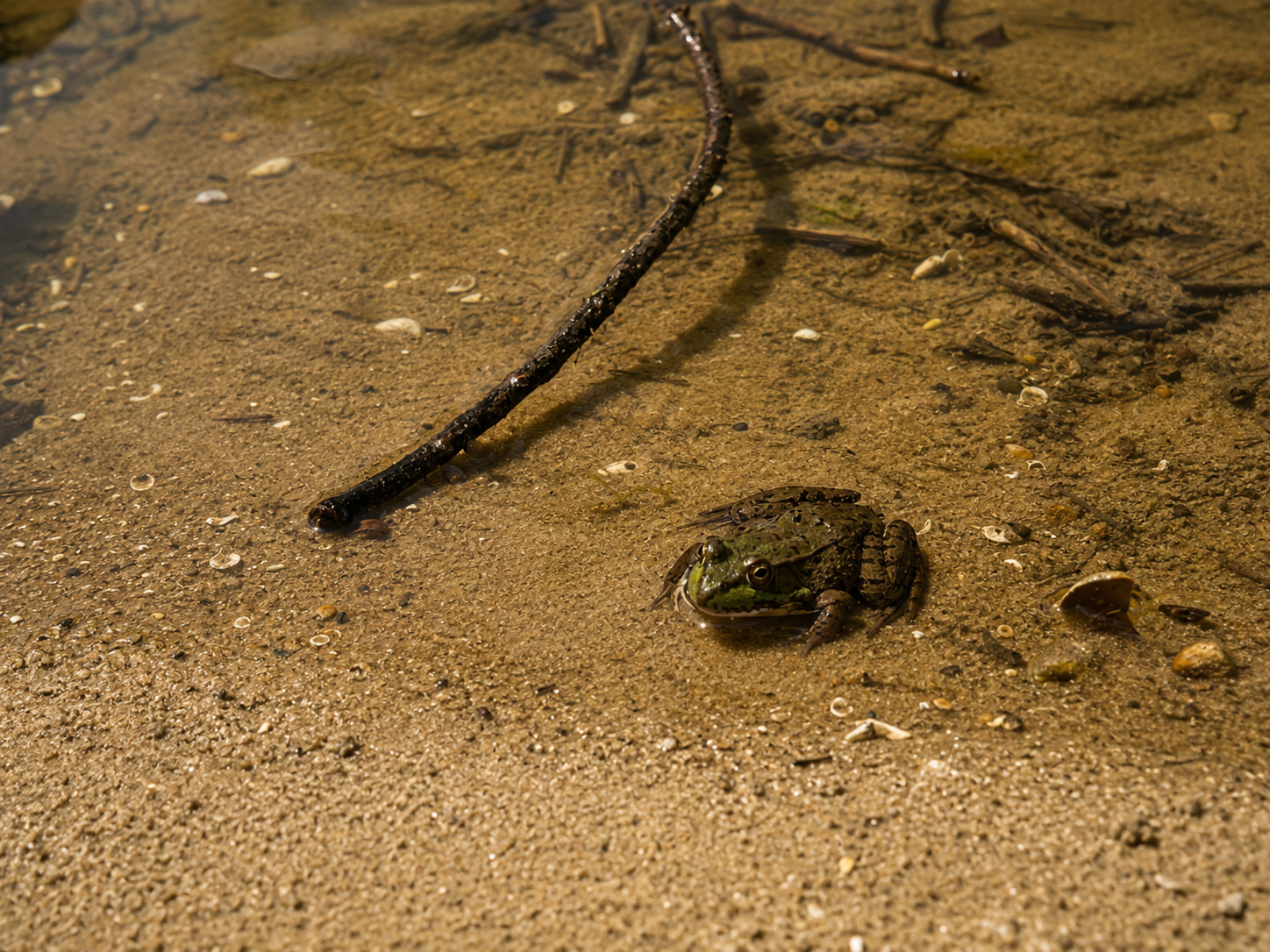
Even a frog sitting motionless in a shallow creek running through the property caught my attention. I was already thinking about amphibians and reptile habitats, so I was naturally more inclined to look for them.
It wasn’t that I’d gone up north looking for some profound experience. I was spending time with my family, enjoying the sunshine and the lake, and gathering a few materials for projects I hoped to build.
The interesting part was how easily those things fit together. My curiosity gave me something else to pay attention to without requiring the weekend to revolve around it.
Projects Begin Long Before They Exist
There’s a tendency to think that worthwhile projects need to begin with a clear plan, a list of materials, and a defined outcome. Sometimes they do. Other times, an idea is already somewhere in the back of your mind, and an ordinary experience gives you the opportunity to move it forward.
That’s what happened on Lake Huron.
Between long conversations, afternoons watching freighters move across the horizon, walks along the shoreline, and time spent with family, I came home with the beginnings of several future projects. The driftwood offered a collection of shapes and structures I could eventually build around. The moss presented a separate challenge, one that I hoped would develop into a small propagation project.
Several months later, some of those possibilities have already become real. Two pieces of the collected driftwood have found their way into a completed bioactive enclosure I’m preparing for an Amazon milk frog. The frog hasn’t arrived yet, but the habitat is built, and it’s satisfying to see materials gathered during a family trip become part of something I’d only been imagining at the time.
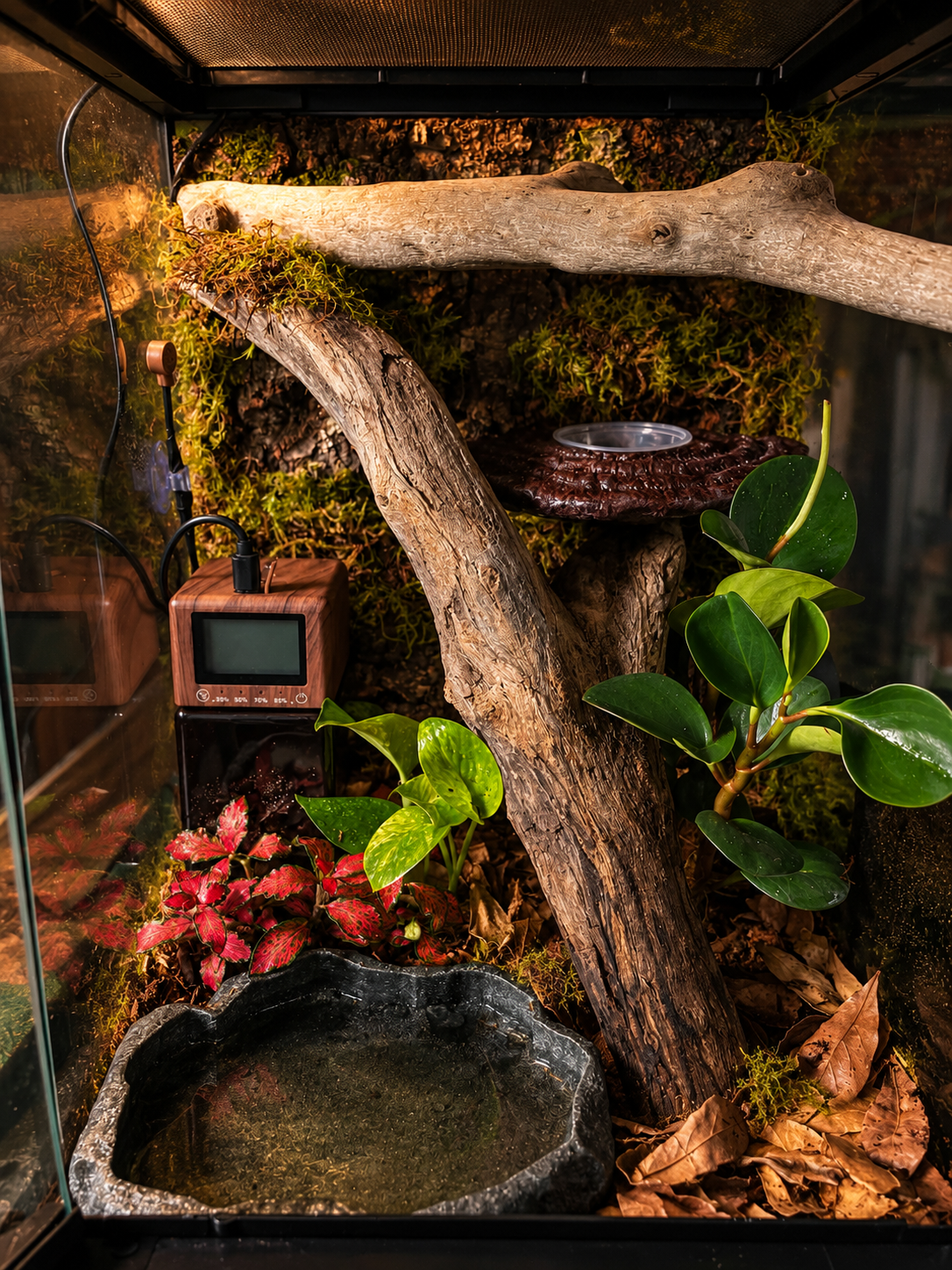
The moss, on the other hand, didn’t survive. Unfortunately, I had to purchase the moss required for completing the bioactive frog enclosure. Whatever I hoped to cultivate from those original patches didn’t work out, and I’ll need to approach that experiment differently if I want to try again.
That’s part of working with living materials. Not everything you collect will be useful, and not every experiment will succeed. Sometimes the idea survives even when the material doesn’t.
What I appreciate about the whole experience is that none of it required setting aside a weekend specifically for productivity. We went to the lake to enjoy ourselves. I had a project in mind, paid attention to what was around me, and brought home a few things that might be useful later.
Some of them were. Some weren’t.
And a couple of pieces of driftwood that spent years washing around Lake Huron are now sitting inside a tropical habitat in my basement. I find that pretty satisfying.
Kaizoku Path isn't about leaving your life behind.
It's about discovering the adventure inside of it.
More Editions, Field Notes, and Project Ledgers can be found at kaizokupath.com.