Permission to Wander Without a Plan
An unplanned afternoon of wandering, record digging, and quiet time reveals how everyday life changes when it isn’t shaped by constant optimization.
Field Note V
An Opening in the Day
My wife had a massage appointment and the kids were at grandma’s, which created a rare kind of opening.
I could have stayed home. She could have gone to her appointment, I could have disappeared into whatever project was waiting for me, and a few hours later we would have picked the kids up and carried on. There would have been nothing wrong with that. Instead, I decided to go with her.
There still wasn’t a plan. I wasn’t trying to manufacture a date or make the afternoon memorable. I just saw an opportunity to have a couple hours on my own and some time with her afterward, and decided to leave the rest open.
That distinction matters to me. There was no plan, but there was an intention: let the time be what it was going to be.
Normally, when an opening like that appears, my instinct is to use it. I like working on things, building, fixing, tending, moving something forward. That pull doesn’t come from pressure. I genuinely enjoy it.
But this time, I didn’t need the afternoon to become anything.
Wandering Instead
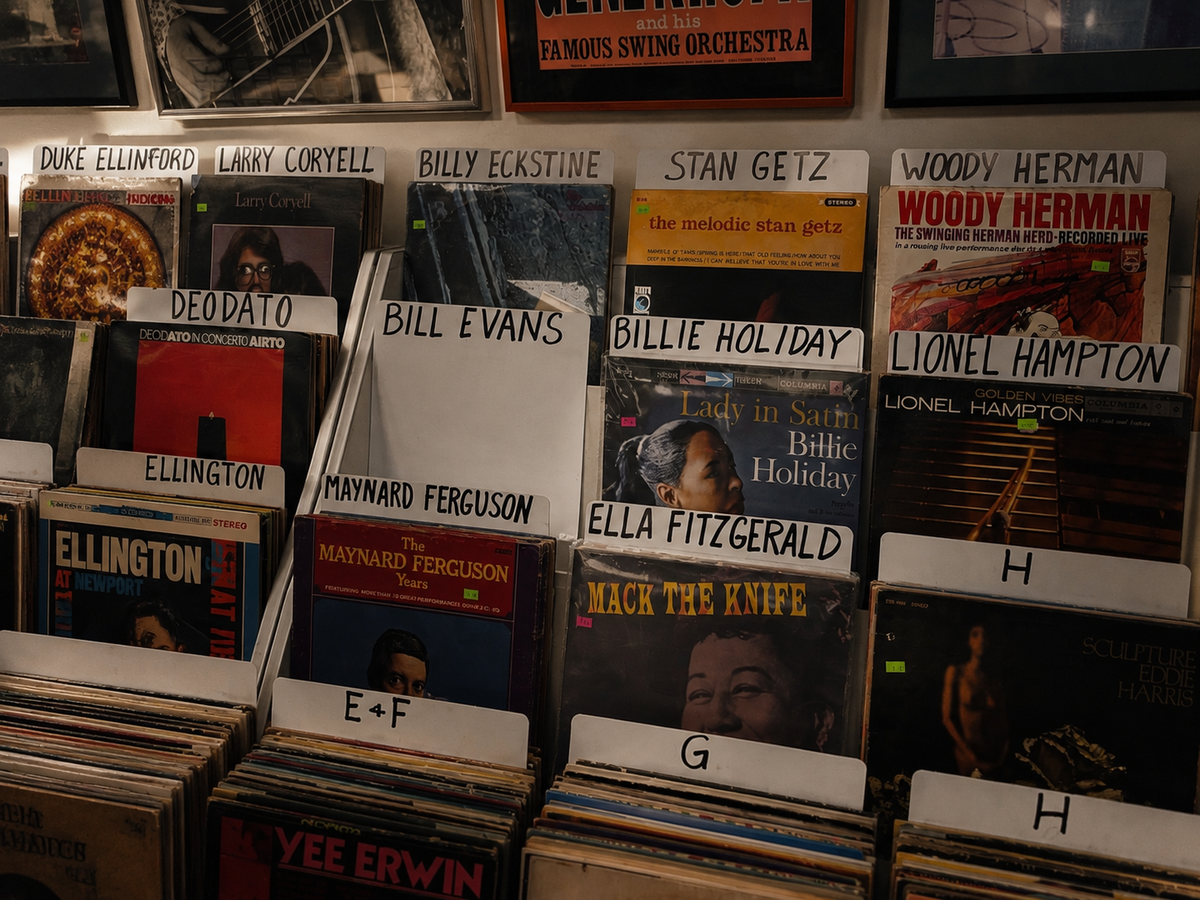
I ended up in a record store.
Recently I’ve been slowly building a jazz collection, although even that phrasing makes it sound more deliberate than it is. I’m not trying to become a serious collector or chase rare pressings. I’m also by no means a jazz expert.
What interests me is creating soundtracks for particular spaces and moments in my life. Music for an evening with friends. Something playing while I draw. A record for a quiet afternoon spent working with my hands. The right sound for the right moment.
I’ve also realized I don’t need to connect with everything I’m supposed to appreciate. Respecting something and actually wanting to live with it are different things. Some widely recognized artists don’t do much for me. Others immediately feel inhabitable.
I left with a Bill Evans Trio album and a strange psychedelic live compilation that looked like it had slipped in from another timeline.
One familiar. One completely unknown. That felt about right.
Letting Time Sit
Afterward, I grabbed a slice of pizza and sat alone by a window. Nothing remarkable happened.
The city moved in its usual rhythm. People passed by. Conversations drifted in and out of earshot. I ate my pizza and watched things happen.
There was no podcast playing. I wasn’t learning anything. I wasn’t trying to turn the time into progress or squeeze something useful out of it.
Strangely, there wasn’t even much of the usual voice telling me I should be doing something else.
I had already decided what the afternoon was for: nothing more than this.
The Pull of Optimization
I like optimization. I like systems, habits, and small adjustments that make life run more smoothly. I like figuring out better ways to do things.
The problem is that an unclaimed hour can start to look like a problem waiting to be solved.
Walking becomes step counts. Coffee becomes caffeine delivery. Hobbies start looking suspiciously like side businesses. Rest becomes recovery. Even presence can become another thing to get better at.
The instinct is always to give the time a job. That afternoon didn’t have one.
I wandered through a record store because I wanted to. I ate pizza because I was hungry. I sat by a window because there was nowhere else I needed to be.
Then I met my wife for coffee, and that was the afternoon.
What an Ordinary Afternoon Reveals
What stood out afterward was how little had actually happened. I walked through town, bought a couple records, ate pizza, watched people through a window, and had coffee with my wife.
There was no trip somewhere new, no retreat from ordinary life, and no attempt to escape routine. I hadn’t even planned the afternoon.
I had only made room for it.
Maybe that is the more useful kind of permission: not waiting for life to accidentally become interesting, but occasionally resisting the urge to decide in advance what a stretch of time needs to accomplish.
The afternoon could have been less interesting. I could have stayed home and gotten something done.
Instead, one thing led to another.
Carrying It Forward
I don’t think every empty afternoon needs to become an exercise in wandering. Sometimes there is work worth doing, something worth building, or a project I genuinely want to move forward. But not every opening needs to be claimed either.
There is a difference between having no plan because nothing is happening and intentionally leaving enough room to see what happens next.
That afternoon, the intention was simply to leave the space open. Permission to wander isn’t really about going anywhere in particular.
It’s about occasionally deciding that, for the next few hours, you don’t have to.
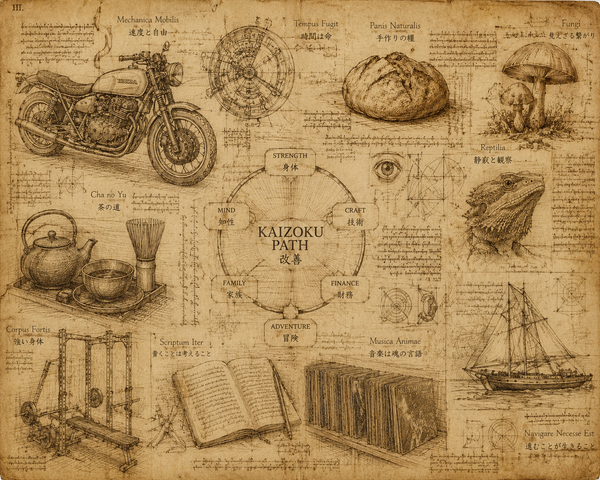
Kaizoku Path isn't about leaving your life behind.
It's about discovering the adventure inside of it.
More Editions, Field Notes, and Project Ledgers can be found at kaizokupath.com.