Building a Visual Language Through Drawing
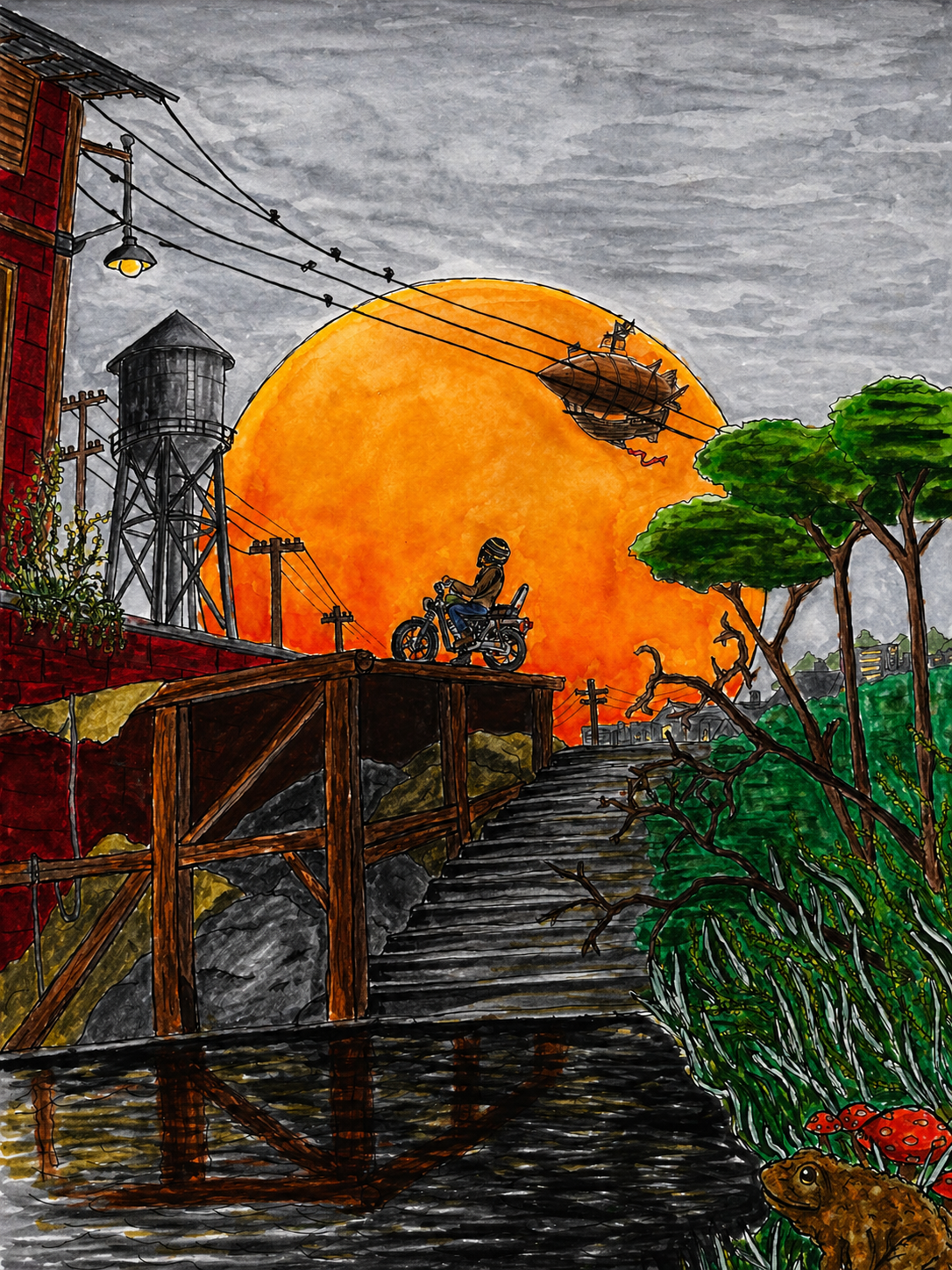
A return to drawing evolves into a simple, repeatable practice shaped by Miyazaki, Moebius, and everyday life, gradually forming a personal visual language.
Project Ledger III
Where It Started
I used to draw all the time. There was no structure or intention behind it, just something I could do better than most kids around me without thinking too much about it. Both my father and grandmother were artists and still draw well today. It was always present in the background, not as a profession, but as a natural extension of how they moved through the world.
Somewhere along the way, I stepped away from it. Growing up pulled my attention elsewhere; trying to fit in, chasing girls, drinking, college, and the start of adult life. None of it felt wrong, but over time drawing moved further out of reach until it became something I used to do.
The Return
Lately, it has been coming back. Not as a skill I need to relearn from scratch, but as something familiar that I haven’t spoken in a long time.
The inspiration has been building from a few directions at once. The work of Hayao Miyazaki and Jean “Moebius” Giraud has been a big part of that. Both create worlds that feel grounded in reality but slightly shifted. They rely on clarity, restraint, and presence rather than excess.
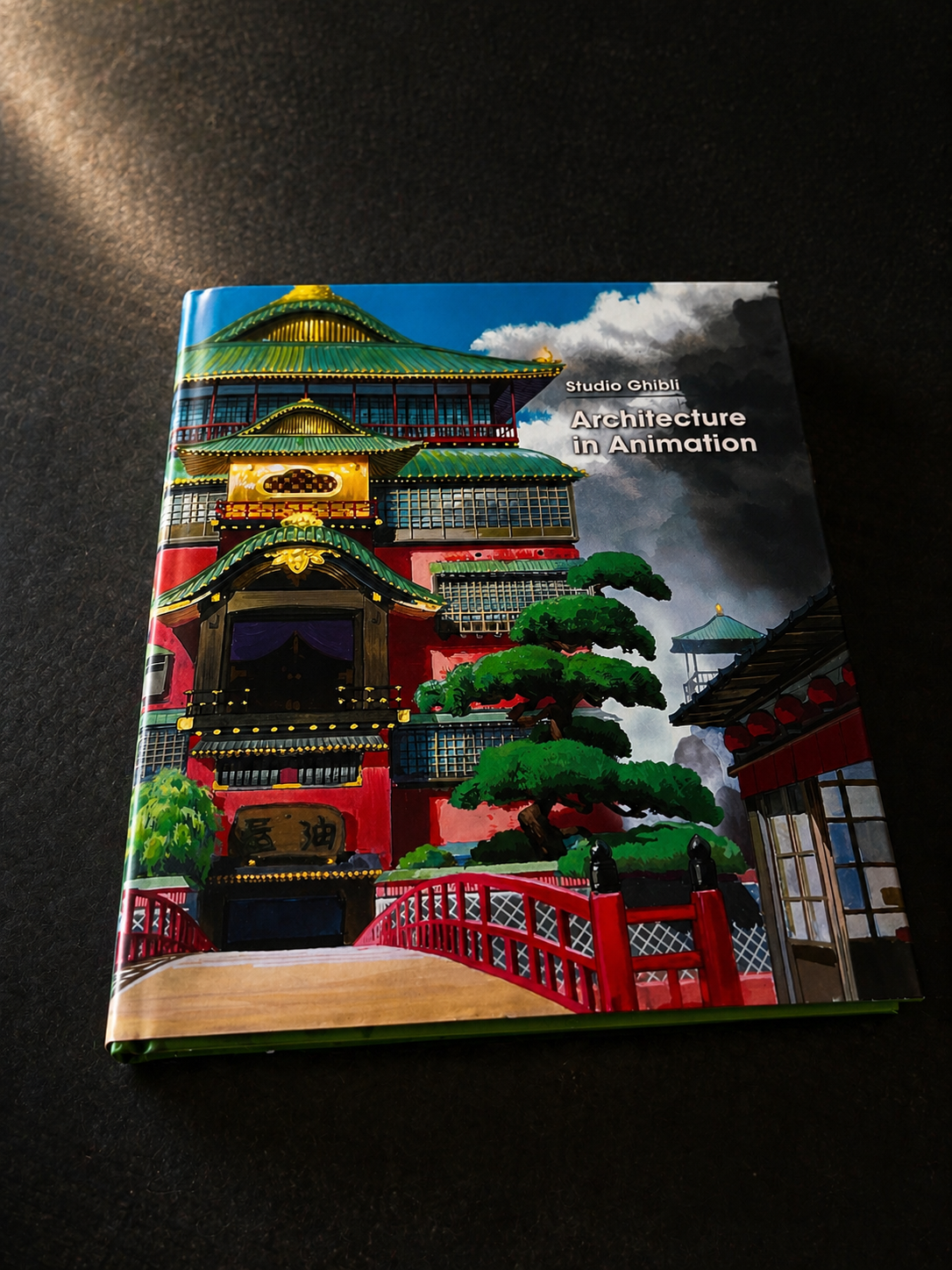
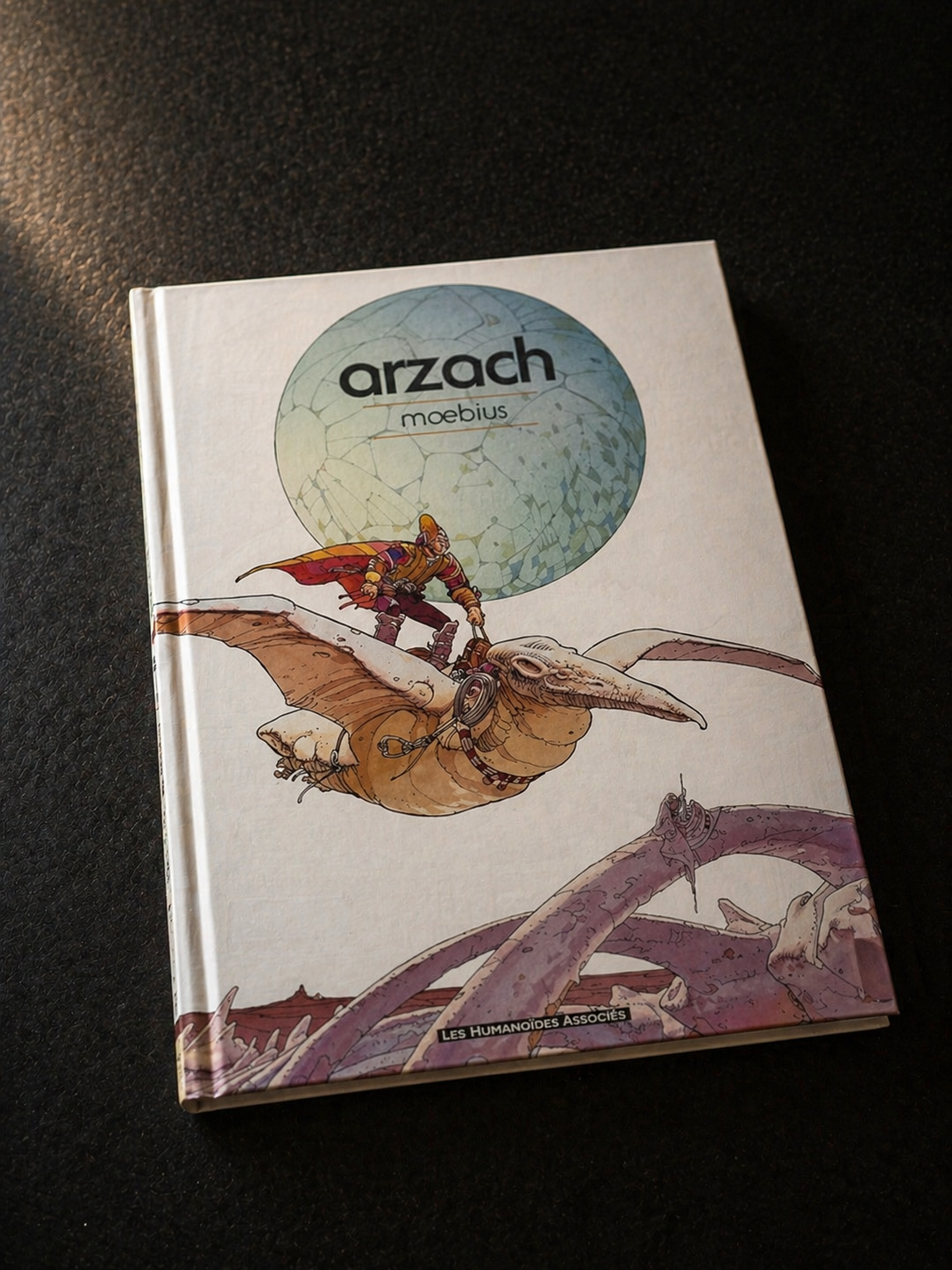
I am still finding my own hand in it. Skill returns faster than style. Technique can be practiced, but voice takes longer. It has to be uncovered.
What pulls me is consistent; the quiet worlds of Miyazaki and the strange, elegant landscapes of Moebius. Their work feels lived in rather than simply illustrated. The spaces carry atmosphere, and the characters feel like they existed before the page.
The goal is not imitation. It is translation.
Taking what resonates and letting it pass through my own life, my own spaces, and my own sense of balance and tension.
Building the Language
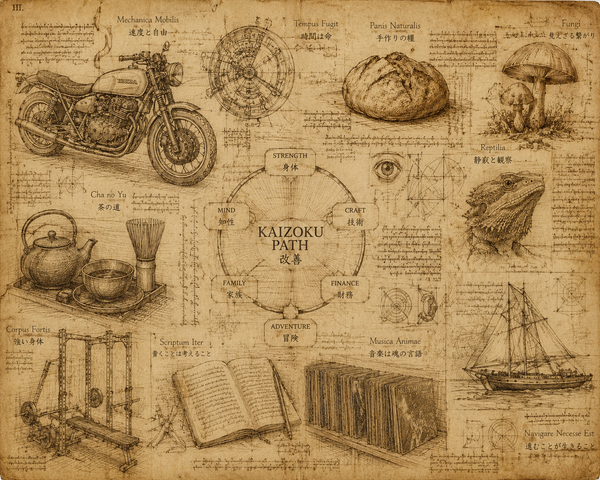
That idea connects directly to what I’ve already been building; a world rooted in real life. Basement spaces, reptile enclosures, mushroom cultivation, aspirational builds, and quiet mornings. The missing piece has been a visual language that belongs to that world instead of being borrowed from somewhere else.
I started by listing what I am naturally drawn to: lizards, frogs, and dinosaurs. Samurai, swords, and Eastern European history tied to my own lineage. Old dworki, tapestries, and the Polish-Lithuanian Commonwealth. Mushrooms and forests. Industrial systems, pipes, valves, and control panels. Detroit architecture and layered cities. Ruin and decay. Motorcycles, cars, boats, and airships. Japanese interiors, gardens, and negative space. Female protagonists, warriors, audio equipment, strange planets, and abstract forms.
At first it looks scattered, but it begins to organize itself into a few clear groups; organic life, human culture and myth, industrial systems, environments, and atmosphere. The key is not combining everything at once. It is pairing two or three elements and letting them interact.
A mushroom growing from a valve. A samurai standing inside a factory. A quiet room with a single object placed with intention. A small boat drifting through a dense, layered city.
Each pairing creates tension while the composition stays calm.
Restraint and Composition
That calm is important.
There is a strong pull to fill every inch of the page, but the work benefits from restraint. Negative space, limited palettes, and clear focal points create more impact than complexity. Most drawings can live within two or three colors; one green, one red, one neutral. Variation comes through pressure, layering, and control rather than expansion.
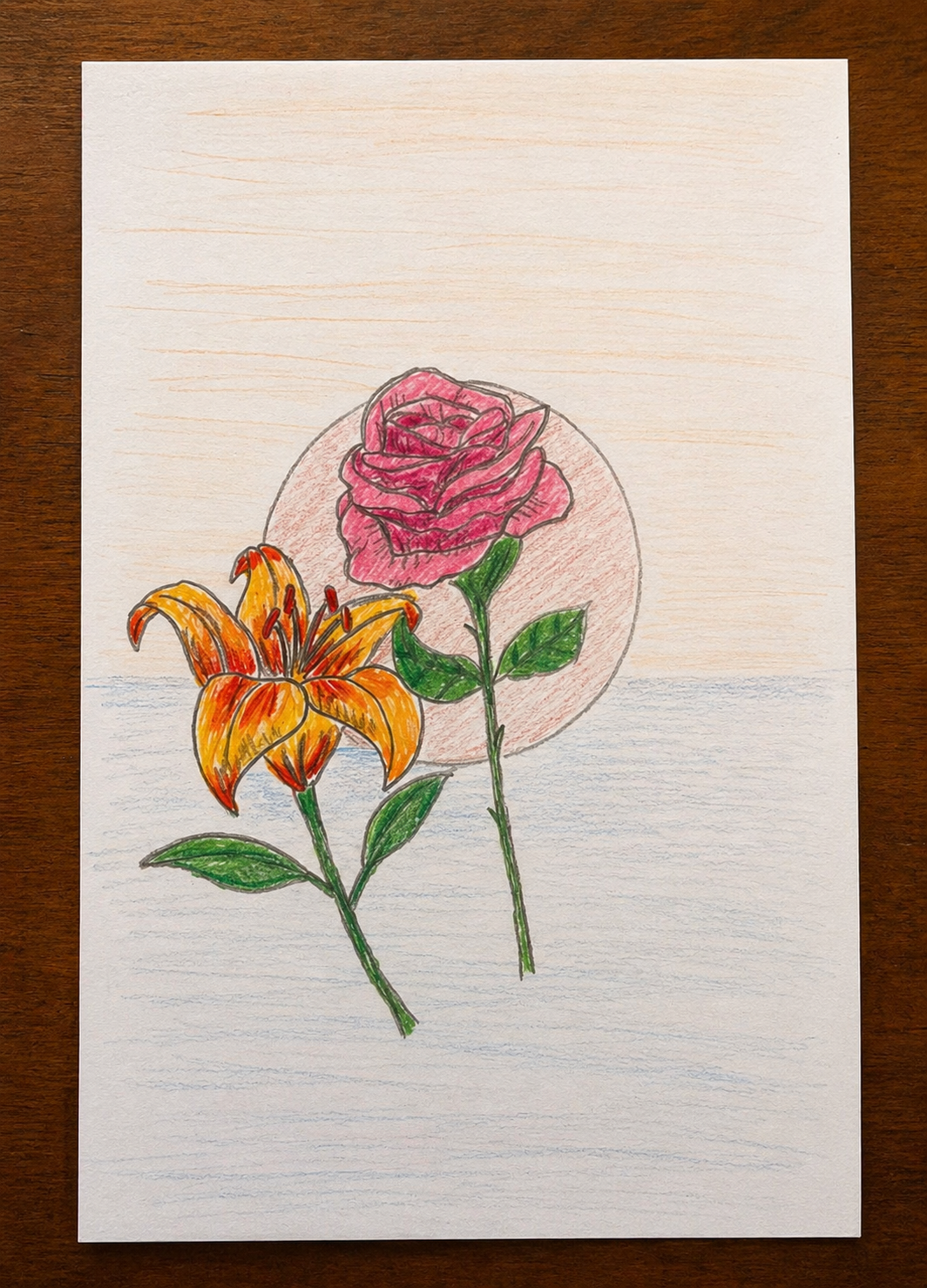
This showed up naturally even in a quick drawing with my kids. The composition was balanced. The palette was limited. Line and color stayed separate. The instinct was already there.
The next step is not to complicate it.
It is to keep drawing and let the skill catch up to what already feels right.
Tools and Process
The tools follow the same logic.
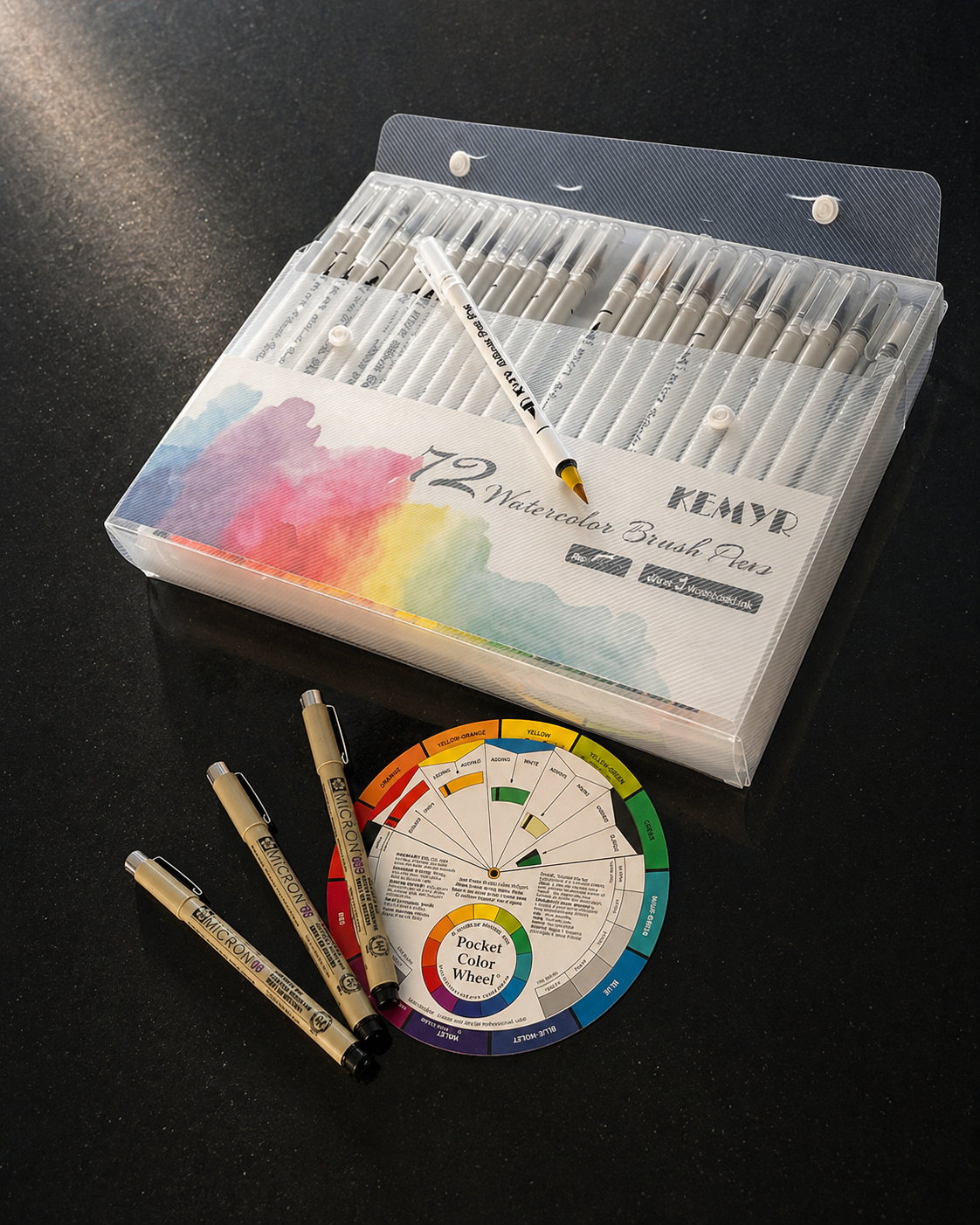
An ink pen comes first, defining clean structure through line. Watercolor brush markers are used mostly dry to apply color, with occasional blending when needed. The goal is control with just enough softness to keep the work from feeling rigid.
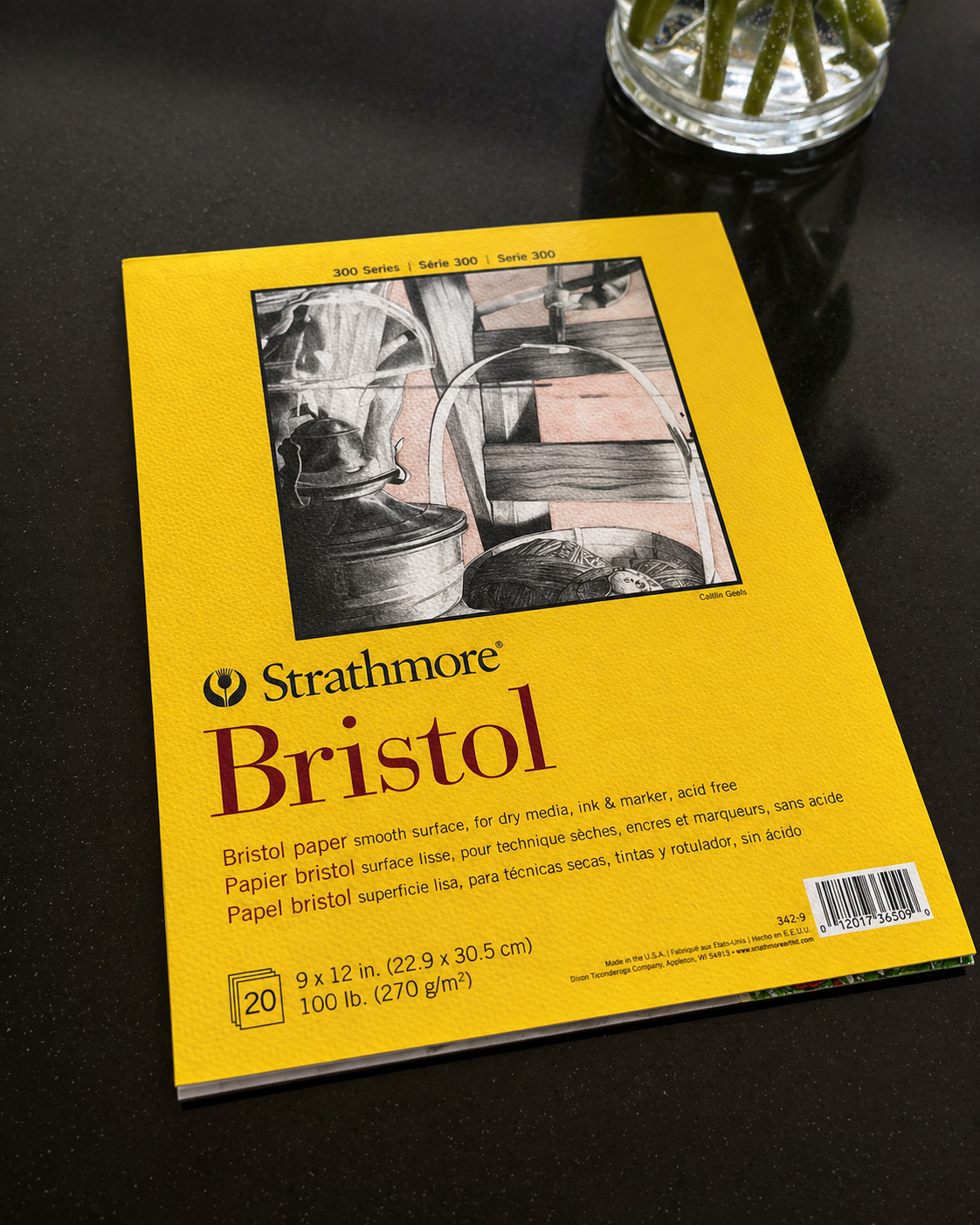
Paper matters more than expected. A smooth surface like Bristol supports clean linework and controlled color. Mixed media paper allows for more flexibility with water. Heavier watercolor paper can come later if the work shifts more toward painting. For now, the process leans toward line first, color second.
Size also plays a role. Working around a 5" x 7" format keeps things manageable while still allowing enough space for composition. It forces decisions without becoming cramped and translates well for digital use and prints.
A simple color wheel helps guide decisions. Choosing an anchor color and then deciding whether to stay within a calm range or introduce contrast removes friction and keeps the palette consistent.
Where It Fits
The goal is not to become an artist in the traditional sense.
The goal is to build a visual language that belongs to the Kaizoku Path world. These drawings can live inside articles, zines, packaging, and physical objects. They become a way to connect the philosophy to something you can see and hold.
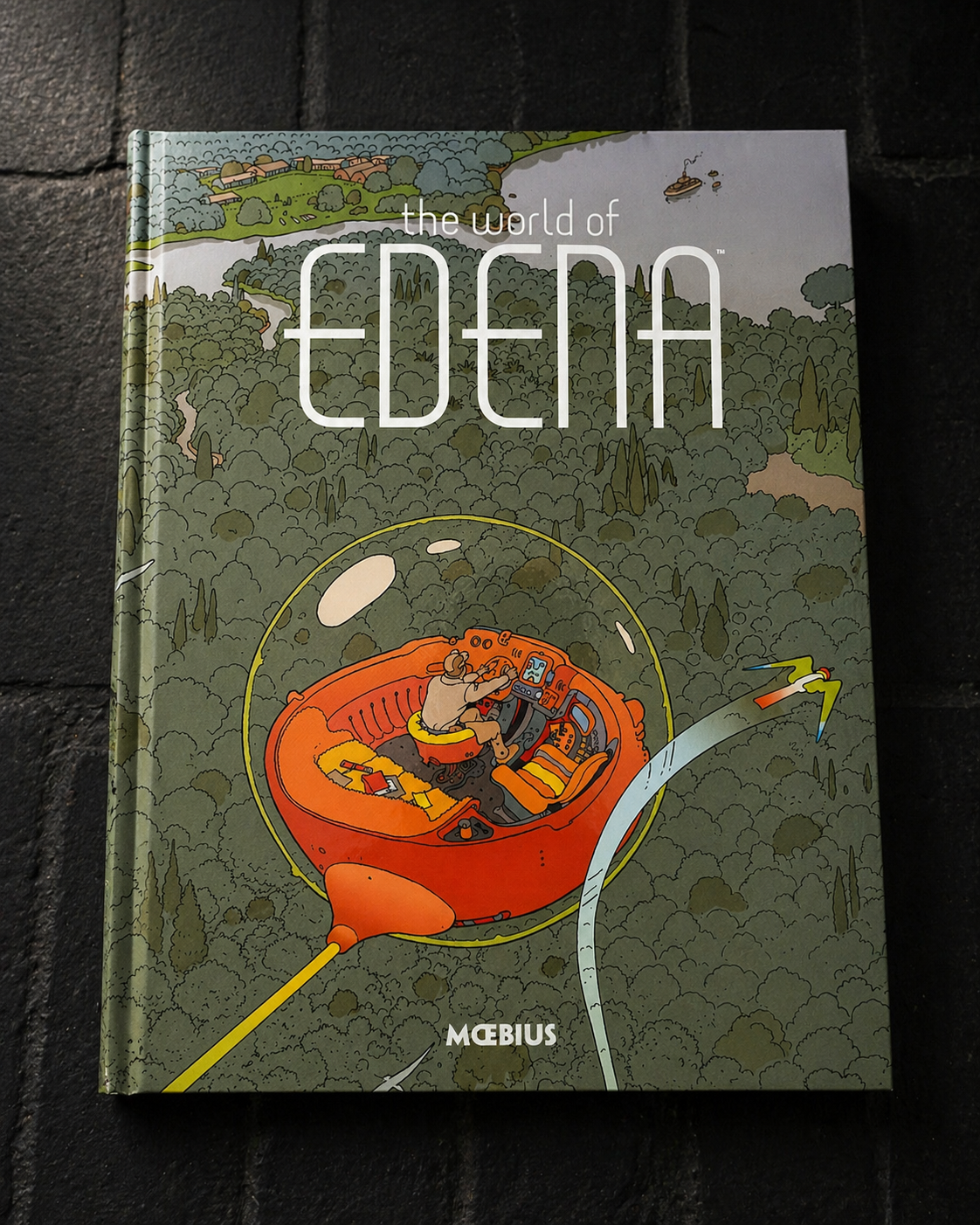
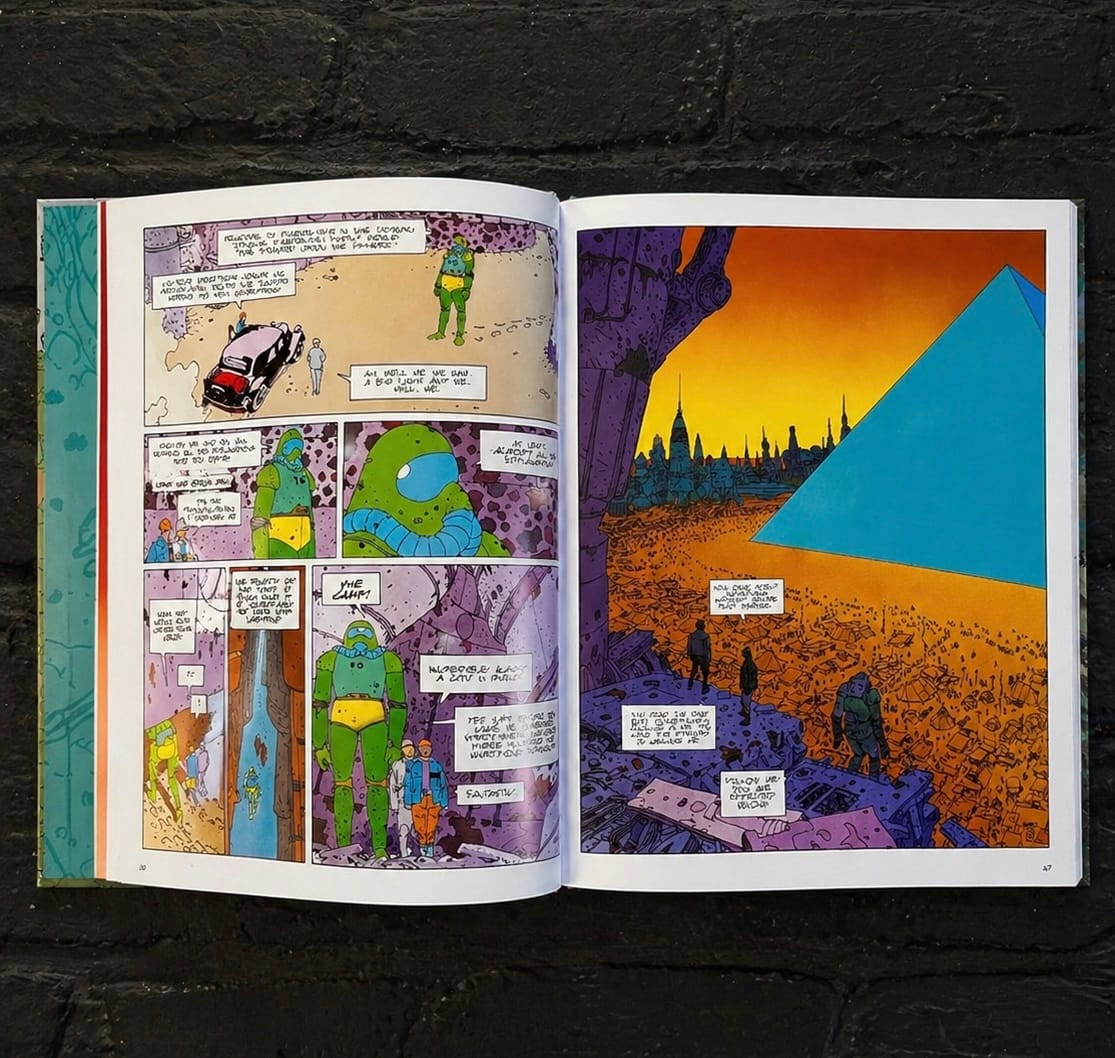
For inspiration, I keep returning to The World of Edena by Moebius. It shows how much can be done with clear lines, minimal color, and thoughtful composition. It shows how a world is built over time.
Drawing doesn’t need to replace anything. It folds into what already exists; a sketch while the kids are drawing, a small piece tied to an article, or a quiet moment on a weekend morning.
What It Becomes
What started as something I left behind is becoming something that connects everything else. Not as the main focus, but as a layer that adds depth. A way of seeing that carries into other interests and everyday rituals.
Drawing has become less about finished pieces and more about attention. It sharpens how you notice shape, atmosphere, proportion, and light. It reveals the small details that give a place its feeling.
It teaches presence in the same way that preparing tea, baking bread, or building something with your hands does.
Style isn’t something you invent overnight. It’s something you uncover by returning to what naturally pulls you; the same images, moods, and environments you keep trying to create.
For a long time, drawing felt like something I used to do.
Now it feels like part of the larger language I’ve been trying to speak all along.
Not a return to childhood.
A continuation with better eyes.
Kaizoku Path isn't about leaving your life behind. It's about discovering the adventure inside of it.
More Editions, Field Notes, and Project Ledgers can be found at kaizokupath.com.