The Art of Doing Nothing - Los Cabos
In Los Cabos, a trip built around doing nothing reveals how rest, environment, and unstructured time can remove noise and bring you back to presence.
Field Note IV
A Trip With No Plan
There was no plan for this trip beyond one thing: do nothing.
Not the version of nothing that still carries a quiet checklist in the background, or the kind where you convince yourself you are resting while your mind is still sorting through work, projects, and ideas. This was actual nothing. A full stop.
Most of the time was spent laying around or floating. Pool to chair, chair to pool. Frozen matcha drinks in hand, something to eat never very far away. There was nowhere we needed to be and very little reason to know what time it was. Eventually the day became whatever was happening directly in front of us.
That took a little getting used to.
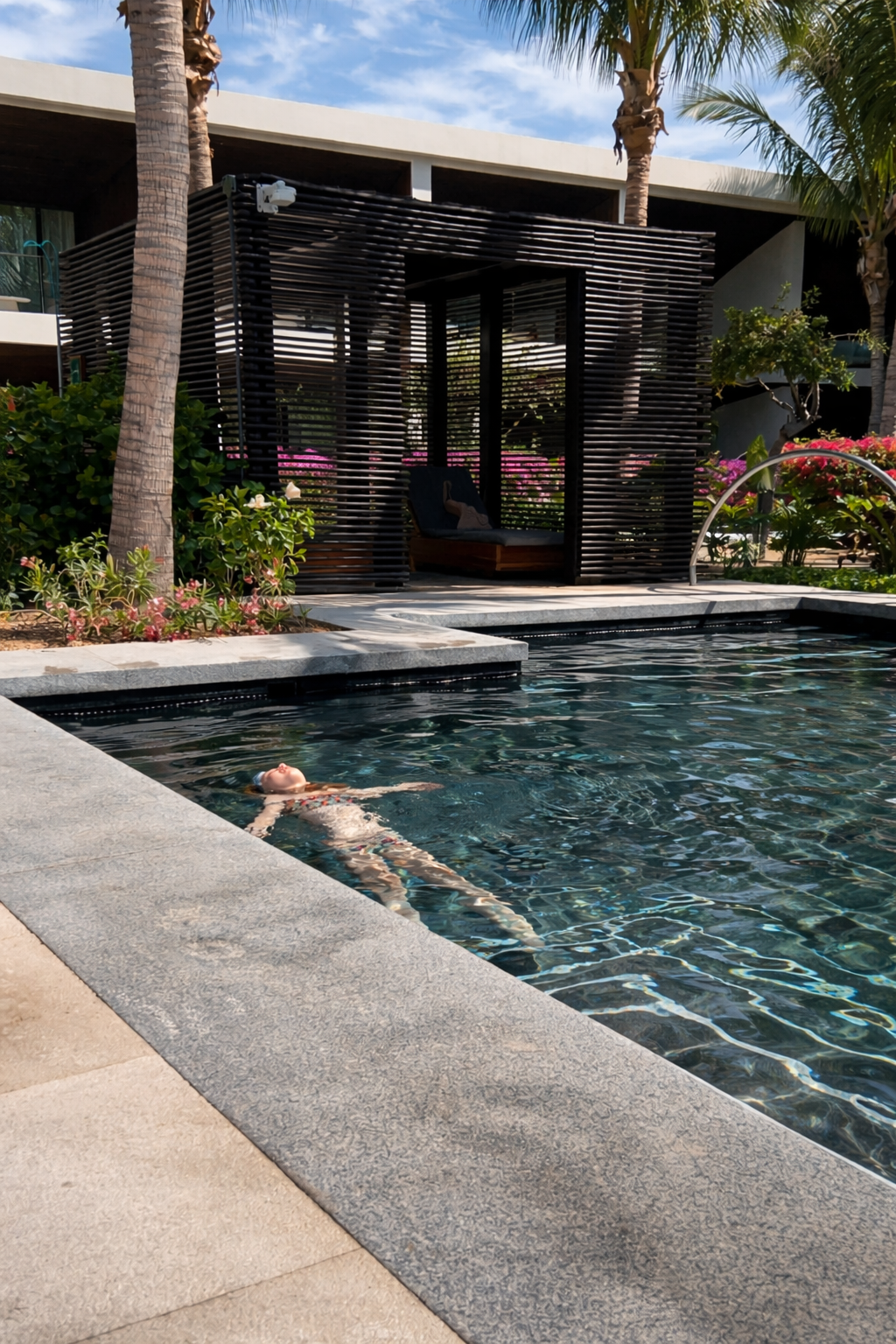
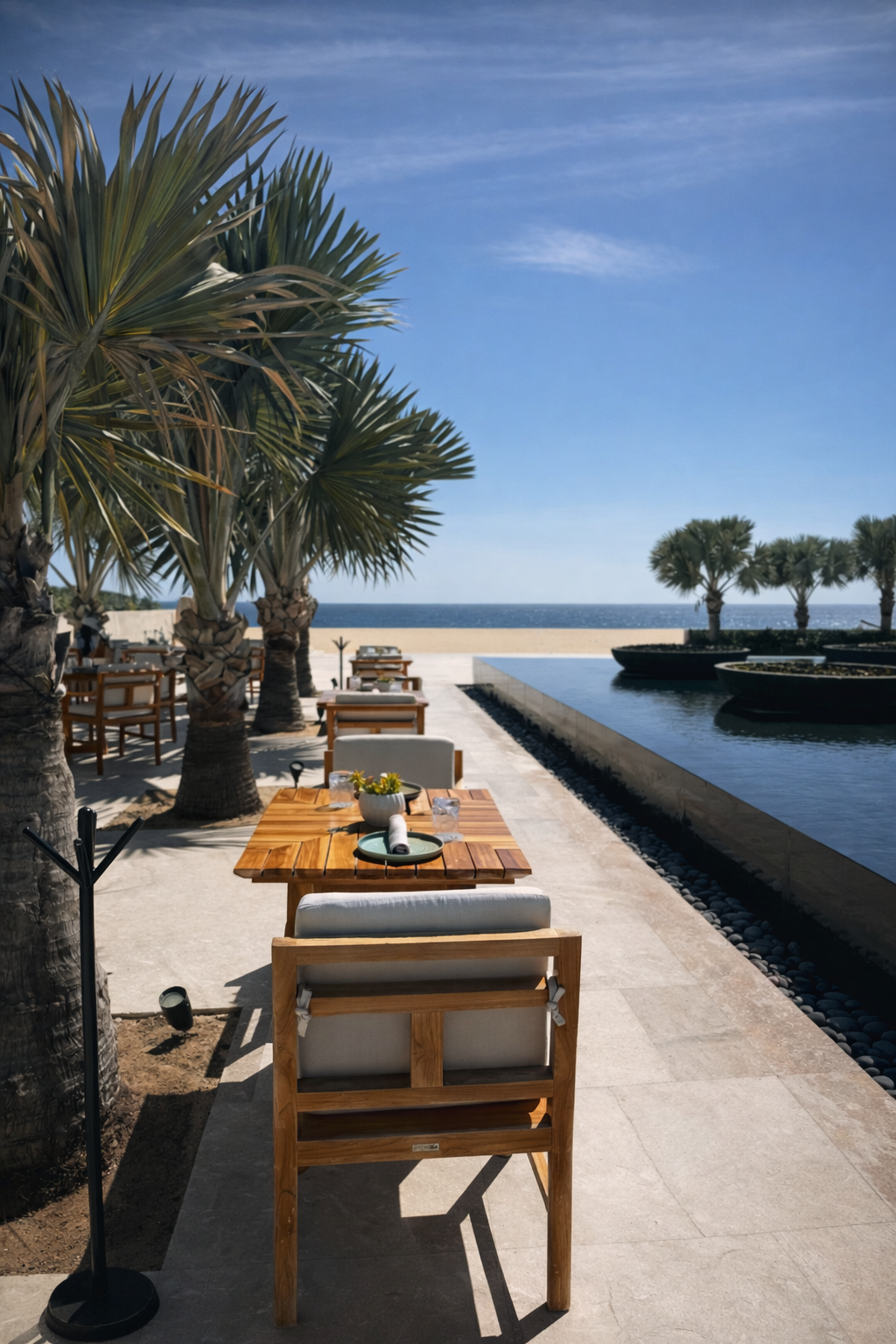
Most of my normal life has some kind of forward pull. Work has somewhere to go. Projects are always somewhere between an idea and being finished. There are responsibilities, logistics and the normal maintenance of a family and a home. Even the things I do because I enjoy them tend to involve making, learning, researching or moving something forward.
Here, there wasn’t anything to move forward. Once I stopped looking for it, that felt pretty fucking good.
An Environment That Doesn’t Push Back
Being somewhere else made this easier. Physically removing myself from work, responsibilities, projects and the familiar logistics of home creates a separation that I have never been able to fully reproduce with a staycation. I would love for staying home and deciding to relax to have the same effect. It doesn’t. The unfinished thing is still downstairs. The normal routines are still within reach. Life as I know it is sitting right there.
Los Cabos provided the distance, but the property itself did a lot of the work too.
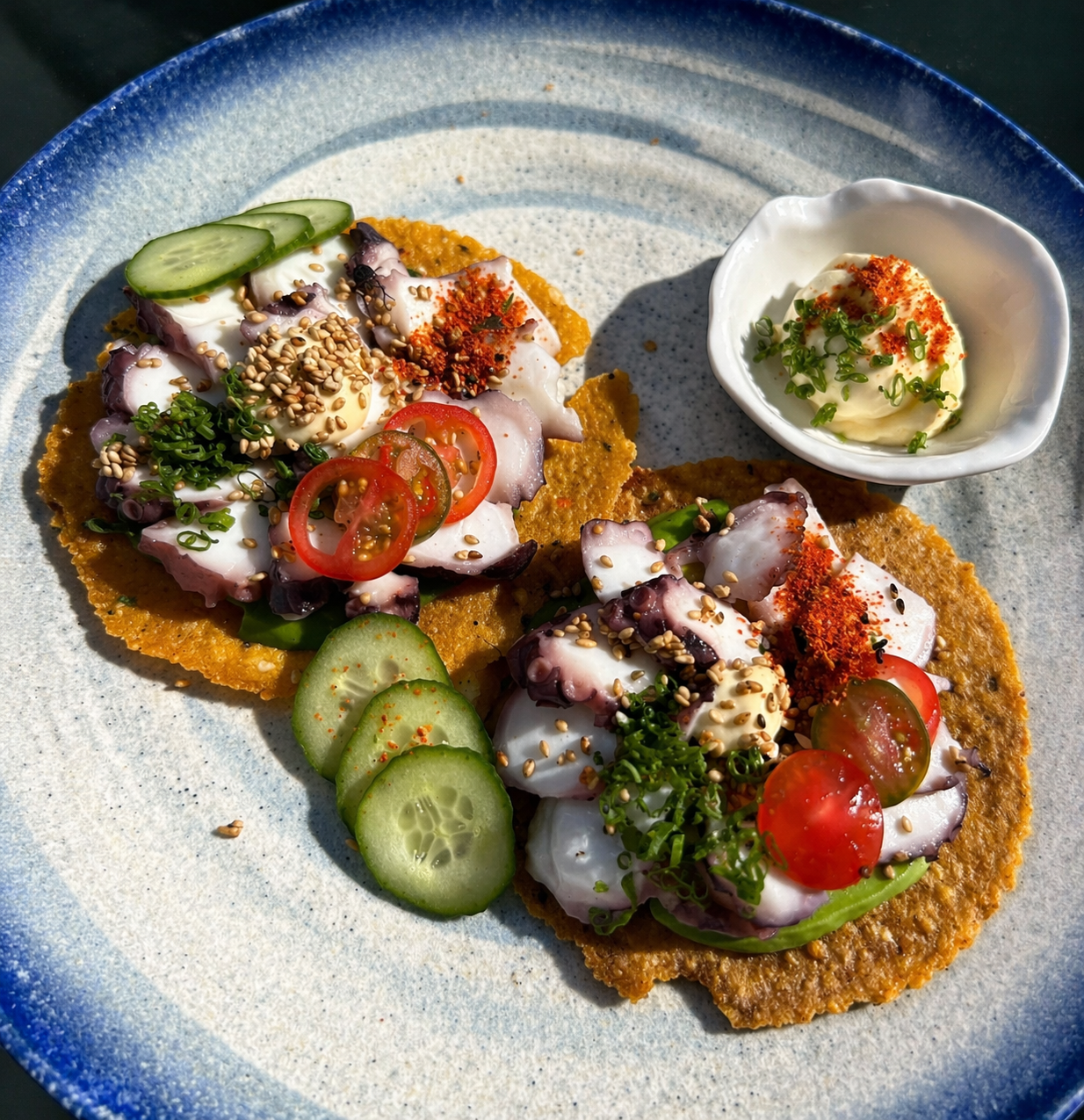
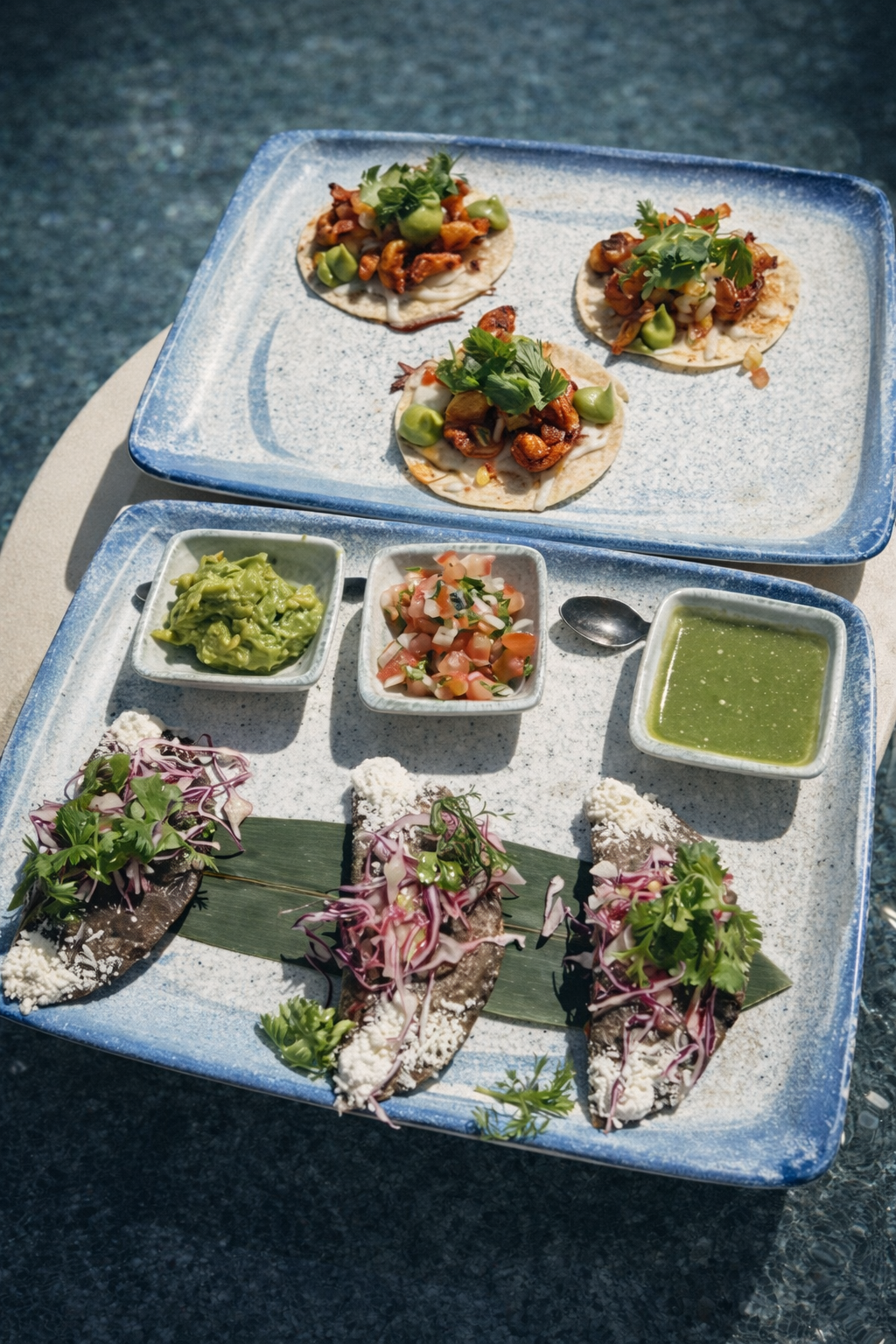
The food followed the same rhythm as everything else. Fresh seafood, vegetables, produce, brunch by the pool. Nothing needed to become an event. Some of the simpler meals were the ones I enjoyed most.
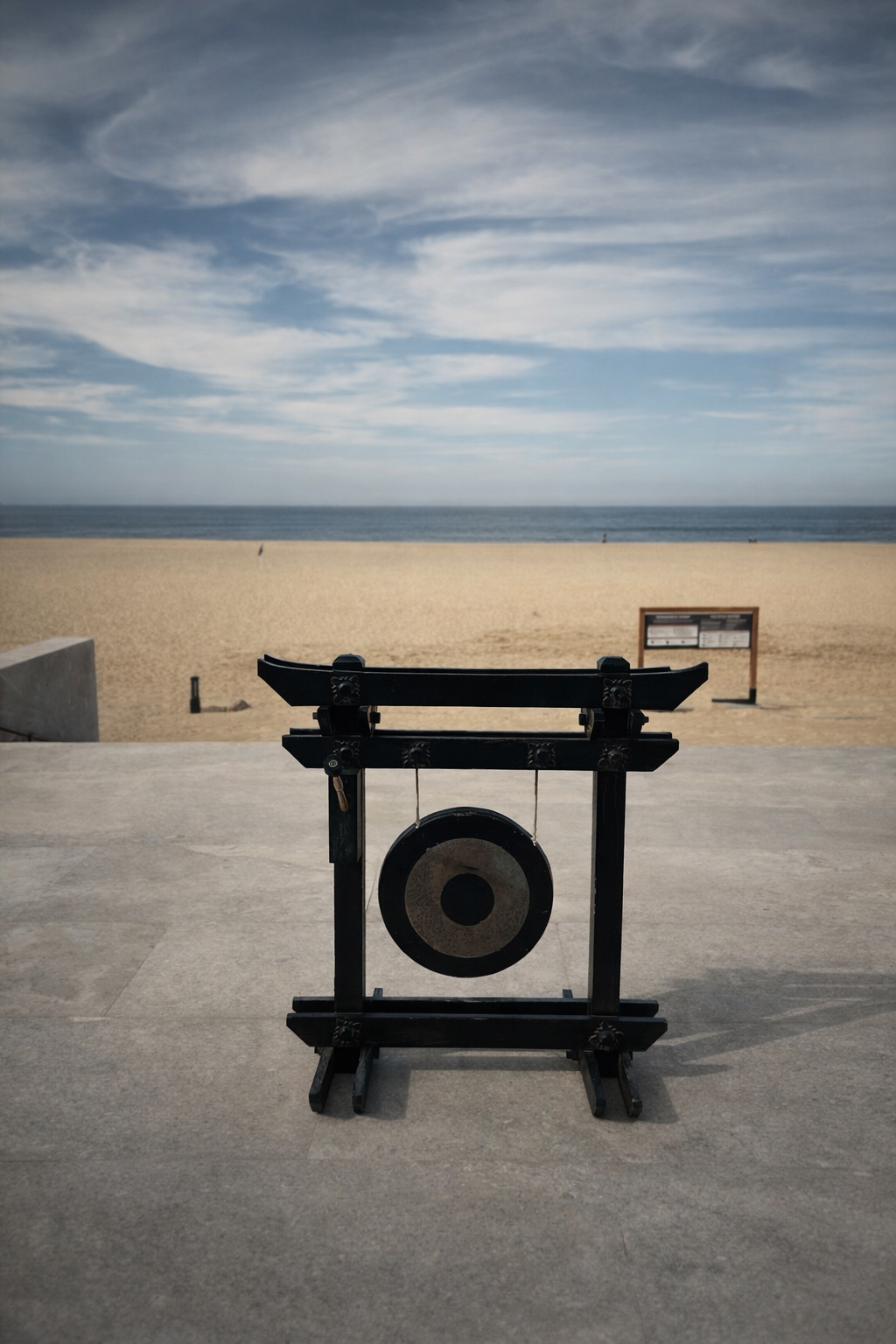
The design carried that restraint throughout the property. There was a clear Japanese influence in the minimalism of the rooms, walkways and open spaces, but what mattered more was how little seemed to compete for attention. The music worked the same way. Ambient and down-tempo in most places, with deep house around one of the pools that added energy without taking over the environment.
Nothing was particularly interested in getting us to hurry.
That stood out because a lot of vacation environments still find ways to keep you busy. There is another activity to book, somewhere else to go, another thing you are supposed to see before leaving. Even relaxation can somehow acquire an itinerary.
This place made it unusually easy to disappear into nothingness for a while. Everything we needed was there, and very little was asking us to do anything with it.
Of course, the environment alone wasn’t enough. I had to give myself permission to respond to it. On this trip, more than on some others, I did.
What Was Missing
For as much as I appreciated that restraint, something was missing.
Not in the way someone might critique a resort. The property was exceptionally well executed. It was clean, intentional, comfortable and inviting. I wasn’t wandering around wishing someone had added some shitty drywall or a crooked light fixture to give the place character.
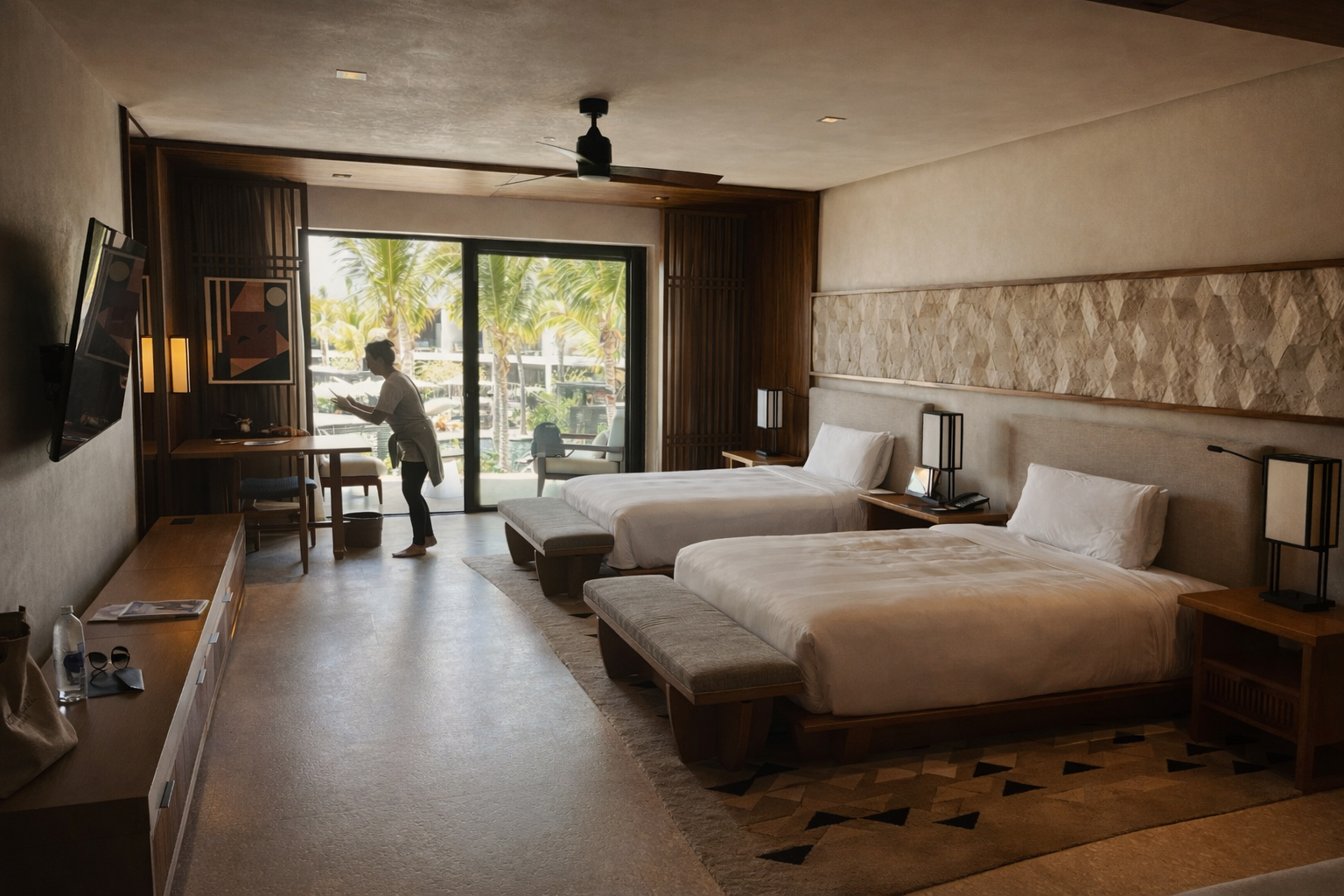
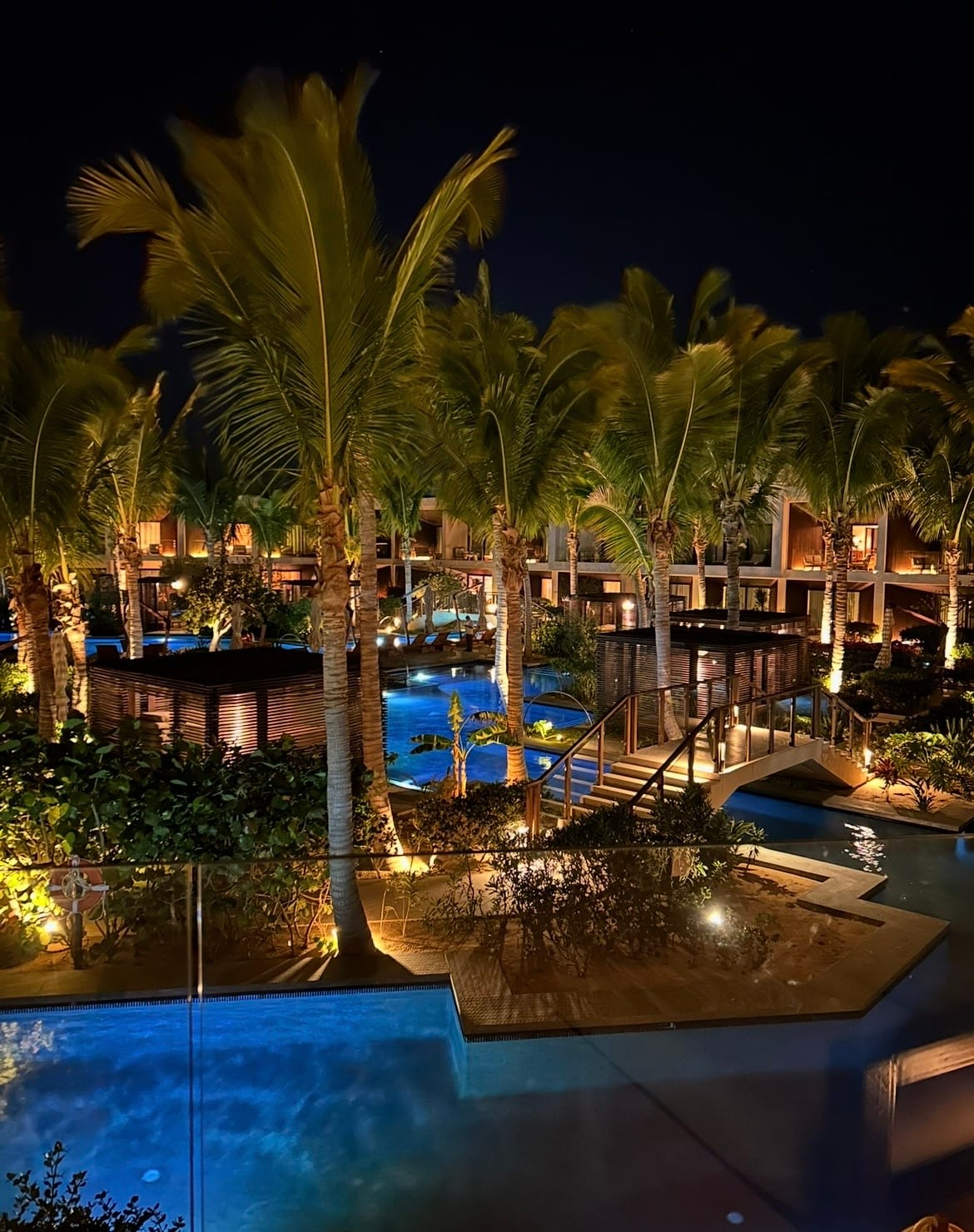
What was missing was harder to define.
There is a layer of atmosphere that doesn’t always come from good design. Sometimes it comes from age, history or the accumulation of people using a place for longer than anyone could have planned for. Sometimes it’s a strange detail that doesn’t quite belong but somehow makes everything around it feel more alive.
I’ve felt that in smaller boutique properties and in places tucked into neighborhoods that are still changing around them. They aren’t necessarily better designed. Sometimes they’re objectively less comfortable. But there can be something happening beneath the surface that makes you want to keep looking.
The resort in Los Cabos had almost everything working exactly as intended, and that was probably part of it.
Beyond the Property
Outside the resort, some of those edges returned.
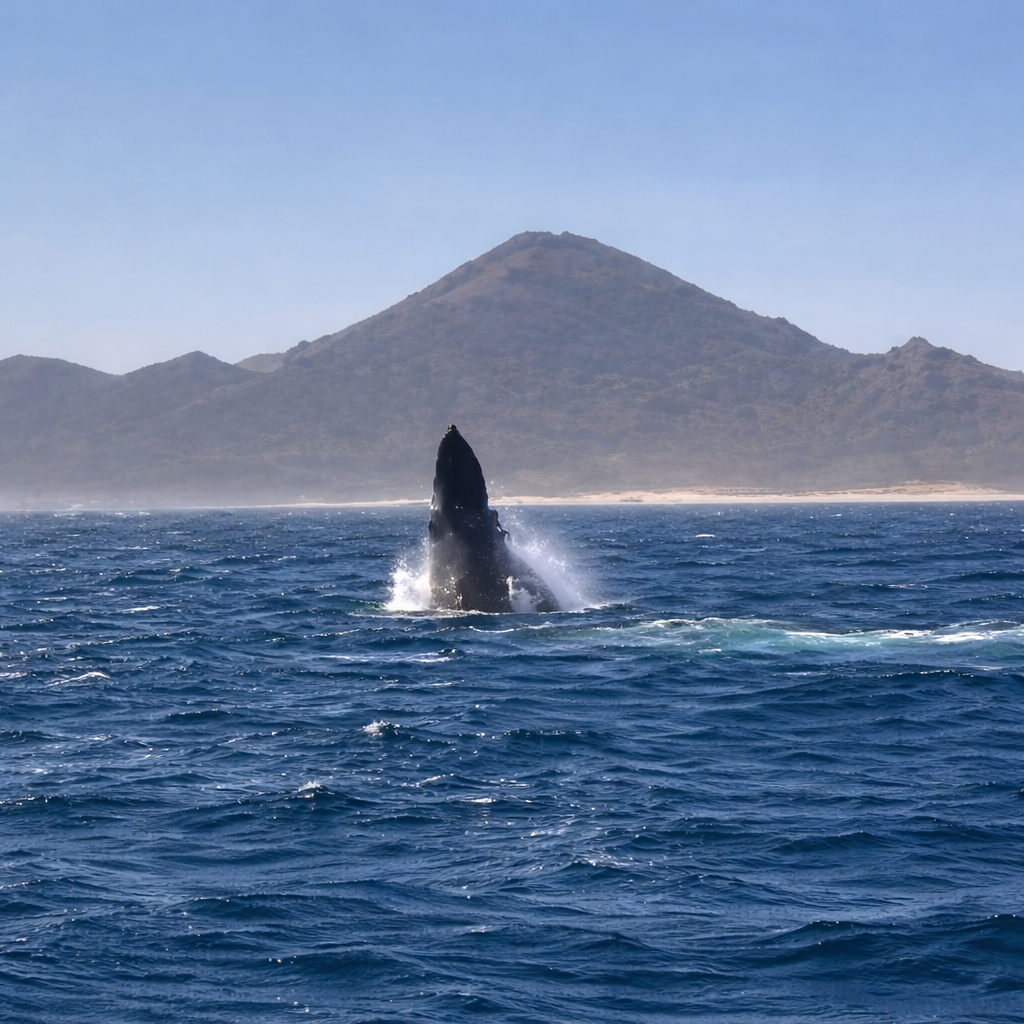
Whale watching changed the scale of the trip almost immediately. Out on the water, the boat suddenly felt very small, and whatever carefully controlled environment we had stepped out of stopped mattering much. Seeing whales in the Pacific had a way of reorganizing attention without requiring any deeper explanation than that.
The ocean itself had a different character than I expected. The beaches were wide enough for long walks, but the Pacific wasn’t particularly inviting. It felt aggressive, almost angry at times. This wasn’t water that existed for us to casually wander into. It demanded a little more respect. In fact, when I checked in, I had to sign a waiver acknowledging that I would not enter the ocean.
Even ordinary interactions outside the resort shifted things. Conversations often started in Spanish, with English coming second when needed. I liked meeting people somewhere in the middle rather than having every interaction immediately adjusted around my own comfort.
None of this diminished what the resort offered. If anything, the contrast made both experiences more interesting. One gave us a place to completely let go. The other reminded us that the world outside that carefully designed stillness was still moving on its own terms.
What Doing Nothing Actually Does
Looking back, the trip did exactly what I needed it to do.
For a few days, there was no building, optimizing or trying to make better use of the time. Nothing needed to become a project. Rest didn’t need to prepare me to work harder when I got home. I wasn’t collecting experiences because they might become useful later.
Nothing was trying to become something else. I think that’s increasingly difficult to find in ordinary life.
Coming home from a vacation, I usually carry some of that slowness with me. For a little while, the pace feels different. I’m more aware of how quickly everyday life fills itself back in.
Work and responsibilities return. Then projects start calling again. The logistics of American life have their own momentum, and trying to permanently preserve vacation slowness inside of them can feel like climbing uphill against a hell of a lot of resistance.
I’ve stopped expecting a vacation to permanently fix that. Perhaps that’s not what vacations are for. We leave, in part, because physical distance can accomplish something that intention alone sometimes can’t. Removing ourselves from familiar surroundings interrupts the momentum long enough to remember that another pace exists. Then we come home and inevitably lose some of it.
Eventually, if we’re fortunate enough to have the opportunity, we leave again.
There is still value in trying to carry fragments of that slowness into ordinary life. I don’t think the lesson of Los Cabos was that I should somehow turn home into a permanent vacation. That would miss the reality of both places.
The trip was simply a reminder of what it feels like when the noise drops away and nothing is demanding that the next moment justify itself.
It didn’t teach me how to escape ordinary life, but it reminded me that, every once in a while, it’s worth stepping far enough outside of it to do absolutely nothing.
Kaizoku Path isn't about leaving your life behind. It's about discovering the adventure inside of it.
More Editions, Field Notes, and Project Ledgers can be found at kaizokupath.com.