When Progress Stalls and Life Moves Forward
When visible progress slows across work, projects, and daily life, it can be difficult to trust that nothing has been lost. Sometimes the work is finding your way back without turning the things you care about into another source of pressure.
Edition VIII
When Nothing Seems to Move
There are stretches when nothing seems to move forward.
A project sits exactly where I left it. Something I expected to finish remains half-built. A few weeks pass, sometimes longer, and I start doing the mental math of where I thought I would be by now. Even when there was never a real deadline, I can still feel behind.
That is one of the strange things about personal projects. Work comes with deadlines, customers and consequences. Family responsibilities have people on the other end of them. Bills eventually have to be paid. But many of the things we choose to pursue for ourselves have none of that external pressure. Nobody particularly cares whether I finish something I decided to build. There is no penalty for taking another month. I can invent a deadline, but I know it’s fake.
The only real consequence is that the thing I wanted to exist still doesn’t exist.
That can make optional work surprisingly difficult to sustain. The things we choose for ourselves are often the easiest things to postpone, even when they are also some of the things we most want to make room for. And when progress stalls, it becomes easy to interpret that as a problem with discipline.
Sometimes it is.
But often, something much simpler is happening. Life is full.
What Doesn’t Look Like Progress
There is a difference between having free time and having available capacity.
I’ve had weeks when work, family, travel, social commitments and ordinary responsibilities filled enough of my attention that even the things I had to do weren’t getting my best effort. Expecting a personal project to somehow flourish in whatever remained wasn’t particularly realistic.
Even when a free evening eventually appeared, that didn’t necessarily mean I was ready to build something. Sometimes watching television or doing almost nothing was exactly what I had left in me. Restoration takes capacity too, and treating every unoccupied hour as available project time ignores why that hour may have remained unoccupied in the first place.
There are also periods when life is simply full in ways that have nothing to do with output. A summer can go by with very little movement on a project while being filled with family, travel, friends and time outside. Looking back only at what was built would make those months appear strangely empty when they were anything but.
I don’t think the solution is to redefine all of that as another form of productivity. Time with people I care about doesn’t need to secretly improve my work to justify itself. A great summer doesn’t need to become research for something I’m going to build in the fall.
Sometimes life moves forward while a project doesn’t.
That distinction matters because otherwise everything meaningful eventually gets forced to prove what it produced.
Finding the Bottleneck
Of course, accepting that progress sometimes stalls doesn’t mean leaving everything unfinished forever.
Eventually there comes a point when I start looking at something again and thinking, All right, it’s time to move this fucking thing.
I’ve learned that the useful question isn’t always why the entire project isn’t finished. It’s what, specifically, is preventing the next part from happening.
My mushroom lab has been a good lesson in this. Some of the work is straightforward and satisfying. Putting up material, painting, cleaning, installing shelves and watching the room visibly change all feel like progress. But those aren’t necessarily the steps holding everything up.
The bottleneck has been much less exciting: airflow, ductwork and electrical.
The ventilation design requires uncommon duct sizes, reducers, fittings and connections that aren’t always sitting on the shelf at a hardware store. Some of the electrical work requires more research and skill than painting a floor or hanging material. Until those systems are in place, several easier parts of the room can’t really move forward.
It’s the home-renovation equivalent of needing a new roof when you’d much rather buy a new kitchen. The roof may be more important, but nobody walks into the house afterward and gets excited about it. It’s simply the thing that has to exist before everything underneath it can continue existing safely.
Projects are full of these bottlenecks. They require more research, money, skill or energy than the work surrounding them, and because they often produce the least visible transformation, they can create the impression that nothing is happening.
Breaking the bottleneck into something smaller helps. Find the fitting. Buy the material. Research the part you don’t understand. Complete one piece with a definitive endpoint instead of staring at the entire unfinished project.
Finishing one small step doesn’t complete the room, but it changes the project from something stalled into something that can move again.
Not Everything Needs to Be Finished
There is another possibility that becomes easier to accept once you’ve lived with enough unfinished things: some of them are already finished enough.
The main living area of my basement has been used for years while still technically incomplete. There are details around the ceiling and trim that I haven’t resolved. I may eventually hide some of the overhead utilities, paint them, or leave them exposed. Those decisions don’t prevent anyone from sitting down there, playing pool, listening to music or spending time together. The room already does what I built it to do.
Other projects don’t work that way.
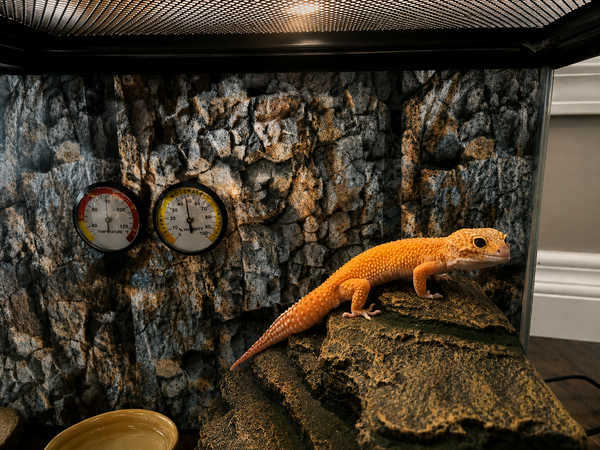
A mushroom lab can’t be seventy-five percent functional if the missing twenty-five percent is the filtration, airflow or ability to properly sanitize the environment. A reptile room has its own threshold. Heavy construction, electrical work, fumes and loud tools need to be dealt with before animals can comfortably occupy the space.
Some projects can be lived in while they evolve. Others have to cross a functional threshold first.
Recognizing the difference removes a lot of unnecessary pressure. Completion isn’t always a single state. Sometimes the useful question isn’t Is it done? but Can it do what I need it to do yet?
If the answer is yes, maybe the unfinished edges can wait.
If the answer is no, the next job is to identify what actually stands between here and usable.
Progress Has Seasons
There is another way I have started looking at stalled projects: over a longer stretch of time.
A week is often too small a window to judge anything. Even a month can be misleading. A season feels closer to the natural rhythm of how my interests actually move.
Sometimes an entire summer passes with very little progress on something indoors because my attention is elsewhere. When fall arrives and I find myself spending more time inside again, the unfinished work becomes visible in a different way. A season has passed. The project is still there. Maybe now it’s worth revisiting.
That doesn’t necessarily mean forcing myself back into it.
Sometimes I need to become interested again.
I’ve noticed this happening in real time with mushrooms and reptiles. Lately, I’ve been researching reptiles far more than mushroom cultivation. Unsurprisingly, an Amazon milk frog enclosure has been moving along while the mushroom lab has barely changed. The frog enclosure is new, contained and exciting. I can see its endpoint. The mushroom lab is a much larger system with more technical bottlenecks between where it is and where I want it to be.
Right now, curiosity is pulling harder in one direction.
Eventually that may change. Once the enclosure is established and that particular thread of curiosity settles down, mushrooms may start pulling at me again. I might begin researching species, cultivation techniques or what I eventually want to grow. Seeing the possibilities again can restore some of the excitement that made me build the room in the first place.
That matters because optional work runs on different fuel than obligation.
You can force yourself through plenty of things when the consequences are real. You go to work when you’re tired because people are expecting you. You deal with responsibilities because leaving them undone eventually creates a problem.
Personal pursuits are different.
Guilt is remarkably bad fuel for something nobody is making you do.
Finding Your Way Back
Maybe that’s the part worth remembering when something you care about has stopped moving.
First, look at the life surrounding it. If you’re barely keeping up with the things that actually require you, the stalled project may not need a discipline intervention. It may simply need to wait.
If capacity exists but you keep moving toward something else, pay attention to that too. Maybe you need restoration. Maybe another interest has more energy behind it right now. Or maybe you’ve reached a technical, financial or psychological bottleneck that needs to be broken into something smaller before the project becomes approachable again.
And if enough time has passed that you genuinely want to return, don’t begin by demanding the whole thing move at once. Find one piece you can finish. Solve the annoying problem that’s blocking everything behind it. Revisit whatever made the project interesting before it became a list of unfinished tasks.
Progress doesn’t have to be continuous to be real, and a period without it doesn’t need to become evidence that you’ve failed at something.
Some projects move quickly. Some move seasonally. Some become useful long before they’re finished, while others need more time before they can be used at all. And some may eventually stop mattering enough to finish. That’s useful information too.
The important part is being able to tell the difference between something you’ve outgrown and something you still care about that has simply gone quiet for a while.
If it still matters, find your way back when you have the capacity to do something with it. Start small enough to create movement, and if the spark has faded, spend some time around the thing that made you curious in the first place.
Let curiosity drive the progress.
Not guilt. Not fake deadlines.
Kaizoku Path isn't about leaving your life behind. It's about discovering the adventure inside of it.
More Editions, Field Notes, and Project Ledgers can be found at kaizokupath.com