Inside the Reptarium and What It Inspired
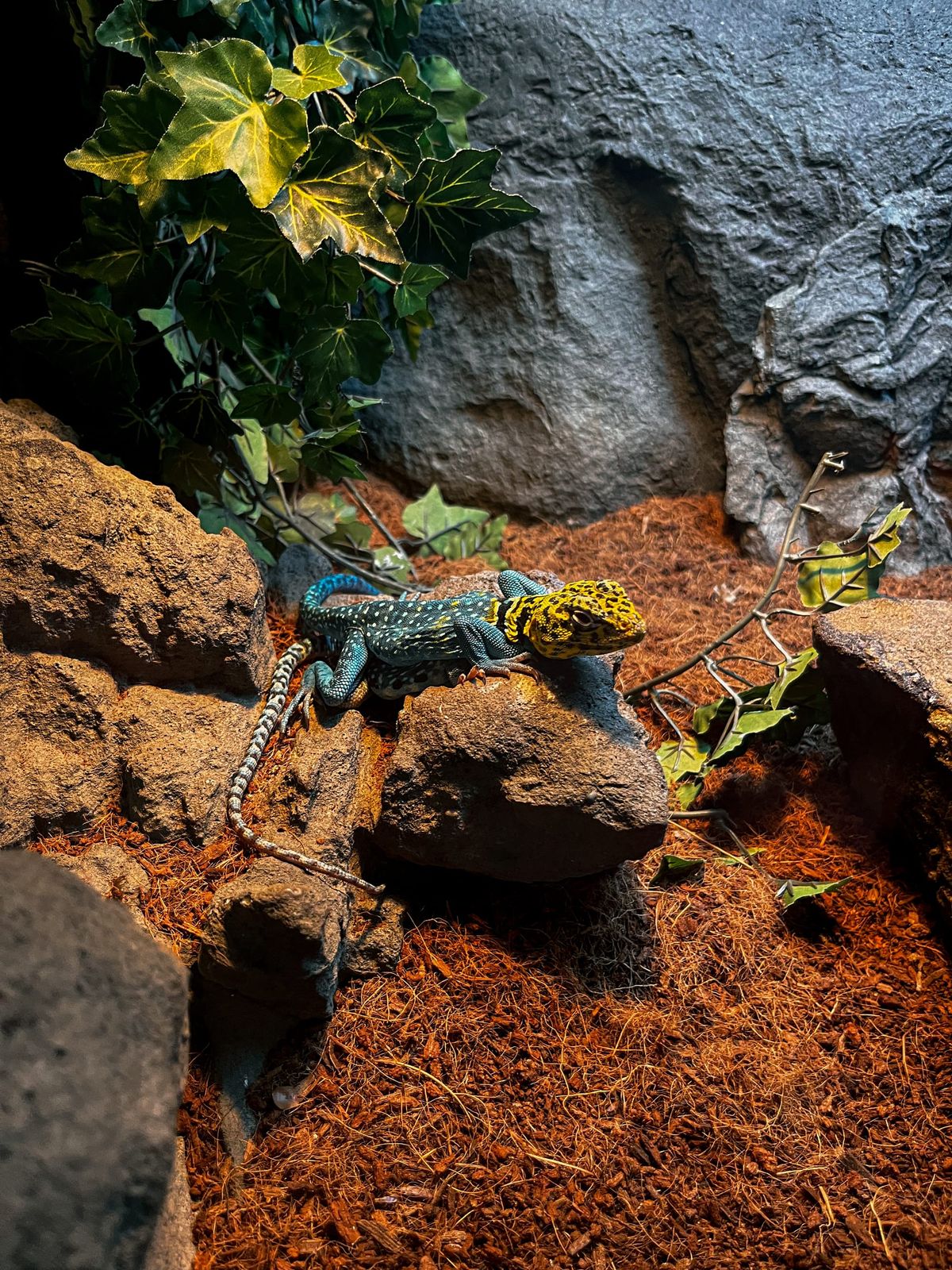
A visit to a hands-on reptile zoo becomes less about the animals themselves and more about the environments they inspire and the spaces we go on to build.
Field Note III
A Place That Started Small
I have been coming here long enough to remember when it was just reptiles. Before the expansion into fish at LegaSea, there were rows of enclosures, heat lamps, substrate, and animals that most people only ever see from a distance. That version of the place still sits closest to me, even as it has grown into something bigger.
The expansion works well. The fish exhibits pull you in right away, especially the koi, slow and deliberate, and the Great Lakes predators that feel more familiar than anything tropical ever could. The sharks in the newer section add another layer that I never would have expected from the place when I first started coming here.
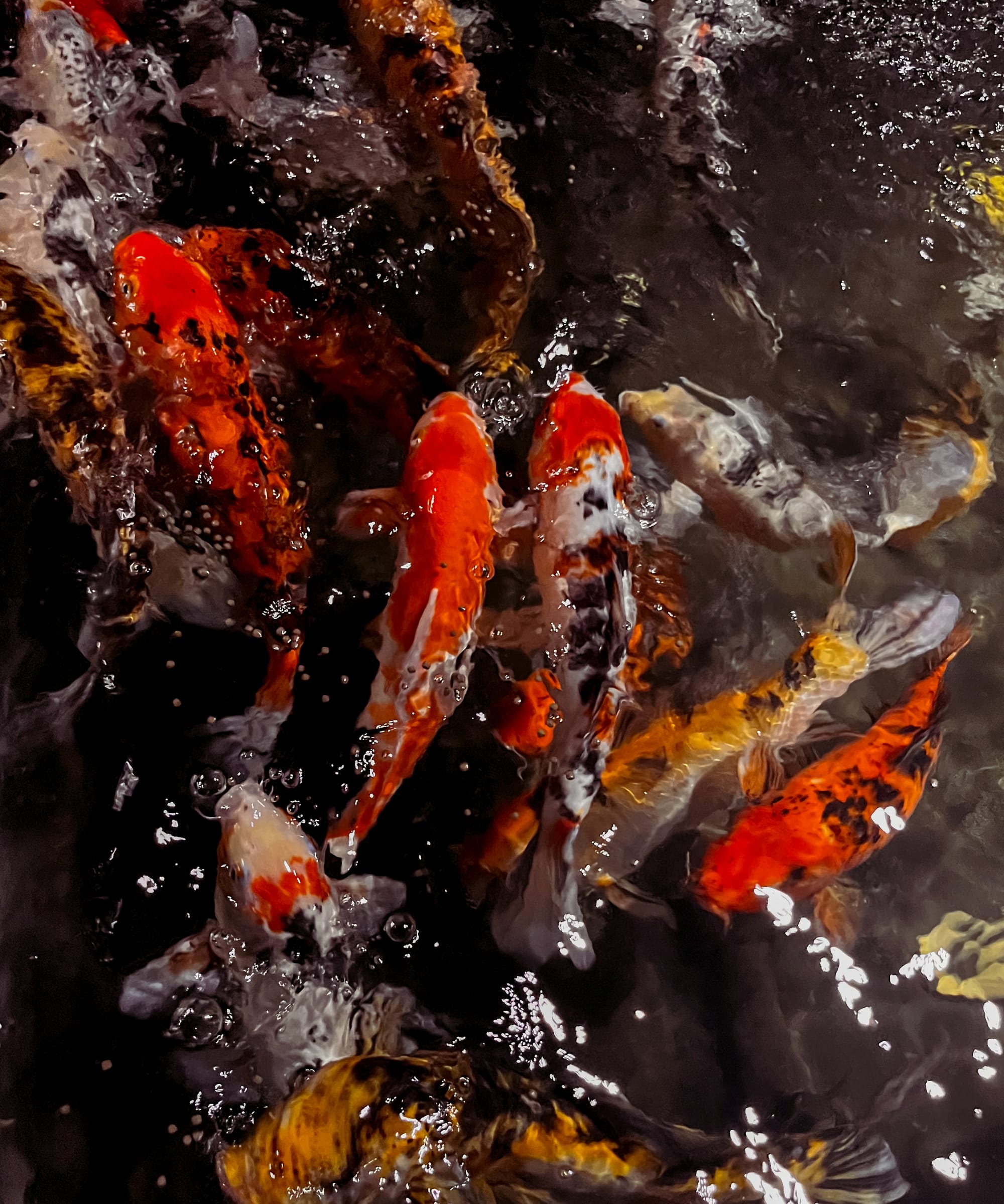
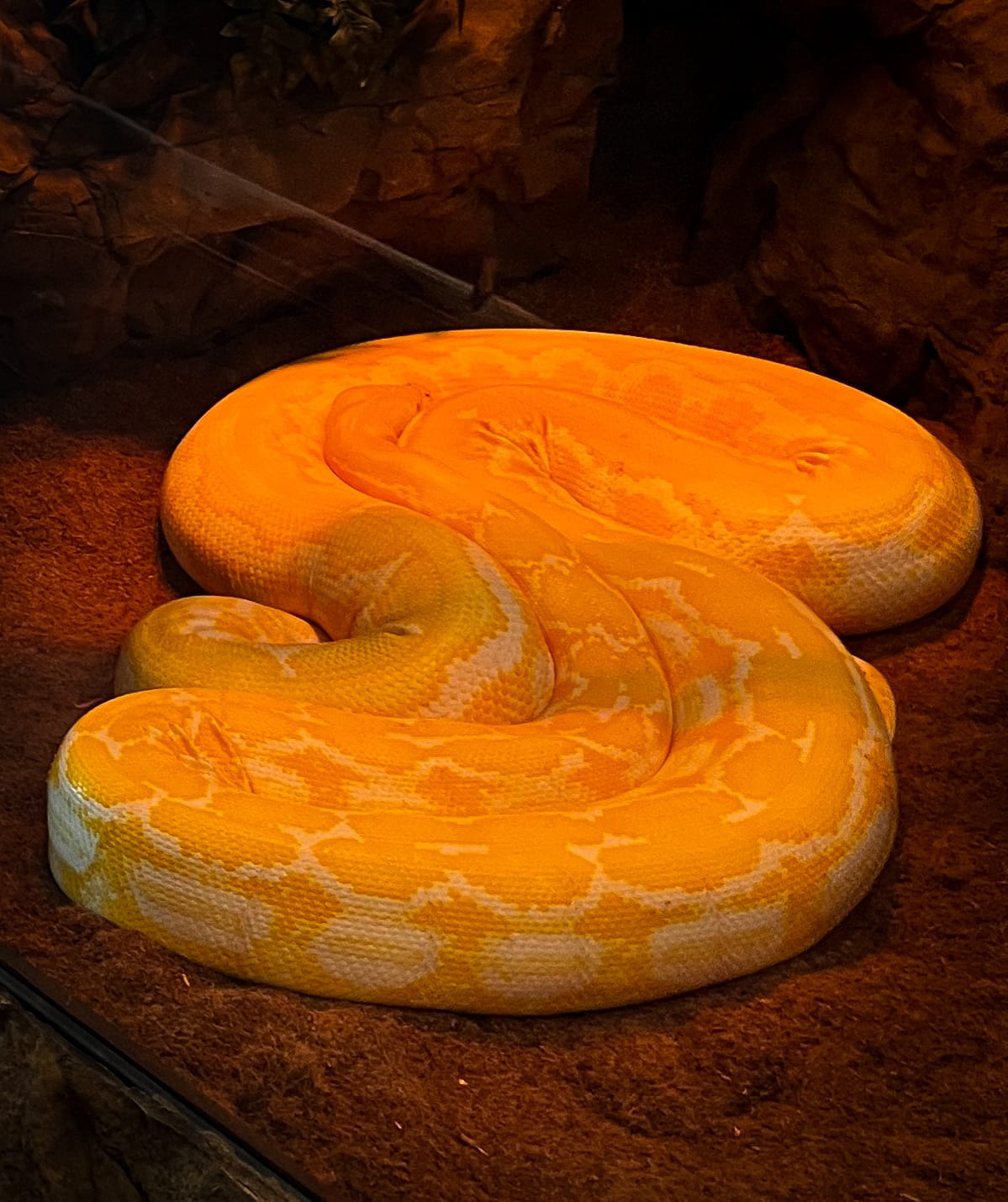
Still, I always find myself drifting back toward the reptiles. There is something about them that asks more of you. They do not necessarily perform or meet you halfway. You either slow down enough to notice what is happening, or you walk past and miss it.
My girls love it in their own way. They hold snakes with very little hesitation and reach out to touch a tortoise like it is the most natural thing in the world. Watching them reminds me a little of being much younger with my sister. I was in late high school or early college when she was only four or five, and animals became something we participated in together. We had turtles, including a red-eared slider that is somehow still alive and belongs to her today. We also had a newt that didn’t survive, mostly because we didn’t know nearly as much as we thought we did.
Eventually that part of my life went dormant. I didn’t stop liking reptiles. They just disappeared behind everything else for the better part of twenty years.
The Reptarium gave that interest somewhere to wake back up.
Part of what pulled me in was the access. Part was the variety. Part was simply seeing so many different environments concentrated into one place. But there was also something about the place itself. It felt like it had been built out of obsession rather than assembled from a business plan.
That came from its founder, Brian Barczyk, whose enthusiasm for reptiles was inseparable from the place he created. Even after his death, that personal quality remains. The Reptarium feels like the result of someone allowing a very specific fascination to become big enough that other people could physically enter it.
I don’t think I had language for why that resonated with me at the time. I just knew I wanted to keep coming back.
Proximity Changes Everything
The scale of the Reptarium is approachable, but there is enough variety that every visit gives me something different to look at. More importantly, the animals are close. You’re not always studying something from across a large exhibit. You can watch how it moves, see its texture, and in many cases actually interact with it.
That proximity was probably what turned an old interest into active curiosity again.
I started researching almost immediately. Not because I had decided which reptile I wanted, but because suddenly I wanted to know what was possible. Geckos led to other geckos. Lizards led to enclosure sizes, temperatures, humidity, lighting, feeding, substrates and bioactive environments. I’d research at home and then return to the Reptarium knowing more than I had on the previous visit, which meant I noticed more when I got there.
The collection leans heavily toward snakes and crocodilians, and they do those extremely well. There is a level of access and comfort around those animals that most places don’t attempt. The newer LegaSea side has expanded the experience considerably too.
But I’ve always been more of a lizard guy.
I still find myself wishing there were more of them at the main location. More geckos, mid-sized lizards, frogs and strange little species that occupy the space between the obvious showstoppers. The original Reptarium still exists and offers some of that experience, but access there is more limited. That absence at the newer location doesn’t really bother me as much as it feeds the part of my brain that starts imagining what I would put together myself.
And eventually the idea became bigger than owning a reptile.
Before this, I probably would have put individual tanks wherever they fit naturally around the house. An enclosure in one room, another somewhere else, each worked into the available space and feng shui of the house.
The Reptarium made me want a room.
Building Environments, Not Enclosures
The idea became a dedicated place where multiple species and multiple ecosystems could exist together. Not together in the same enclosure, obviously, but collected into a room where walking inside would reveal several small worlds at once.
That distinction matters to me. I’m interested in the animals, but I’m equally interested in everything required to create and maintain their environments. Plants, rock, wood, substrate, temperature, humidity, light, airflow and the way an animal actually uses the world around it all become part of the same hobby. Then that branches again into construction, ecology, behavior and eventually even the possibility of breeding projects.
The Reptile Room became my miniature version of the Reptarium. Not an imitation of it, but a place where I could take the same basic impulse and build around the species and environments that fascinate me.
The funny part is that I was planning the room before I even owned the first reptile.
I researched the hell out of leopard geckos, but I was researching plenty of other species too. A bearded dragon was a possibility. So were different geckos. I had a twenty-gallon tank available, though, and a bearded dragon immediately presented a problem because I knew I’d need considerably more space as it grew.
Eventually I decided to stop researching long enough to actually start.
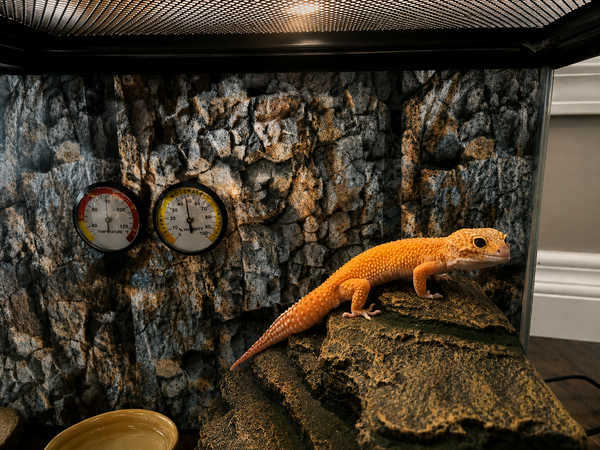
I went to a pet store without knowing exactly what I was going to bring home. Among a group of more typical spotted and albino leopard geckos was one very light, almost creamy tangerine gecko that immediately registered with me.
That was Ember.
She wasn’t the culmination of the idea. She was the starting point.
Keeping a reptile changed the planning again. Suddenly gut-loading mealworms, hand-feeding, lighting, temperature and humidity weren’t things I was reading about. They were maintenance. Ember initially lived downstairs, which worked fine until a Michigan winter reminded me that a basement and a temperature-controlled reptile room are two very different things.
She moved upstairs while work on the room continued.
That seemingly simple problem forced me to reconsider the room itself. If I wanted several ecosystems downstairs, I couldn’t think only about what went inside each enclosure. I had to think about the environment surrounding them too. Did the room need additional HVAC? How would airflow work? What would the baseline winter temperature be? What species actually made sense there?
Owning one animal was already changing the decisions I would make about the next.
That is part of what keeps the room interesting. There isn’t a final roster I’m trying to fill. Species enter the picture, send me down a research hole, and sometimes disappear from the plan just as quickly.
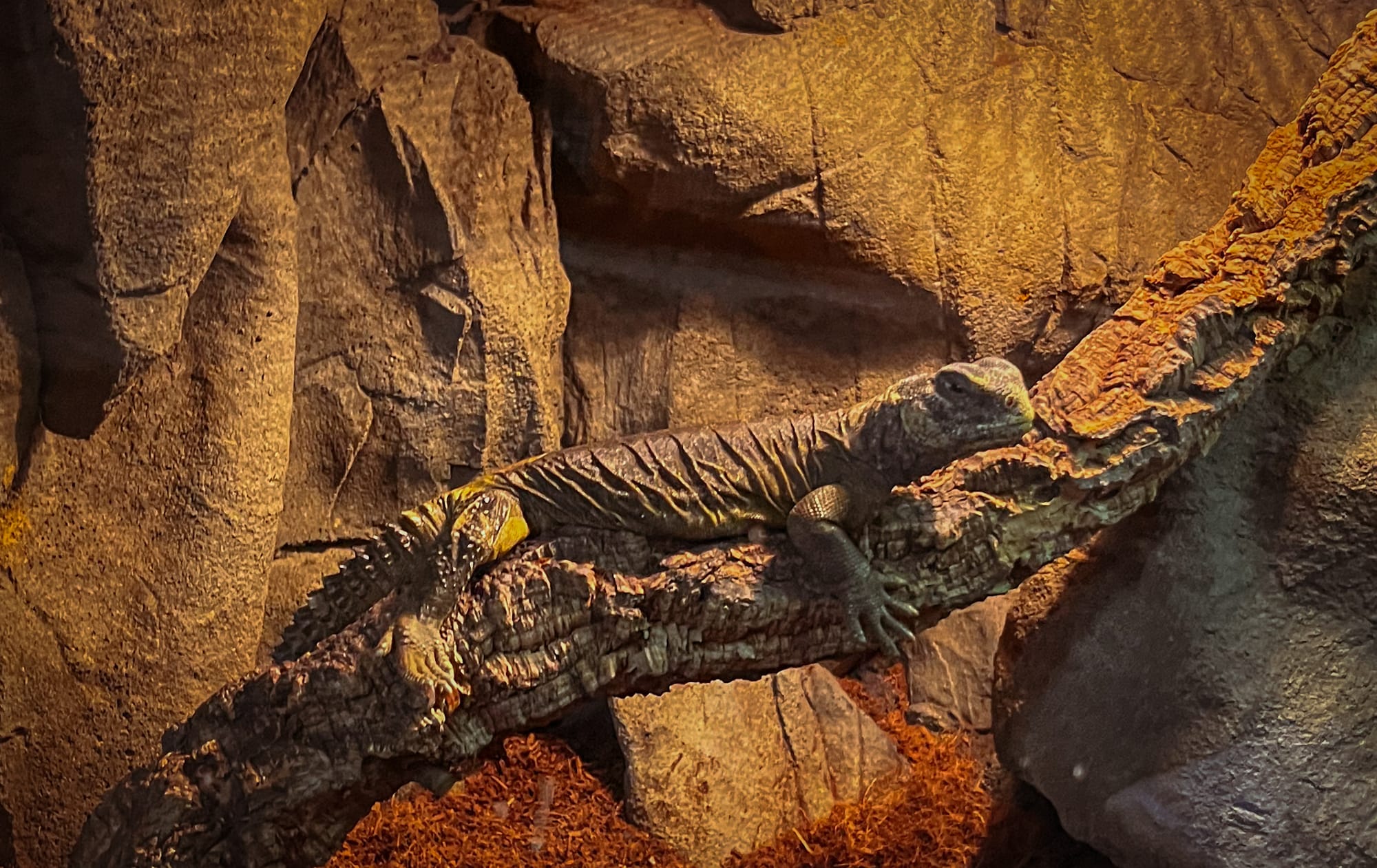
Uromastyx were one of those unexpected turns. Seeing them at the Reptarium got my attention because they had a presence I hadn’t really considered before. Solid, grounded and almost ancient-looking, they opened up an entirely different category of reptile in my head.
Researching them eventually led me elsewhere.
I started looking more seriously at chuckwallas, another heavy-bodied desert lizard with some of the same qualities that initially attracted me to uromastyx. The more I learned, the more a chuckwalla began to make sense for the kind of large, rocky, bioactive environment I wanted to build. Now that environment has become one of the anchors in the developing room.
That may change again. Probably will.
The room has had to remain flexible because the curiosity behind it is flexible. What started with looking at reptiles has become an interest in constructing ecosystems, solving environmental problems and learning enough about unfamiliar species to imagine living alongside them responsibly.
There is another part of it that I didn’t fully appreciate at first.
I want people to see it.
Not in the sense of turning my basement into a public attraction, but because there is something satisfying about allowing a fascination to become visible. I want my girls involved. I want friends and family who come downstairs to wander over and see what is living behind the glass. I like the idea that the room carries a little mystique, that someone can step inside and discover several worlds they weren’t expecting to find in a Michigan basement.
In that sense, the Reptarium may have influenced me more than any particular animal inside it. It showed me what happens when an interest isn’t tucked away or treated like some private eccentricity. Someone gave it a space, built around it, kept adding to it, and invited other people inside.
My version is obviously much smaller. It’s one room, still under construction, inside a family home. Ember is still upstairs while I figure parts of it out. Plans change constantly as I learn more.
But the original impulse has held.
I still go back to the Reptarium with my girls. I still find something new to research afterward, and I still leave thinking about what I might build at home. Even writing this makes me realize it’s probably about time for another round of tickets.
The place that helped restart my interest in reptiles has become one of our favorite places to return to. Meanwhile, downstairs, that interest is slowly becoming a place of its own.
Kaizoku Path isn't about leaving your life behind. It's about discovering the adventure inside of it.
More Editions, Field Notes, and Project Ledgers can be found at kaizokupath.com