The Practice of Integration
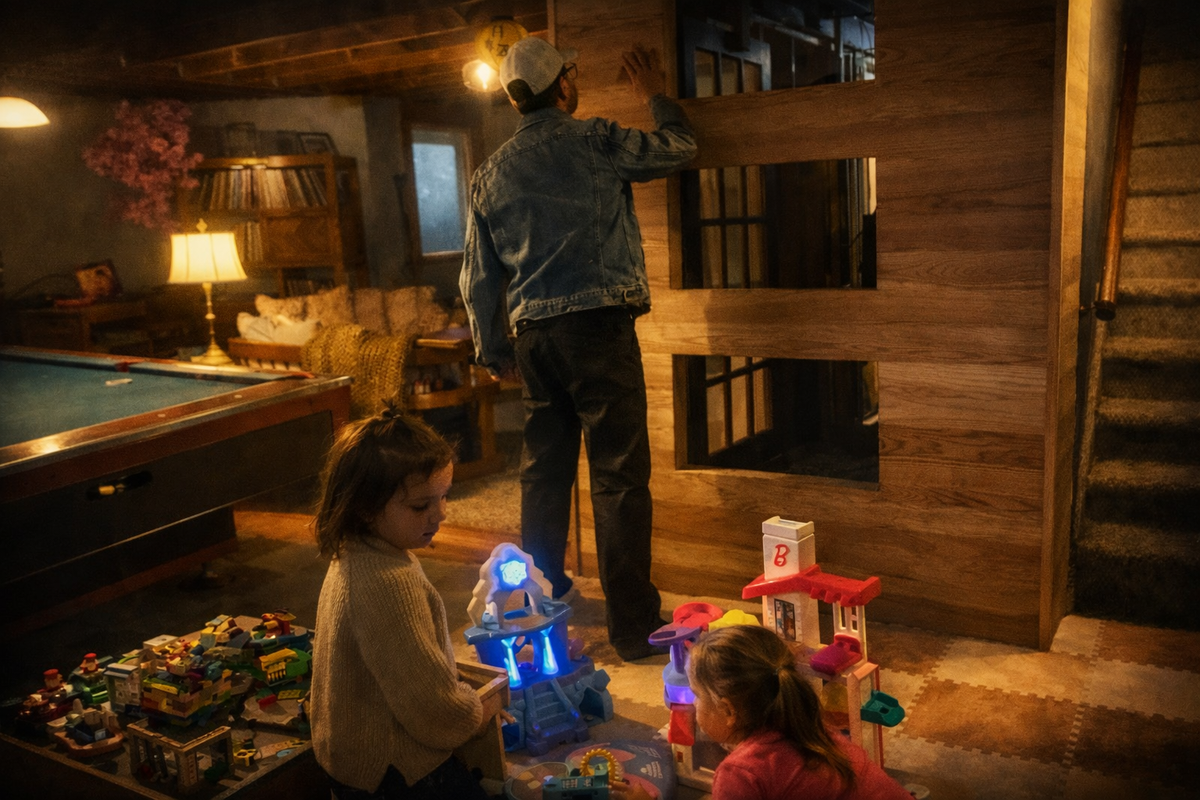
Integration is what allows curiosity, presence, and space to survive the demands of work, family, and everyday life, turning separate parts into a continuous way of moving through the day.
Edition IV:
Curiosity gives me more things I want to keep alive. Presence reminds me not to disappear into them. Space gives them somewhere to exist. Integration is what happens when all three encounter the rest of life, because none of them gets a clean room to operate in.
There is still work. Kids need things. Dinner needs to happen. The yard needs to be mowed. Someone gets sick. Something breaks. Travel blows up the week. Some nights disappear entirely. Meanwhile, the interests don’t stop arriving simply because the calendar is full. If these ideas only work when life gets out of the way, they don’t work. Integration is where they have to prove themselves.
When Life Is Divided Into Modes
There was a period when I became a highly efficient administrator of a life that didn’t actually feel like mine anymore. Everything worked. My job got done. The kids got where they needed to go. Things around the house were handled. Appointments were made. Dinner happened. The calendar functioned. From the outside, there wasn’t necessarily a problem.
The problem was that I felt like I was surviving my schedule while entirely missing my life.
It’s surprisingly easy to end up there. Work becomes Work Mode. Family gets Family Mode. The house gets Maintenance Mode. Interests wait for Personal Time. Rest gets whatever is left. Each part has its own boundaries and expectations, and you move between them all day like rooms in a building where the doors have to close behind you before the next one opens. I had become extremely good at being functional, and eventually I realized that being functional wasn’t the same thing as actually feeling present inside my own life.
The alternative isn’t blowing up the schedule or pretending responsibilities don’t exist. I have a job that sometimes requires a lot from me. I travel. My kids have places they need to be. My marriage needs attention. The house requires constant maintenance. There are plenty of things in my life that happen at a specific time whether I’m feeling particularly integrated that day or not.
The problem comes when everything meaningful to me also has to wait for its assigned window. If a project requires a free Saturday, it may sit for months. If drawing requires Drawing Time, I probably won’t draw. If reflection needs a retreat, I’m fucked. If staying connected to a friend requires finding an evening when two adults with families have absolutely nothing going on, we might not talk for six months.
A lot of life happens in smaller openings than that. Integration, for me, has gradually become less about creating more time and more about allowing the different parts of my life to stop treating one another like intrusions.
The Cost of Compartmentalized Living
I know what happens when that breaks down because I’ve fucked it up in both directions.
When I first started seriously building what eventually became the Basement Incubator, there wasn’t much down there. Once the work started moving, though, it became almost unstoppable. One wall suggested the next. Framing became drywall. Drywall changed how furniture could be staged. Moving furniture made another room visible. Suddenly I was deciding where a reptile room should go, where a mushroom lab could live, what another area might become, and how all of it could connect.
For a few weeks, I was completely in it. The strange part is that I was still handling my responsibilities. My professional work got done. The kids were taken care of. Homework happened. If Anna needed a propane tank or something else handled around the house, I handled it. Nobody was wandering around starving while I manically framed walls underground.
Technically, I was there. I just wasn’t really there.
Dinner might have been happening while I was mentally calculating how many two-by-fours I needed from Home Depot. Homework got done, but playtime disappeared because I wanted to get back downstairs. I wasn’t spending much quality time with Anna. The people around me weren’t being neglected in the obvious sense; they were increasingly becoming the background of whatever I was building.
That experience became part of what eventually made me think seriously about presence. It also taught me something important about Integration: getting everything done isn’t the same as being integrated. In some ways I was incredibly efficient during that period. I was working, handling responsibilities, and making huge progress on something I cared about. The problem was that one part of my life had started eating the others.
I’ve gone the opposite direction plenty of times too. Work travel piles up. Something happens at home. There’s a bad week. A kid gets sick. The house produces another problem. A project stalls. I fall back into compartments where work, family, maintenance, and anything personal seem to wait for one another to finish. Eventually the switching itself becomes exhausting enough that sometimes nothing meaningful happens at all.
That’s when I can end up in research hell. I’ll spend an hour on my phone reading about something related to a project without actually moving the project forward, while simultaneously not being particularly present with anyone around me. Then I notice how much time has passed and start feeling like I need to make up for it.
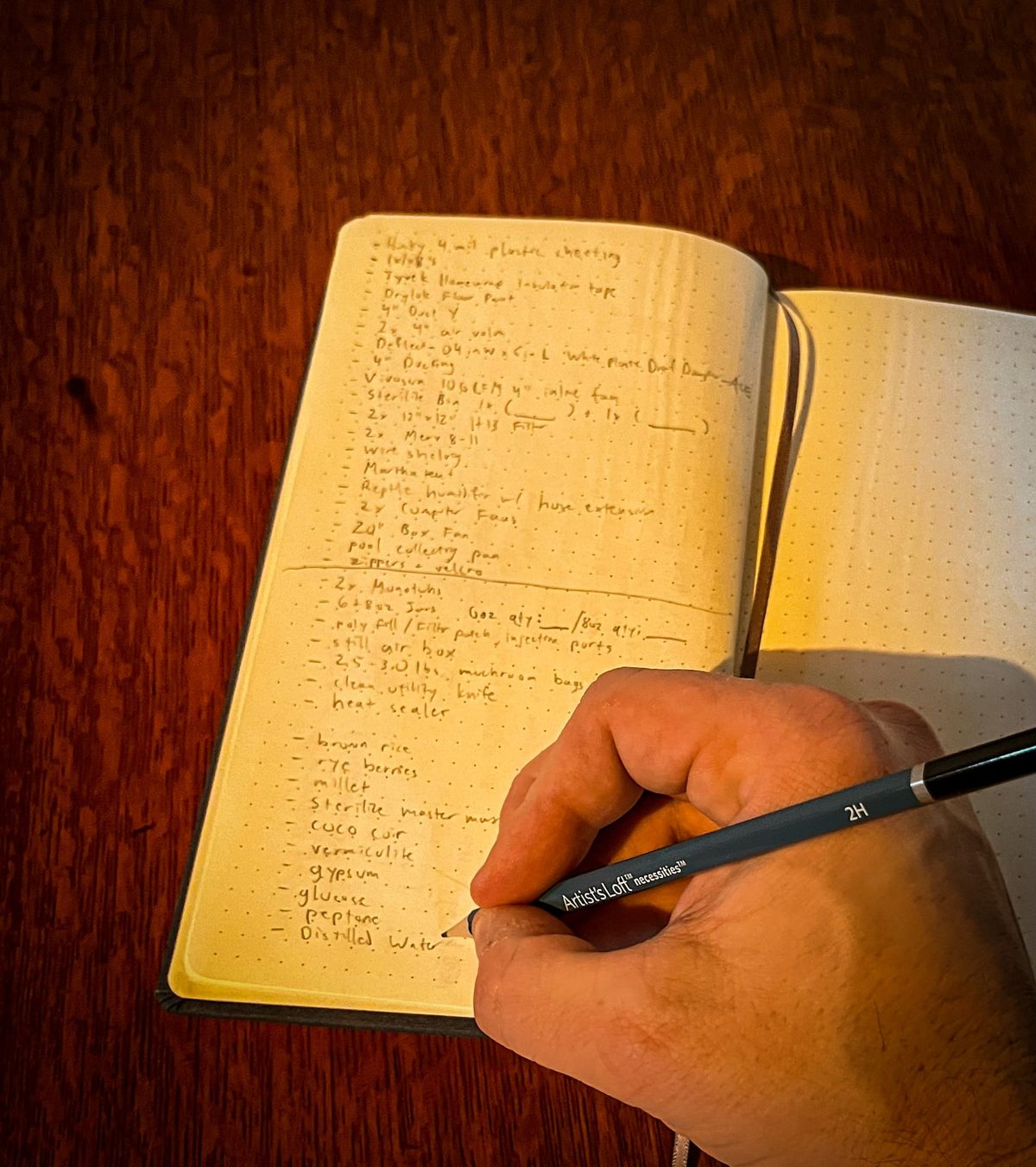
The mushroom lab was supposed to be running by fall. It isn’t. Nobody is holding me to that deadline. There is no customer waiting for it, no boss asking for an update, and nothing catastrophic happens because I missed it. That’s almost what makes it harder. My personal projects are one of the few places in my life where I’m both management and labor. I decide what matters, when it should happen, and whether I’ve done enough. If they don’t move, nobody else particularly loses anything.
I do.
There is some selfishness in admitting that, and I’m increasingly okay with it. Most of these projects are internally motivated because I want them. There is self-satisfaction and probably some ego involved in seeing an idea become physical. I don’t want a life in which every responsibility is handled, everybody else’s needs are met, work is successful, the yard looks good, and everything that makes me feel like I’m building something of my own is perpetually scheduled for later.
At the same time, I’ve experienced what happens when my own projects always win, and I don’t want that life either. The challenge isn’t choosing between responsibility and self-interest. It’s finding a way for both to remain alive without either one swallowing everything around it.
Continuity Across the Day
On an ordinary weekday, I usually wake up with less slowness and reflection than I’d like. There’s caffeine, water, maybe food, and I start knocking out the biggest work items while helping get the kids moving toward school. Meetings begin and work takes over. By lunch, things often loosen.
What happens with that opening depends on the day. Maybe Anna and I sit down together. Maybe I eat quickly. Maybe the lawn needs to be mowed and I can knock that out. If nothing around the house is demanding attention, I might get an hour or two to move something else forward. That doesn’t necessarily mean physically building. I might research something specific, sketch a design, make a material list, figure out a budget, or sit with a notebook and work out the next step. Then I go back to work.
Eventually the kids come home. There’s time with them and Anna, dinner, dishes, conversation, and whatever else the household needs that night. Whether I do anything personal afterward depends heavily on the vibe of the house.
I’m not particularly gifted at reading the room, but there are signals even I can recognize. If I’ve been traveling a lot, I usually need to lay low for a while and just be around. If the girls are obviously fighting for my attention, Anna and I are having some trouble in paradise, everybody seems irritable, or a pile of unfinished things around the house is becoming impossible to ignore, that’s probably not the night to disappear downstairs for four hours.
Other nights everybody is good. The girls have their own thing. Anna has hers. Nothing is on fire. There isn’t some unmet need hanging in the room. On those nights, I can go do my thing without it feeling like I’m taking something away from somebody else.
That’s why I’ve become skeptical of trying to perfectly organize all of this ahead of time. I can plan, and I do plan, but I can’t know on Sunday exactly what Thursday night will require. Integration has to respond to the life that’s actually happening rather than constantly forcing life to match the plan.
When it works, I don’t feel like I’m repeatedly changing identities. I’m not Work Me until five, Dad Me until bedtime, Husband Me when required, and then finally allowed to become Myself for whatever remains. It feels much more like the same guy moving through the world, taking care of things for my employer, my family, other people, and myself.
The boundaries between those areas also aren’t as solid as they look on a calendar. The creative process I use in personal projects follows me into work. It shapes how I build presentations, create training material, or approach technical problems. In the other direction, years of managing complicated projects professionally have made me better at planning builds at home, creating material lists, thinking through budgets, sequencing work, and figuring out what can realistically happen with the time available.
Travel does the same thing. I can walk into a restaurant while traveling for work, try a sauce I’ve never had, and suddenly that experience is coming home with me. That’s essentially what happened with Peruvian aji verde. Something encountered almost incidentally on a work trip became something I started making at home and eventually served to the extended family during a weekend together on Lake Huron.
Those moments of crossover feel strangely validating to me. It’s like reality briefly matches the blueprint already in my head. Work, personal life, hobbies, family, travel, and creativity aren’t stored in separate departments up there. They constantly bleed into one another, and when I allow that to happen in real life it feels wildly organic and authentic.
The parts already belonged together in my head. Integration is allowing my life to reflect that.
Living Without Resetting
Physical space has made this considerably easier.
My work desk sits close to the action downstairs. The workshop is nearby. Tools are accessible, and materials for whatever I’m building tend to stay near the project. Unfinished work is allowed to remain unfinished, although there is a difference between that and living in a giant shit pile. What I’m after is closer to organized incompletion.
The workshop is almost never what I would call clean. Sawdust stays on the floor until I decide to vacuum it a few times a year. Relevant tools remain accessible. A project can stay where it is because I know I’m coming back to it. If I have twenty minutes, I don’t want to spend fifteen of them reconstructing whatever I was doing the last time I had twenty minutes. I want to walk over and continue.
That proximity matters more than I realized when I started building the space. If every interest required driving somewhere, setting everything up, doing the activity, cleaning everything up, and driving home, a lot of them wouldn’t survive the rest of my life. Instead, work and curiosity can exist near one another. An hour opens between meetings and I can physically move something forward. Ten minutes gives me enough time to write down an idea. A notebook or relevant book is nearby. Art supplies are accessible enough that I can grab them and draw outside while I’m waiting for dinner.
The tradeoff is that I don’t always get giant uninterrupted blocks of deep work, but if I waited for giant uninterrupted blocks, a lot of this shit simply wouldn’t happen. Some projects really do need them. If I’ve emptied half the garage onto the driveway, there is no graceful little twenty-minute session. That shit has to get back inside before dark. Integration has to leave room for intensity too.
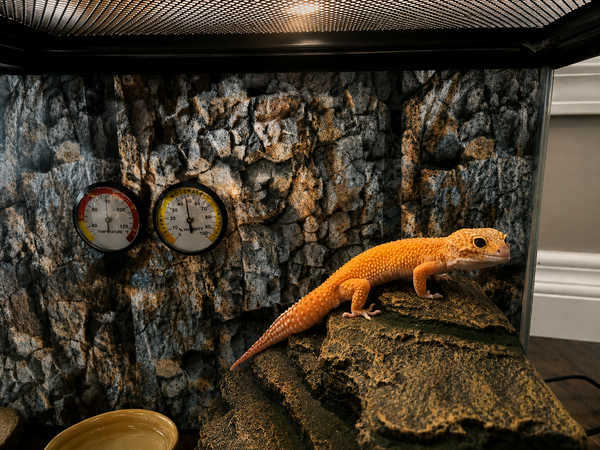
The basement itself has become more integrated than I expected. There’s a workshop and my desk. There are projects mid-process. Ski equipment is displayed partly because it contributes to the atmosphere and partly because it’s sitting there ready for the next time the weather cooperates. There is music, a pool table, a boxing area with a rubber floor that regularly becomes a mini-sticks hockey rink, reptiles, books, notebooks, and whatever else is currently moving through the place.
It’s also become a special place for the girls. They know it’s usually where they’ll find me when I’m home but not upstairs. They play down there and bring friends down. Reptiles became an interest we genuinely share. Anna doesn’t particularly care about most of what I’m building down there, and she doesn’t need to. Her most significant territorial claim may be the astonishing amount of holiday shit we apparently need to store for every season known to man.
Some things are mine. Some are hers. Some belong to the girls. Some become ours, and some simply coexist. Food, travel, and skiing are much more naturally shared between Anna and me. Reptiles overlap with the kids. Other interests remain almost entirely my own. Integration doesn’t require everybody to become interested in everything.
The same is true of presence. Sometimes I’m building something while a record plays and the girls are twenty feet away doing their own thing. Anna comes downstairs because she wants to talk. I don’t necessarily have to put the tool down, announce that I am now entering Relationship Mode, and relocate upstairs. She can come down. We can talk. I can keep working on the wall.
Sometimes, though, presence means putting the fucking tool down.
Learning the difference is probably more important than any system I’ve come up with.
Integration Away From Home
I didn’t fully appreciate how much of my Integration was spatial until I started spending more time on the road for work. At home, things are close enough that I can move between them without constantly starting over. Travel removes that advantage, but the Integration doesn’t necessarily disappear. It just becomes more temporal than physical.
A long drive can become time for a podcast about something I’m researching, soundboarding an idea out loud, recording voice notes, or thinking through something I’m writing. A hotel room can become reading, planning, or writing time. Those same drives also give me unusually long stretches to call people. Friends and family I rarely have forty uninterrupted minutes to shoot the shit with suddenly fit naturally into a drive across Ohio or wherever the hell work has sent me that week.
That doesn’t mean every minute on the road needs to be reclaimed. Sometimes the hotel television goes on and my brain goes off. Sometimes a drive is just music. The same is true at home. I doomscroll considerably more than I’d like to admit. I watch shows. When the weather is good, I’ll sit outside and stare at the sky. Sometimes I walk a local trail every day for a while and sometimes I don’t go at all. I hang out with friends, visit my parents, stop at somebody’s house because I’m already nearby, or get coffee with Anna.
Despite the rest of this making it sound like I operate a second illegal life after midnight, I still usually get seven or eight hours of sleep.
Integration isn’t an attempt to turn every unclaimed minute into meaningful output. That would just be optimization wearing more interesting clothes. Not every sliver of the day needs to carry weight. I just don’t think meaningful things should require the rest of life to stop before they’re allowed to exist.
Integration Over Balance
I used to think Integration removed the need for balance. I’m not sure I believe that anymore.
There are days when presence needs to win and days when progress needs to win. There are also days when the distinction barely matters because everybody is doing their own thing and the day has enough room for both. Occasionally I’ve emptied half the garage onto the driveway and it simply needs to get put back before dark. On that day, the garage wins.
Integration doesn’t make competing priorities disappear. It makes their relationship more fluid. I can’t always let presence win, but I can’t always let progress win either. What matters more than either is whether the different parts of my life are receiving what they actually need, and that is very different from giving them equal amounts of time.
After I’ve been away for work, my family probably needs more of me and a project can slow down. If a project has been sitting untouched for weeks and the household is humming along fine, maybe I need a couple of hours downstairs. Sometimes the yard needs to be mowed. Sometimes one of my daughters needs more attention than usual. Sometimes Anna and I need coffee and a conversation. Sometimes I need to sit outside and do absolutely nothing. The proportions change constantly because the needs change constantly.
I’m also still not particularly good at this. I fall out of Integration all the time. I get obsessive. I get distracted. I mistake research for progress. I create deadlines nobody asked for and then become irritated when I miss them. I occasionally realize I’ve been physically present and mentally somewhere else. Other times I become so consumed by responsibilities that weeks pass without anything personally meaningful moving forward, and I resent that too.
I’m writing about Integration because I need it, not because I’ve perfected it.
When it does work, the result isn’t particularly profound. It feels more like baseline achieved. The girls are good. Anna’s good. Work is handled. Maybe the yard got mowed. I moved enough that my Apple Watch rings are closed. The mushroom lab progressed almost incidentally. Maybe some obscure supplies for whatever comes next are already en route to the house.
Nothing extraordinary happened. Everything received the amount it needed, and I can end the day with a kind of ease that is surprisingly difficult to manufacture any other way.
That fucking rocks.
Maybe that’s what I was looking for all along. Not balance as equal portions, not efficiency, not a perfectly optimized schedule, and definitely not some imaginary future where work is finished, the house is finished, the projects are finished, and nobody needs anything from me. Just enough permeability that curiosity can remain alive, enough presence that I don’t disappear into it, and enough space for everything to keep existing without requiring the rest of life to shut down.
You don’t escape daily life to live meaningfully. You rearrange daily life until meaning has somewhere to stay. On the good days, that means I stop waiting for the right part of life to begin and realize I’m already inside of it.
Read Next Article
 David Miga