How Anime Worlds Shape Atmosphere and Attention
Anime worlds like Miyazaki’s and Cowboy Bebop reveal how atmosphere, place, and attention shape experience, often making the ordinary feel more alive than the extraordinary.
Edition V:
How Anime Found Its Way Back
I didn’t arrive at anime through film school or deep fandom. Like a lot of kids growing up in the late 90s and early 2000s, it started with whatever happened to be on. After school meant turning on Cartoon Network and catching what was airing on Toonami. Weekend movie nights meant wandering the aisles of Family Video, looking for a case that looked cool enough to rent.
That’s where I first ran into shows like Dragon Ball Z and Yu Yu Hakusho. At the time it was simple: fights, energy blasts, transformations, and villains that took entire seasons to defeat. This is the kind of storytelling that feels enormous when you’re a kid. I’m sure there were others too, half-remembered titles that cycled through depending on what the store happened to have in stock that week.
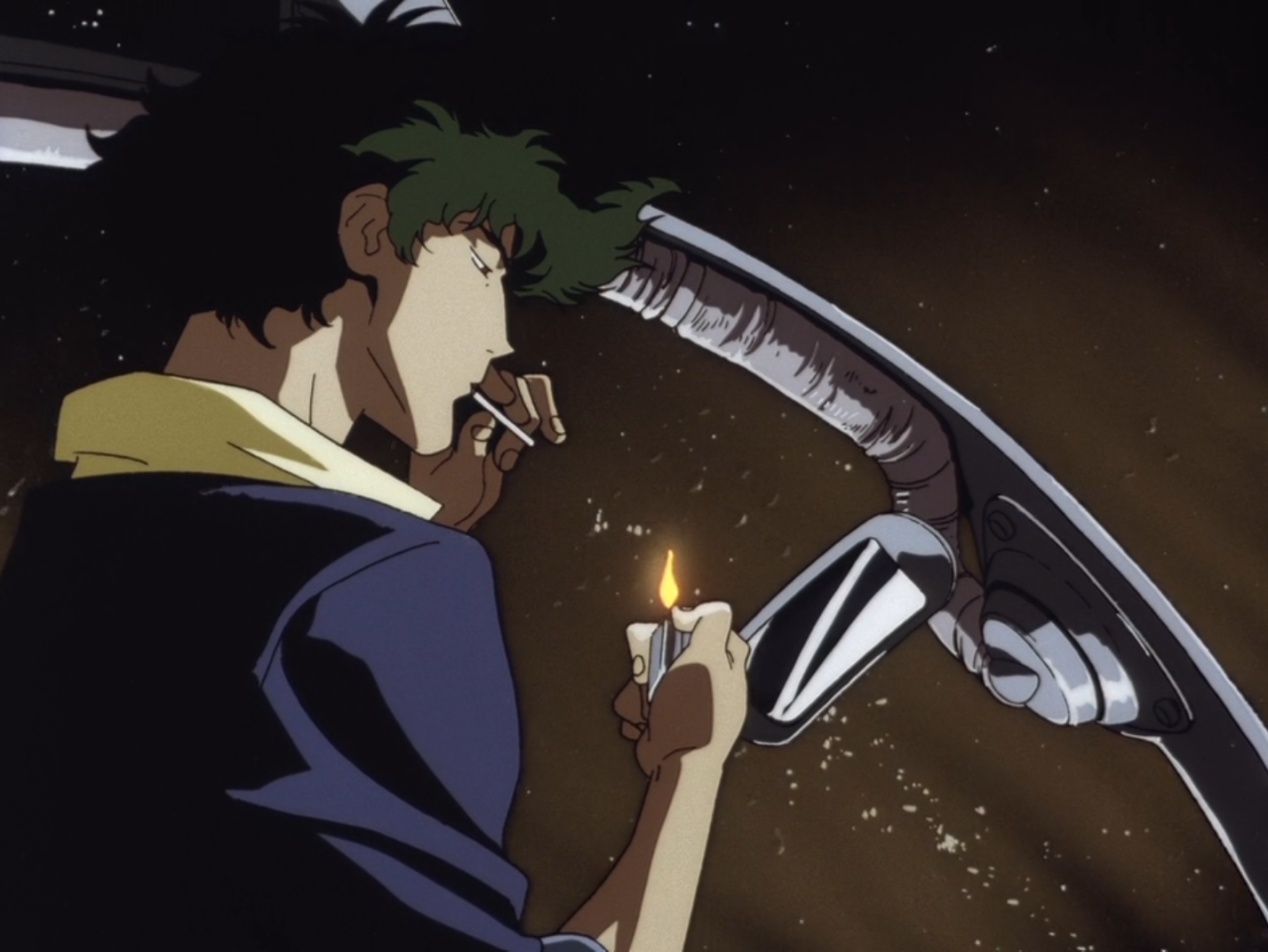
Somewhere in the background was Cowboy Bebop, but it didn’t land then.
Eventually anime faded into the background too. There wasn’t some moment when I decided I had grown out of it. Life just moved on, and it became one of those interests from childhood that sat untouched for years without ever completely disappearing.
When a World Feels Like a Place
Years later, anime found its way back into my life almost accidentally. A longtime friend, more like family at this point, who works in film was visiting from California. One evening we ended up playing a few rounds of Dragon Ball Fighter Z on the Switch, and the conversation drifted toward old shows. He casually suggested I rewatch Cowboy Bebop.
So I did, and this time it hit.
Not because of the action or even the plot, but because of the mood, the noir tone, the wandering sense of adventure, the slightly seedy underbelly of space, and above all else, the music. The jazz drifting through star systems and lonely saxophones over asteroid fields had me captivated. The episodes felt more like short films than television.
What I really love about that world is the mix of elegance and grit. It can be impossibly stylish without ever feeling polished. Beautiful music plays over places that are dirty and worn. The characters move through bars, crowded cities, old machinery and spaceships that actually look lived in. Then, between jobs and all the larger moments, they stop to eat. They sit around bored. They argue about stupid things. Sometimes there isn’t enough food.
Those slower moments are as important to the world as the gunfights and space travel. They give everything else weight because life continues between the interesting parts.
There was something about Cowboy Bebop that felt less like a series and more like a place you could spend time inside. Its atmosphere wasn’t something laid over the story. The music, architecture, clothing, machines, food, grime and quiet stretches all seemed to belong to the same world.
Miyazaki and the Power of Atmosphere
From there the door opened again. I moved through a handful of classics like Ghost in the Shell, Trigun, One Piece here and there, and a few others. Each one had something interesting going on, with different philosophies, tones, and worlds.
But nothing resonated quite like the films of Hayao Miyazaki.
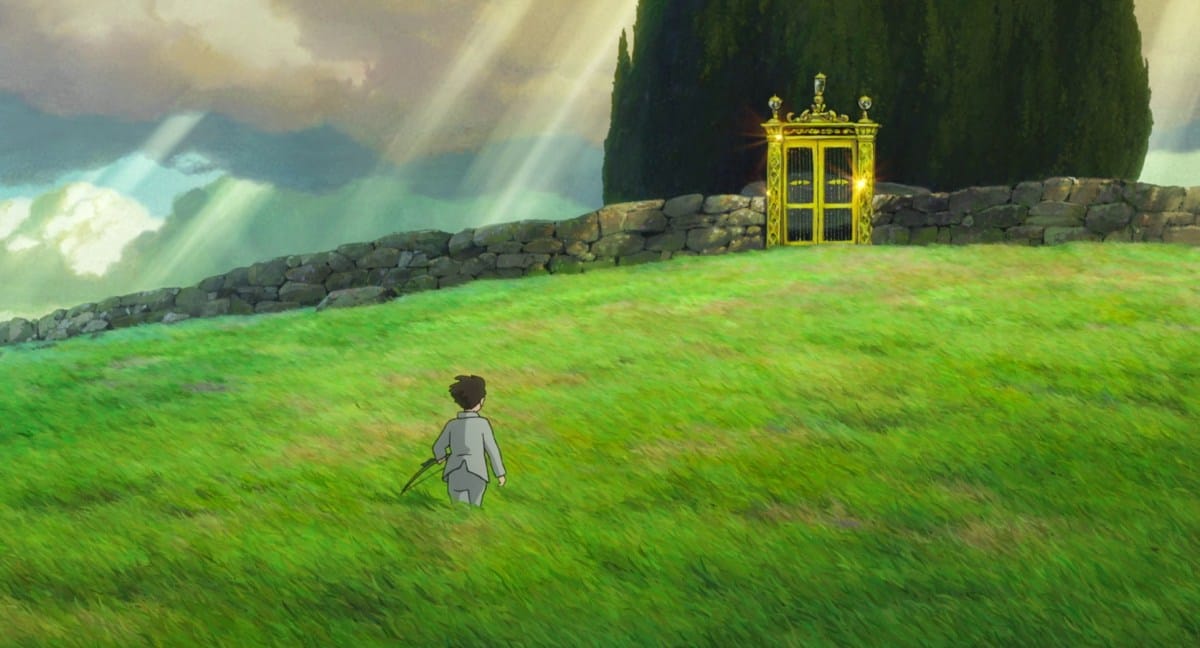
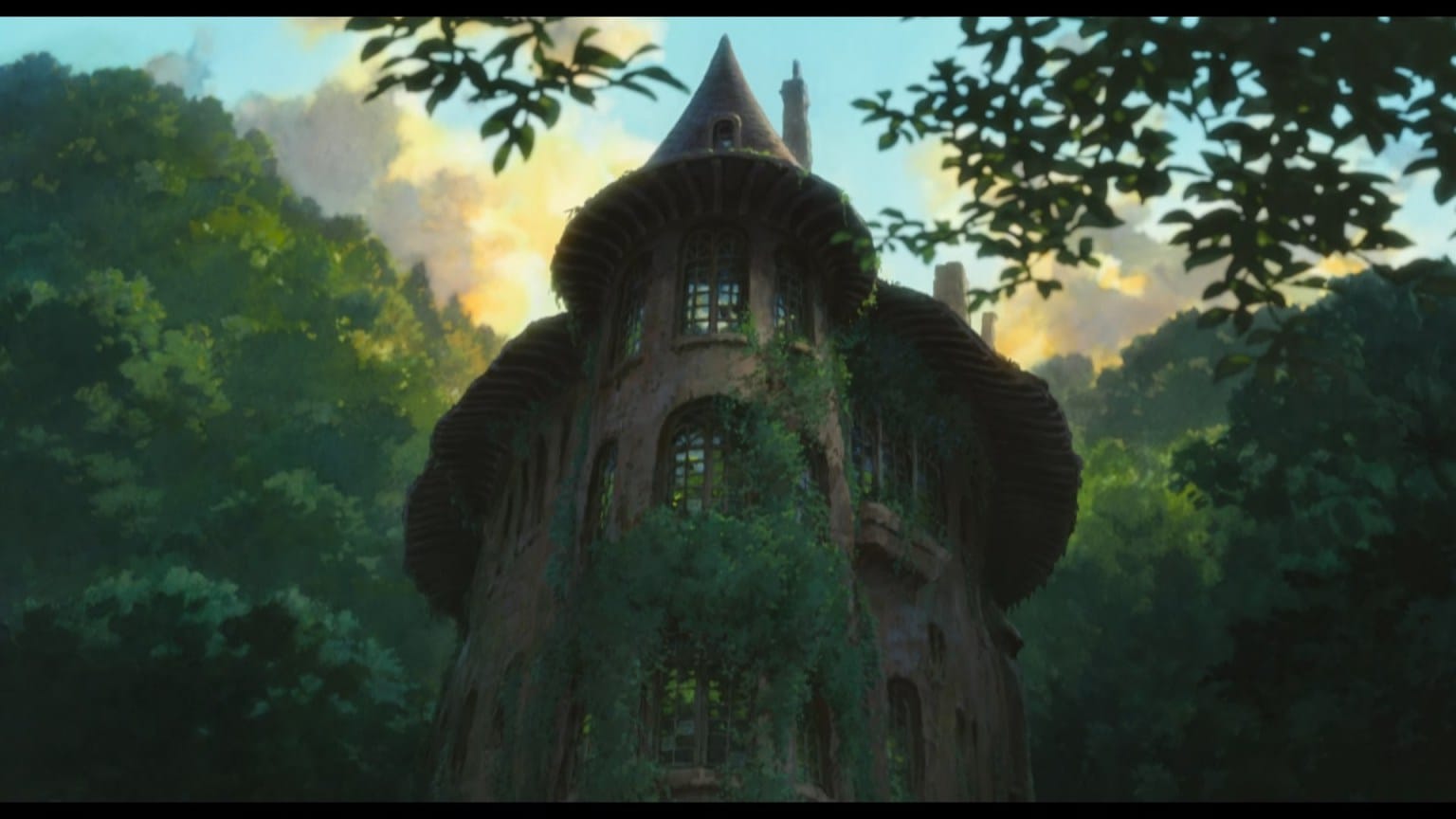
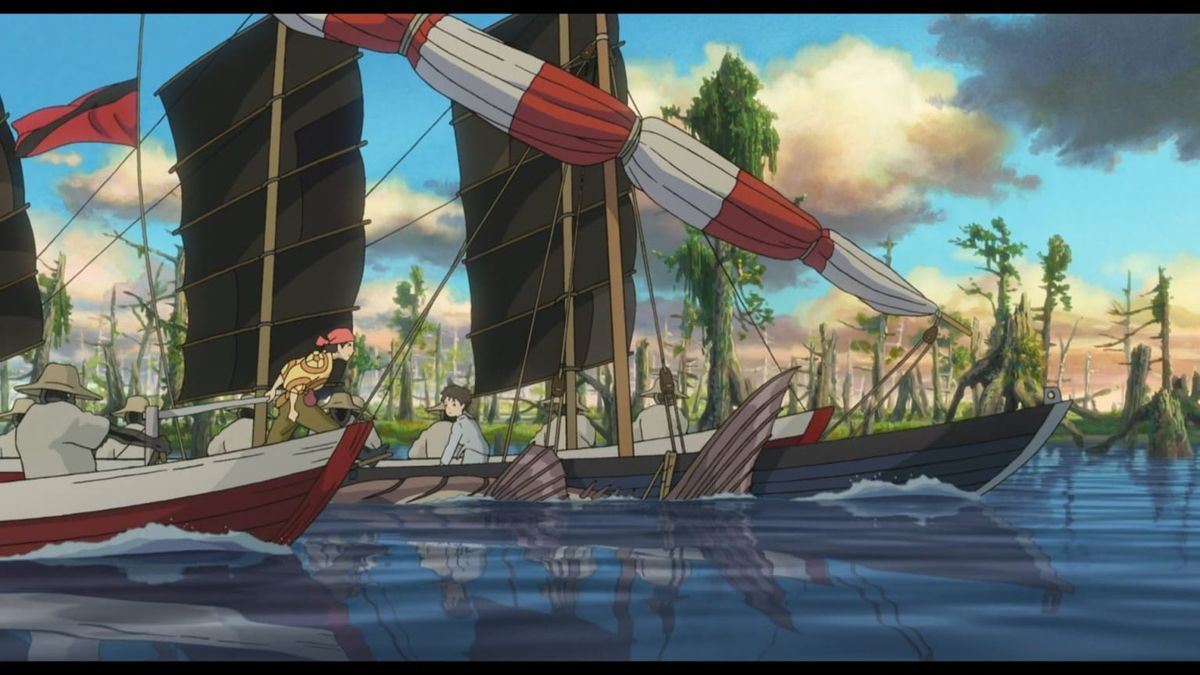
The Boy and the Heron (2023) - screenshot included for critical commentary
The first one that really stayed with me recently was The Boy and the Heron, strange, dreamlike, and a little unsettling in the best way. It’s the kind of film that doesn’t explain itself so much as invite you to wander through it.
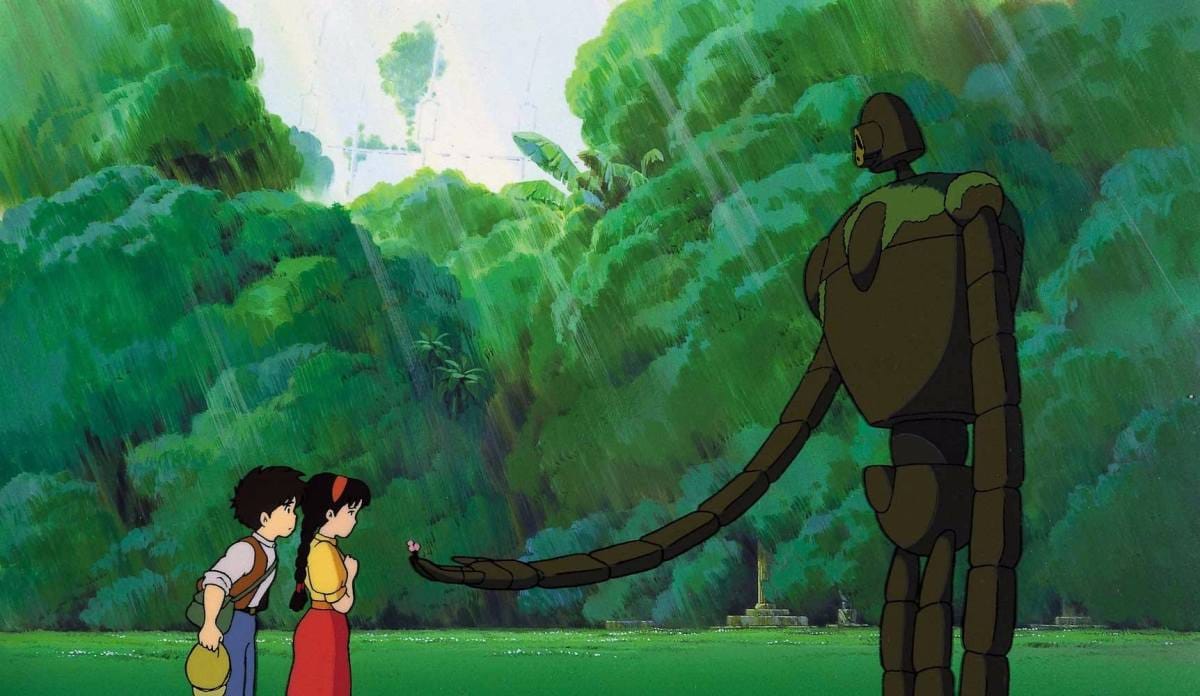
Then came Castle in the Sky, and that one landed differently. Not only during the big moments with the airships, chases, and floating island, but in the quieter ones. A robot tending a garden in the ruins of a forgotten city. Wind moving through tall grass. Moss growing across stone and machinery. Nothing needs to be rushed along just because the plot has temporarily stopped moving.
That level of detail is a huge part of what pulls me into Miyazaki’s worlds. Very little feels incidental. A landscape, a meal, a machine, an old building, the way grass moves in the wind all contribute to making the place feel vivid.
There’s also something about the way nature, machinery, decay and human craft are allowed to coexist. The machines can be beautiful without the natural world disappearing around them. Old structures weather. Stone gets covered in moss. Machines built for war can end up standing quietly among gardens and birds. Nothing has to remain pristine to remain beautiful.
The more I learned about Miyazaki himself, the more another part of that began to resonate with me. So much of what appears on screen carries traces of a lived life: childhood memories, landscapes, machines, places, fears, fascinations and experiences translated into an imagined world.
I recognize something in that impulse.
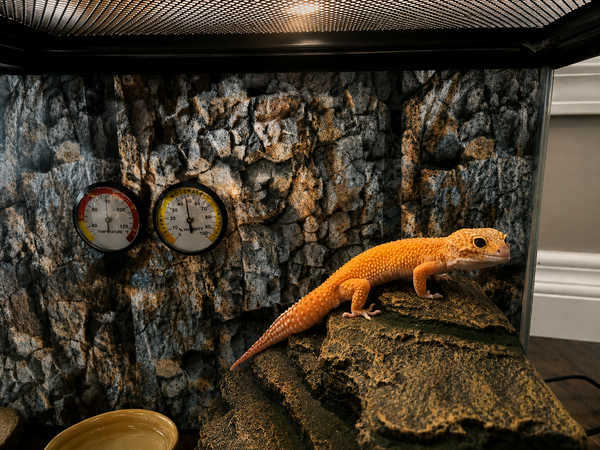
As I’ve continued writing these editions, I keep finding myself returning to things from my own childhood that disappeared for years and somehow found their way back into my adult life. Anime itself is one of them. Reptiles are another. Drawing. Making things. Wandering into subjects simply because something about them catches me. They return differently now because I’m different, but the original fascination is still somewhere underneath.
I’m obviously not making animated films, but I understand the instinct to take pieces of a lived life and allow them to shape the world you create around yourself.
The Ordinary Made Visible
One of the things Miyazaki has said that stuck with me is that he finds the extraordinary in ordinary, everyday scenery.
I understand why.
The magic in these films isn’t confined to spectacle. It’s also wind through trees, a quiet neighborhood, an old kitchen, food on a table, a train moving through a landscape, or an ordinary street seen from a passing car. The attention given to those moments changes how important they feel.
Sometimes that attention follows me back into my own life.
I remember driving up toward the lake once with a storm forming in the distance. Along the horizon, the green foliage of the trees was sitting against this dark gray, almost purple sky. The contrast was so beautiful that my first instinct was that I wanted to draw it. Nothing extraordinary was happening. It was just trees, weather and light arranged a certain way for a few minutes, but I noticed it.
I’ve always had some tendency toward that kind of observation, but films like these seem to sharpen it. They make me want to pay closer attention to grass moving in the wind, changing light, old buildings, weather, textures and all the other small things that are easy to pass without really seeing.
That attention has also found its way into the spaces I build.
The basement is probably the clearest example. Inherited furniture sits beside DJ equipment and records. Natural materials mix with things I’ve built or salvaged. There are spaces for music and work, mushroom cultivation and eventually reptiles, along with places to sit, make something, drink tea or simply spend time. Family life still moves through all of it. None of these things are there because I’m trying to recreate a Miyazaki film, and anime is only one influence among many. But I am consciously trying to create an atmosphere.
Part of that is aesthetic. I care how a space feels when I enter it. I want the objects in it to matter to me, but I also want them to work together in a way that creates a certain mood. I’m building that primarily for myself. If I walk into a space and the vibe feels right, I trust it.
But atmosphere does more than make a room look interesting. The environment can change what becomes easy to notice and easy to do. Keeping records near the turntables makes music available. Giving a curiosity its own corner makes returning to it easier. Building a room around living systems creates reasons to walk inside, observe something, maintain it and learn from it.
That’s what I mean when I say presence is something you can design. I’m not trying to design the feeling of being present. I’m trying to design some of the conditions that make it easier to actually be there.
Not Escape, But Return
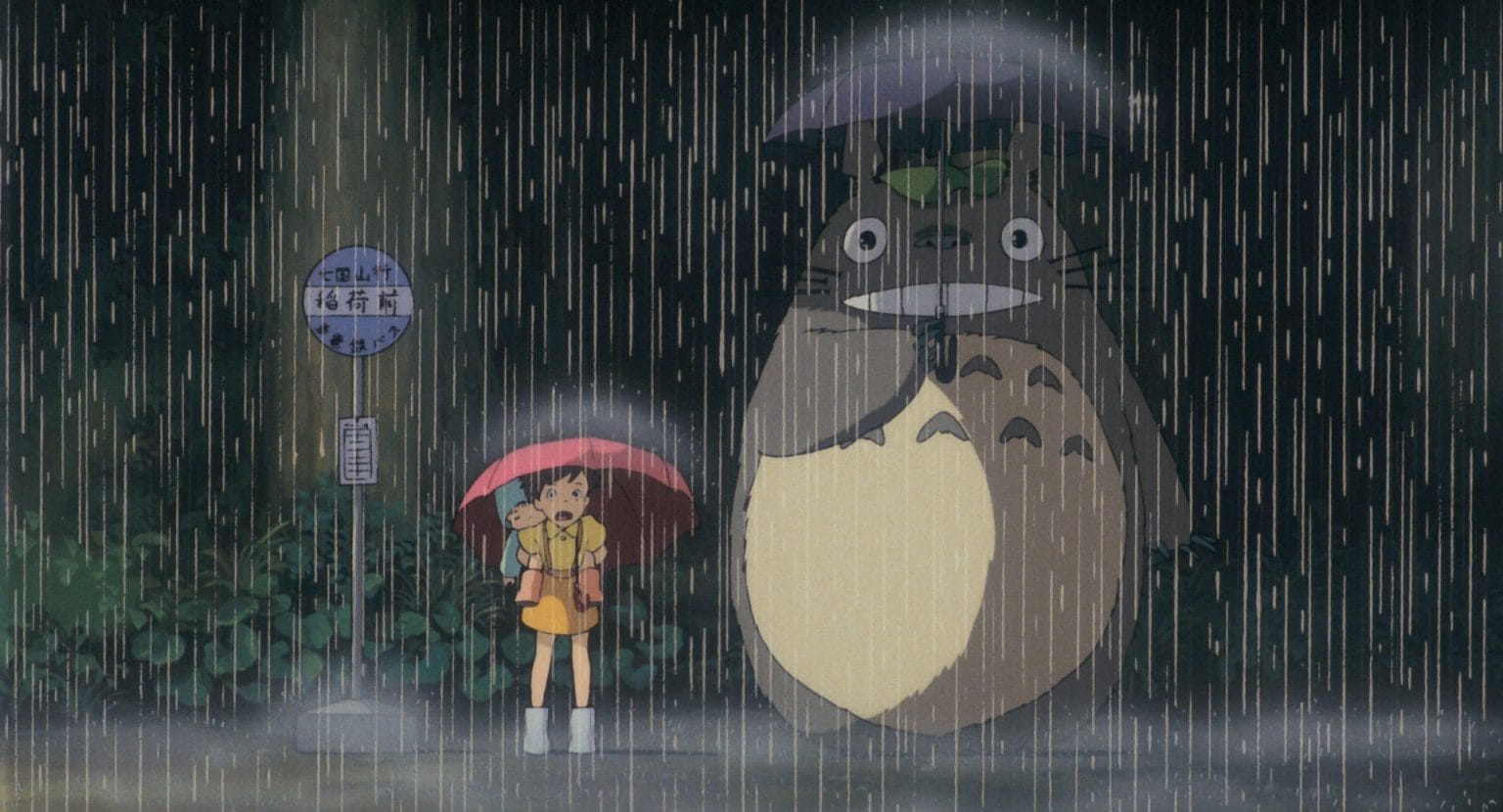
You see the same attention across other Miyazaki films too. In My Neighbor Totoro, the magic lives inside everyday moments: waiting at a rainy bus stop, walking through forests, sitting quietly beside a giant creature that somehow feels completely natural. In From Up on Poppy Hill, the feeling is nostalgia and memory, and the way old buildings and traditions carry meaning because people continue to care for them.
They are different stories, but they share an unusual amount of respect for ordinary life.
It would be easy to look at animation like this purely as escapism. There are fantasy worlds, flying cities, spirits in forests and places that could never exist. But that isn’t really what the best of it does for me. When a Miyazaki film ends, I don’t find myself wanting to disappear into that world.
I want to slow down and pay more attention to this one.
That may be the part of these films that has stayed with me most. An imagined world can be completely fantastical and still send me back toward my own life with a little more interest in it. I notice the weather. I care more about the feeling of a room. I want to make something, draw something, cook something, go outside, or simply look a little longer at what is already there.
The environments around us shape how we move through our days, and the attention we give those environments changes what we’re capable of finding in them. Sometimes a fictional world is useful precisely because it reminds us of that.
Maybe that’s why these films linger for me. They take me somewhere else for a while, but the real effect happens when I come back. The ordinary world is still exactly where I left it. I’m just a little more capable of seeing what was already there.
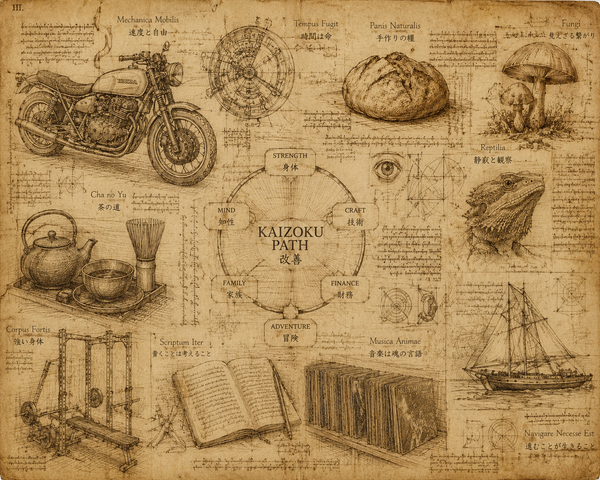
Kaizoku Path isn't about leaving your life behind. It's about discovering the adventure inside of it.
More Editions, Field Notes, and Project Ledgers can be found at kaizokupath.com