Making Space for Attention
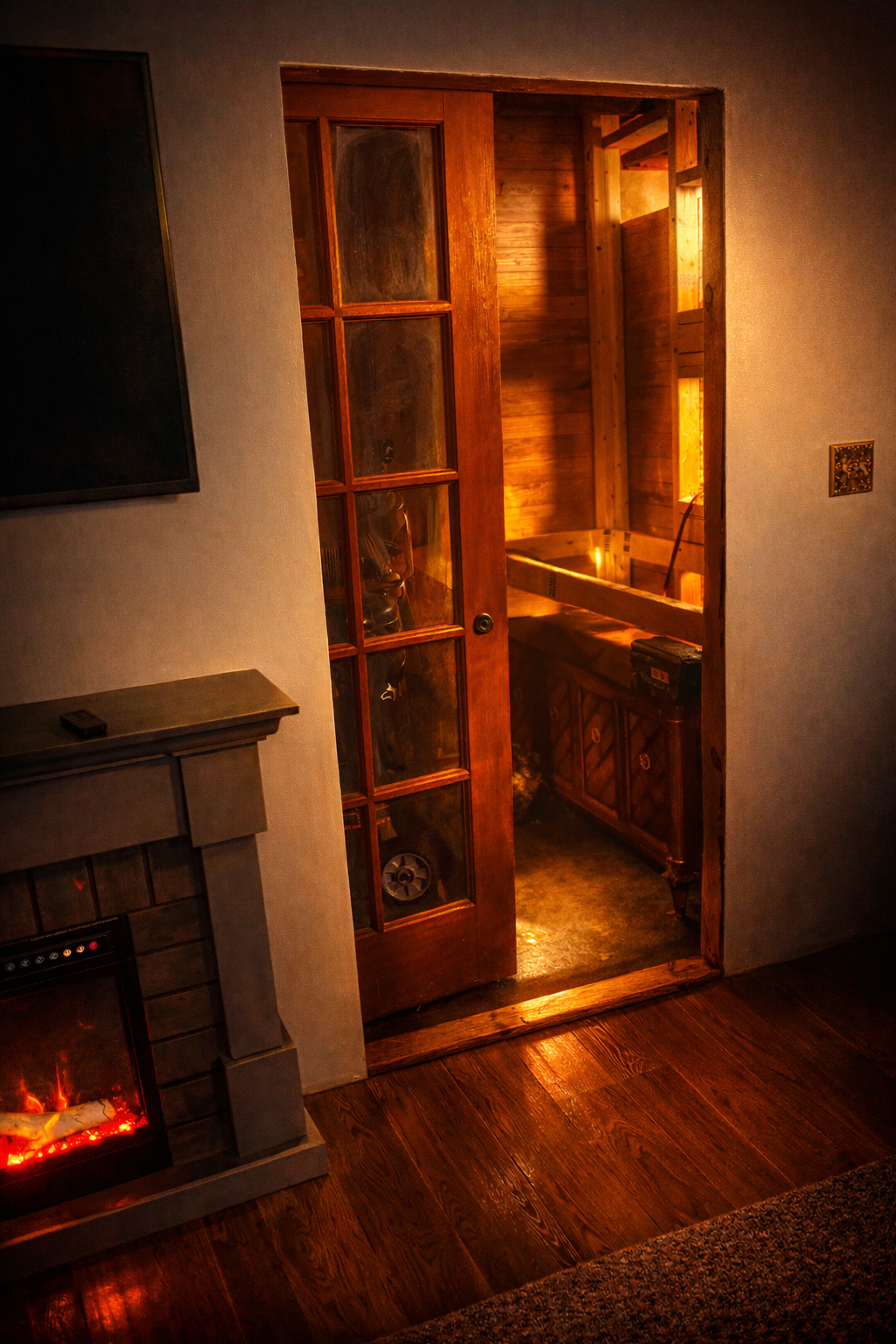
The spaces that shape us are rarely grand. They are the ordinary corners, workbenches, tables, and shorelines where attention settles long enough for craft, presence, and meaning to take root.
Edition III:
Where Attention Comes to Rest
Not every meaningful place announces itself. Some of them only appear after you’ve stood there long enough.
There’s a difference between the places we use and the places that slowly begin to hold us. Most of daily life happens in spaces with a job already attached to them. The kitchen is for cooking. The office is for working. The family room is for gathering. The grocery store would prefer that you buy your loaf of sourdough and pound of avocados, then keep moving. We pass through these places doing whatever we came there to do.
Every once in a while, though, something different happens.
A corner of a room slowly becomes yours. A chair ends up facing the right direction. The edge of a workbench starts collecting the things you’re actually interested in. You find yourself standing in the same part of the yard longer than necessary. There’s a particular table at a café you hope is open when you walk in. A rock beside the lake becomes the rock you sit on without anyone ever declaring it yours.
Sometimes we create these places deliberately. Other times we stumble into them. What they seem to share is that, for whatever reason, we want to stay.
I Think I’ve Always Done This
I didn’t arrive at any of this through architecture or some grand theory about the psychology of space. I think I’ve just been doing it most of my life.
My grandfather had a workshop in the basement of his home in Warren, a working-class inner-ring suburb of Detroit. That house eventually became my childhood home, and the same workshop became my dad’s. So some of my earliest experiences with making things happened in a space that had already been used for making things for two generations.
Sometimes that meant actually helping my dad build something. Other times it meant holding a board straight while he ran it across a table saw or learning the sacred father-son craft of being told to hold the goddamn flashlight over here.
Eventually my buddies and I started making our own shit down there. Lacrosse sticks when buying them wasn’t really an option. Questionable homemade weapons because, well, we were boys and probably idiots. We figured things out with whatever was around.
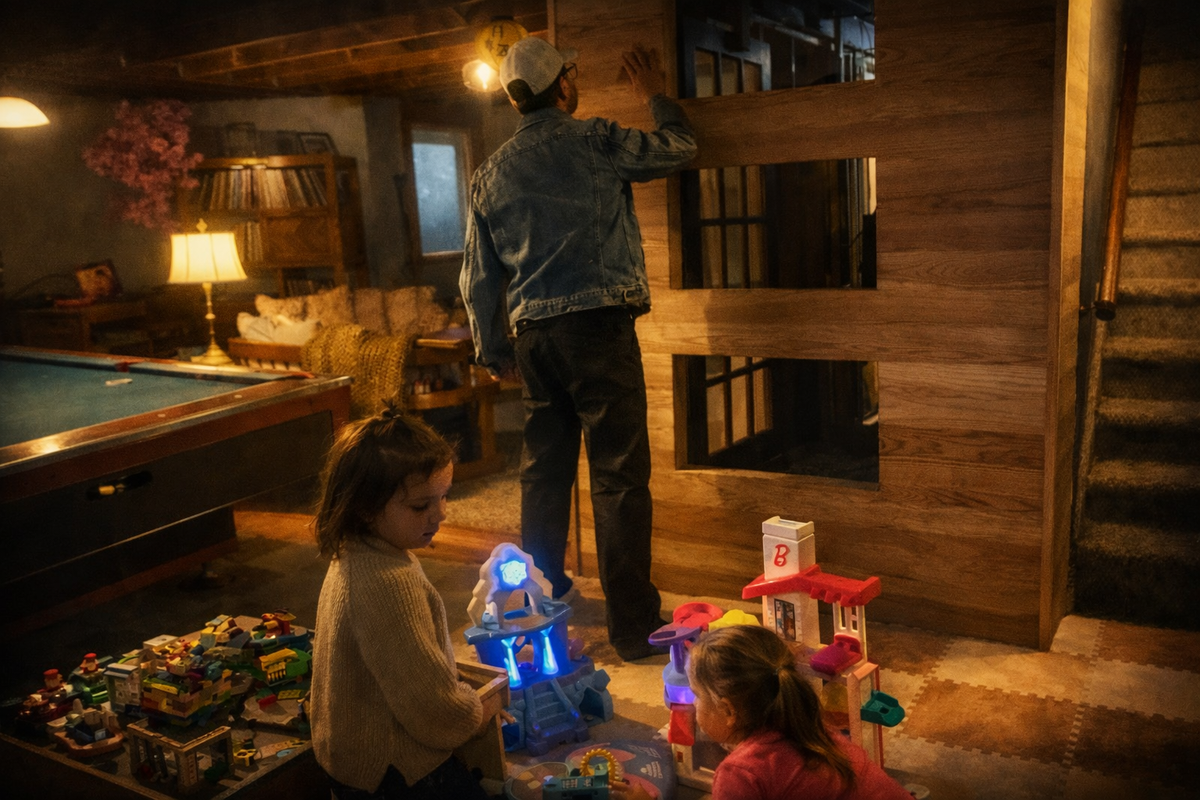
But the basement wasn’t only a workshop. Another part of it became my territory. Friends came over. I played video games. Girls came over. I started dragging home antique furniture for an apartment I did not yet possess, which probably should have been an early indication that I was going to care a little too much about this stuff.
When the imaginary apartment eventually became a real one, first in Detroit and later Royal Oak, the instinct followed me. My wife, who was then my girlfriend, was part of those spaces too, but I still had plenty of free rein to get weird with them. I wasn’t thinking about attention or craft. I just understood that occupying a place and making it yours were two different things.
Years later, she and I bought a big, beautiful, ugly colonial that needed damn near everything. More than 3,000 square feet became one enormous collaborative project. We lived within the chaos while we tore into it and started raising our first daughter somewhere in the middle of the construction. Walls moved. Rooms changed purpose. With a lot of DIY and help from our skilled trade elders, we slowly reinvented what that colonial family home could look like for us.
It was glorious.
It was also a fucking lot.
Eventually the work was done, or at least as done as a house ever needs to be.
The fun wasn’t.
Space Without an Assignment
By that point, everything above ground had been considered to death. The kitchen, family room, library, pantry, bedrooms. Those spaces needed to work for the wife, the kids and me. They needed to handle cooking, gathering, entertaining, homework, holidays and all the normal shit a family throws at a house.
And, if I’m being honest, there was some low-key flexing involved too. We had put an insane amount of ourselves into the place. Of course I wanted people to walk in and think, damn, this is cool. The top two floors had to function, but they also performed a little. I’m perfectly comfortable admitting that.
The basement didn’t need to.
We already had somewhere to entertain. Somewhere to watch TV. Somewhere to cook for a crowd, sit around with friends and do all the things a conventional finished basement would probably try to duplicate downstairs. Aside from some toy overflow and the annual graveyard of holiday decorations, nobody was asking much from it.
It didn’t need to impress anybody. It didn’t even need a particularly good explanation. For the first time in a long time, I had a substantial amount of space that didn’t need to become anything in particular.
The question wasn’t what does this room need to do?
It was what could happen here?
That freedom mattered more than I initially understood. Most of our environments arrive with their purpose already decided, and much of our time does too. There’s something powerful about leaving a little of either one unclaimed.
Because curiosity needs somewhere to go.
An interest can live in your head for only so long. Eventually it needs a table, a shelf, a corner where something half-finished can sit overnight without being packed away. A place where the tools are already out and you can return tomorrow without having to recreate the conditions to begin.
The basement became that for me. What it has turned into deserves its own story. What matters here is what I started to understand because of it: space could give my interests permission to become more than interests.
When a Place Has the Vibe
There’s also the vibe, which I’m going to admit right away I have never been able to completely explain. I use the word because every attempt to make it sound more sophisticated somehow makes it less accurate. You know when a place has it. Something changes when you enter. You get curious without feeling intimidated or like you’ve wandered somewhere you shouldn’t be. You strangely want to stay. The energy doesn’t even need to be particularly warm or exciting. Sometimes it’s completely neutral. What you notice is the contrast. For a little while, it feels like you’ve stepped out of the larger world and into another one.
The vibe isn’t the same thing as a good aesthetic. A brand-new hotel can have it, although I think a new space has to work twice as hard. Old places get a head start because time does some of the work for them. Things wear in. Objects accumulate. People leave traces. A new space has to somehow create that sense of itself without feeling like it was ordered out of a catalog last Tuesday. Both are possible; a boutique hotel and old dive bar in Detroit have it for me in completely different ways. So does 100+ year old bohemian cafe in Kraków. They don’t look alike. They don’t even make me feel the same way. But each one feels like its own little world.
And the vibe definitely doesn’t require beauty or even comfort. A place can be ugly as hell and still have it. Maybe so ugly it becomes beautiful. There’s a difference between the grease left behind from working on a motorcycle and old pizza rotting in the corner. Sawdust on a workshop floor tells you something happened there. Dog shit tells you somebody needs to clean up. Character and neglect aren’t the same thing.
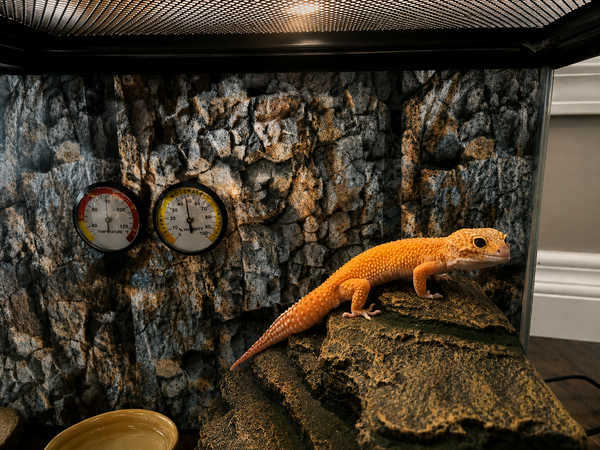
A place with the vibe might be cold. There might be creatures in it. There might be some weird dude named Jim smoking a bong somewhere in the back corner. It probably won’t be for everybody, and I think that might actually be part of it. It doesn’t need everybody to like it.
There seems to be some intersection between intention and pure luck that I don’t think you can completely engineer. Somebody cared enough to shape the place, but at some point the place started shaping itself. Things accumulated. People used it. Time did its thing. Even in a newer space where almost everything was intentional, the best ones somehow avoid feeling like they’re waiting for your approval.
Maybe that’s as close as I can get to defining the vibe. It took effort, but it feels like it did it for itself.
Giving Attention Somewhere to Land
Once I started noticing these places, I also started wondering whether some of what they do could be created deliberately. Not the vibe exactly. I’m increasingly convinced that trying too hard to manufacture that is probably one of the fastest ways to kill it. There’s too much luck and accumulation involved. There's also too much that only happens after people actually start inhabiting a space.
However, the conditions that allow attention to settle are different. Those we have some control over by making a place easier to enter. Leave a chair where I actually want to sit instead of where it looks best. Keep tools close enough that using them doesn’t require twenty minutes of setup. Let a project stay out overnight. Put the record player somewhere records will actually get played. Let books accumulate where I read them.
None of this guarantees presence. I don’t think you can interior-design your way into becoming a more attentive person.
But you can give attention somewhere to land. Daily life pulls attention in a hundred directions: screens, work, chores, messages, another room, or another task. There is always a reason to move on.
A space can push in the opposite direction. Rather than demanding focus, I could simply stop negotiating. The unfinished project is where I left it. I don’t have to recreate the conditions every time I want to begin.
Eventually the space starts carrying some of that attention with me. Books stay open. Materials accumulate. Objects find permanent homes for reasons that probably make sense only to me. One interest starts bumping into another. Maybe that’s the difference between decorating a room and actually inhabiting one.
You aren’t just deciding how the space should look. You’re deciding what gets to live there.
Curiosity Needs Somewhere to Go
I have a lot of interests. Probably too many by any reasonable standard and certainly too many according to the internet, which would really appreciate it if I could pick a fucking niche already.
The problem with curiosity is that you usually don’t know what deserves space until you’ve already given it some. An interest shows up before I know what it’s going to become. Maybe I’ll care about it for ten years or maybe six months from now I’ll wonder why the hell I own all this equipment. I’m becoming increasingly okay with not knowing.
We’re encouraged to justify interests remarkably quickly. Is this useful? Am I going to get good at it? Could I make money from it? Is this really my thing? Even hobbies somehow end up needing a business plan, an identity and a content strategy. Sometimes I just want to be interested in something.
Giving an interest somewhere to live lets me follow it before deciding what it needs to become. It can stay small, get completely out of hand, or just disappear. Most notably, it can collide with something else and lead somewhere I never would have planned.
Even the abandoned ones usually leave something behind like a tool I now know how to use, a book I wouldn’t have read, a lesson learned, a person I met, or an idea that connects to something completely unrelated years later. That doesn’t feel like wasted attention to me.
It’s also why I don’t want a space designed around some fixed list of interests I already have. I want enough structure for what I’m doing now and enough looseness for whatever weird thing captures my attention next.
The space doesn’t just hold the person I already am. It leaves some room for whoever I might become next.
Where Craft Begins
Stay with something long enough and eventually your hands get involved. You build, tune, cut, pour, sketch, repair, rearrange, or fuck it up and try again. This is exactly how an interest starts becoming a practice.
I used to think of craft mostly in terms of skill, the ability to make something well. I think there’s something before that: craft begins with participation. Before you can become good at something, you have to spend enough time with it to be bad at it for a while.
Having somewhere for that to happen helps.
But not every meaningful space needs to become a workshop or every interest needs to produce something useful. My teenage basement certainly wasn’t some temple of productivity. Some nights the most meaningful thing happening down there was a few idiots playing video games. A space can hold making, solitude, conversation, boredom, experimentation, friends, or absolutely nothing for a while. Its value isn’t measured by its output.
I’m especially wary of turning any of this into another system for getting more shit done. The point of creating space for attention isn’t productivity. The point of following curiosity isn’t mastery.
Sometimes an interest becomes craft or ritual, while other times it becomes a friendship, a weird collection, an abandoned experiment, or a story. It’s just a good way to spend a Saturday.
What matters most is participation. There’s a difference between watching someone else experience something and actually getting your hands into it. Making decisions, handling the materials, screwing something up, and learning enough to try again beats watching YouTube videos on a topic all day without action.
I think we need places that make more of that possible. We need places we can alter, return to, and collect evidence of who we are and whatever the hell we’ve been interested in lately. In these spaces, it should be okay for something to remain unfinished because we’re coming back tomorrow.
Sometimes we stumble into them and immediately feel the difference.
Sometimes we have to make them ourselves.
The point isn’t to create somewhere better to escape from life. It’s to create somewhere that makes us want to participate in it.
Read Next Article
 David Miga